13/07/2026
Construction Certifications That Employers Value Most
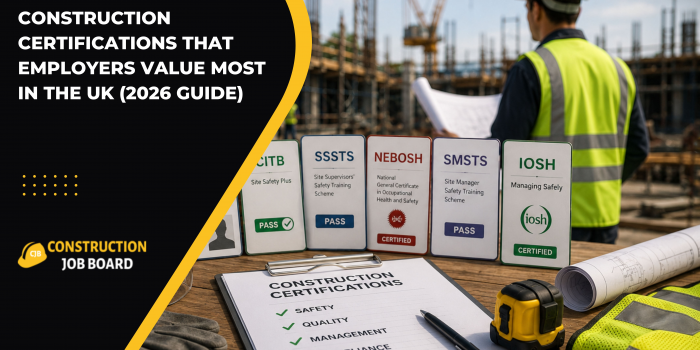
The UK construction industry offers excellent career opportunities for professionals with the right qualifications, and Construction Certifications play a significant role in helping candidates stand out in a competitive job market. While practical experience remains essential, employers increasingly look for recognised certifications that demonstrate safety awareness, technical knowledge, and a commitment to professional development. Whether you are starting your career or aiming for a management position, earning the right certifications can improve your employability, increase your earning potential, and open doors to more specialised roles.
Many construction employers prefer candidates who continually update their skills because the industry is constantly evolving. New regulations, digital technologies, sustainability goals, and health and safety standards mean that learning never stops. Investing in recognised construction qualifications is one of the smartest ways to future-proof your career.
Why Construction Certifications Matter
Construction projects involve strict safety regulations, technical requirements, and teamwork across multiple disciplines. Certifications help employers verify that candidates understand industry standards and can perform their responsibilities safely and effectively.
The benefits of gaining recognised certifications include:
- Improved employment opportunities
- Higher earning potential
- Better career progression
- Increased confidence on site
- Compliance with industry regulations
- Access to specialist and management roles
For employers, certified workers reduce training requirements and contribute to safer, more productive construction sites.
CSCS Card – A Fundamental Requirement
One of the most recognised qualifications in the UK construction industry is the CSCS (Construction Skills Certification Scheme) Card. Although it is not a legal requirement, many employers and contractors expect workers to hold a valid CSCS card before they are allowed on site.
A CSCS card demonstrates that an individual has the appropriate training and understands basic health and safety practices.
There are several types of cards available depending on your role and qualifications, including:
- Labourer Card
- Skilled Worker Card
- Gold Supervisor Card
- Black Manager Card
- Academically Qualified Person Card
Holding a valid CSCS card often improves your chances of securing Construction Jobs UK, particularly on larger commercial and infrastructure projects.
Internal Anchor Text: Construction Career Advice
SMSTS – Essential for Site Managers
The Site Management Safety Training Scheme (SMSTS) is widely recognised for professionals moving into supervisory or management positions.
The course covers:
- Health and safety legislation
- Risk assessments
- Site management responsibilities
- Environmental awareness
- Legal obligations
- Accident prevention
Employers recruiting Site Managers frequently list SMSTS as either essential or highly desirable. Candidates with this certification often enjoy greater career progression and access to leadership roles.
Internal Anchor Text: Site Manager Jobs
SSSTS – Ideal for Supervisors
The Site Supervisor Safety Training Scheme (SSSTS) is designed for professionals who supervise construction teams but are not yet responsible for overall site management.
The course focuses on:
- Supervising safely
- Communication
- Site responsibilities
- Risk management
- Toolbox talks
- Health and safety procedures
For those looking to move from skilled trades into supervisory positions, SSSTS provides an excellent stepping stone.
NVQs Demonstrate Practical Competence
National Vocational Qualifications (NVQs) remain one of the most respected qualifications in construction because they assess real workplace competence rather than classroom knowledge alone.
NVQs are available across many trades including:
- Bricklaying
- Carpentry
- Plumbing
- Electrical Installation
- Groundworks
- Roofing
- Plant Operations
- Site Management
- Quantity Surveying
Achieving an NVQ demonstrates that you can consistently perform your role to recognised industry standards.
Many advanced CSCS cards also require relevant NVQ qualifications.
IOSH Managing Safely
Health and safety are central to every successful construction project. The IOSH Managing Safafely course is recognised across multiple industries and is particularly valuable for supervisors, managers, and team leaders.
The qualification covers:
- Hazard identification
- Risk assessment
- Incident investigation
- Performance monitoring
- Legal responsibilities
Professionals with IOSH certification demonstrate strong leadership and safety awareness, qualities employers highly value.
NEBOSH Qualifications
For professionals specialising in health and safety, NEBOSH qualifications are among the most respected certifications available.
They are particularly useful for:
- Health and Safety Managers
- Construction Consultants
- Project Managers
- Safety Advisors
- Principal Contractors
Although more advanced than IOSH, NEBOSH qualifications can significantly improve long-term career prospects and salary potential.
Digital Skills Certifications Are Becoming More Valuable
The construction industry is rapidly adopting digital technologies, creating demand for professionals with both technical expertise and digital capabilities.
Certifications in areas such as:
are becoming increasingly valuable across the UK construction sector.
Employers recognise that professionals with digital construction skills can improve collaboration, planning, and project efficiency.
Continuous Professional Development
Construction certifications should not be viewed as one-time achievements. Successful professionals continue learning throughout their careers to stay up to date with changing regulations, technologies, and industry best practices.
Regular professional development demonstrates commitment, adaptability, and a willingness to grow—qualities employers actively seek when recruiting for senior positions.
Choosing the Right Certification for Your Career
Not every construction certification is suitable for every role. The best qualification depends on your current experience, career goals, and the type of work you want to pursue.
For example:
- Labourers and entry-level workers should begin with a CSCS Card to meet site access requirements and then work towards an NVQ in their chosen trade.
- Skilled tradespeople such as carpenters, electricians, plumbers, and bricklayers can strengthen their career prospects with trade-specific NVQs and additional health and safety training.
- Supervisors should consider the SSSTS qualification to demonstrate leadership skills and site safety knowledge.
- Site Managers and Project Managers can benefit from the SMSTS course, alongside qualifications in project management and digital construction technologies.
- Health and Safety professionals often gain a competitive advantage by earning IOSH or NEBOSH certifications.
Selecting qualifications that align with your career path helps you maximise your investment in training while improving your long-term employability.
How Certifications Improve Career Progression
Employers increasingly value candidates who demonstrate a commitment to continuous learning. Holding recognised Construction Certifications shows that you are proactive, reliable, and prepared to meet modern industry standards.
Certified professionals are often considered for:
- Higher-paying construction roles
- Promotion into supervisory positions
- Leadership and management opportunities
- Specialist technical roles
- Large infrastructure and commercial projects
As the UK construction industry continues to adopt new technologies and stricter safety standards, ongoing professional development is becoming an essential part of career success.
Whether you are entering the industry or looking to progress into a senior role, investing in recognised certifications can help you stand out from other candidates and build a more rewarding career.
Suggested Internal Anchor Texts (Natural):
- Construction Career Advice
- Construction Training Courses
- Site Manager Jobs
- Quantity Surveyor Jobs
- Construction Skills Employers Want
- Construction Job Opportunities
- BIM Jobs
- Highest Paying Construction Jobs
Conclusion
Recognised Construction Certifications are more than just qualifications—they demonstrate your commitment to safety, professionalism, and career development. From obtaining a CSCS Card for site access to earning advanced qualifications such as SMSTS, SSSTS, NVQs, IOSH, and NEBOSH, each certification can help strengthen your skills and improve your employment prospects.
As construction projects become more complex and technology-driven, employers increasingly look for candidates who combine practical experience with recognised qualifications. Investing in continuous learning not only increases your chances of securing better job opportunities but also prepares you for leadership roles and long-term career growth.
Whether you're just starting out or aiming to advance your career, the right certifications can make a significant difference. Keep your skills up to date, continue developing your knowledge, and explore new opportunities to build a successful future in the UK construction industry.
Frequently Asked Questions (FAQs)
1. What is the most important construction certification in the UK?
The CSCS Card is one of the most widely recognised certifications. While not legally required, many employers expect workers to hold a valid CSCS card before working on construction sites.
2. Is an SMSTS qualification worth getting?
Yes. The SMSTS (Site Management Safety Training Scheme) qualification is highly valued by employers recruiting Site Managers and other leadership positions because it demonstrates strong knowledge of health and safety management.
3. Do construction certifications increase salary?
In many cases, yes. Certifications such as SMSTS, NVQs, IOSH, NEBOSH, and BIM-related qualifications can improve your employability and increase your chances of securing higher-paying construction roles.
4. Which certification should beginners obtain first?
For most entry-level workers, obtaining a CSCS Card is the first step. After gaining practical experience, candidates can progress to trade-specific NVQs and additional health and safety qualifications.
5. Are digital construction certifications becoming more valuable?
Yes. As the industry adopts technologies such as BIM, AutoCAD, Revit, and digital project management platforms, employers increasingly value candidates with digital construction skills and certifications.