05/02/2026
The UK Construction Job Market: Roles, Skills, and Employment Trends
The construction sector plays a foundational role in the UK economy, supporting infrastructure development, housing, commercial projects, and public works. As demand for skilled professionals continues across regions, construction jobs remain a stable and long-term employment pathway for a wide range of roles and experience levels.
This article provides an informational overview of construction jobs in the UK, focusing on role types, skill requirements, employment structures, and long-term workforce trends. It is intended as a neutral reference, not career advice or job selection guidance.
Overview of Construction Employment in the UK
Construction employment covers both on-site and off-site roles involved in planning, building, managing, and maintaining physical structures. Jobs exist across residential, commercial, industrial, and infrastructure projects.
Common employment characteristics include:
- Project-based work cycles
- Multi-disciplinary collaboration
- Regulated safety and compliance environments
- Combination of skilled trades and professional services
The workforce includes manual trades, technical specialists, engineers, surveyors, supervisors, and project managers.
Major Categories of Construction Jobs
Construction roles are generally grouped into functional categories rather than single job paths.
Skilled Trade Roles
These positions involve hands-on construction activity and site execution, such as:
- Carpenters
- Electricians
- Plumbers
- Bricklayers
- Steel fixers
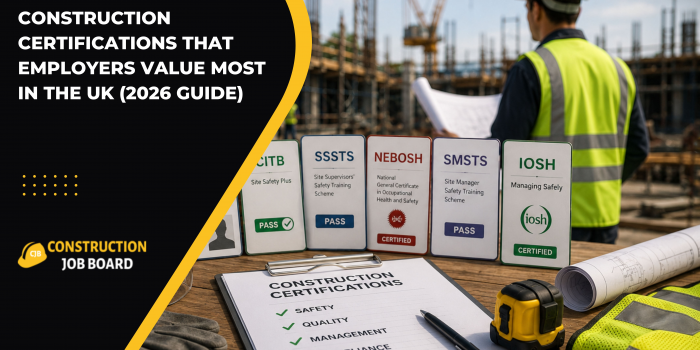
Trade roles often require certifications, apprenticeships, and compliance training.
Engineering and Technical Roles
Technical professionals support design accuracy, system integrity, and performance standards. Typical roles include:
- Civil engineers
- Electrical engineers
- Mechanical engineers
- Site engineers
These positions often combine office-based planning with on-site supervision.
Commercial and Measurement Roles
These roles focus on cost control, valuation, and financial accuracy across projects:
- Quantity surveyors
- Commercial managers
- Cost engineers
Strong analytical skills and contractual knowledge are central to these positions.
Management and Supervisory Roles
Management roles oversee coordination, scheduling, and delivery:
- Site managers
- Project managers
- Construction managers
These positions bridge technical execution and operational control.
Skills Commonly Required Across Construction Roles
While skill requirements vary by role, several core competencies appear consistently across the construction sector.
- Understanding of safety standards and compliance
- Ability to work within structured processes
- Technical drawing or specification literacy
- Coordination with multiple stakeholders
- Time and resource awareness
Higher-responsibility roles additionally require documentation accuracy, reporting discipline, and leadership capability.
Qualifications and Training Pathways
Construction careers follow multiple entry routes rather than a single academic path.
- Trade roles often rely on apprenticeships and vocational qualifications
- Technical roles usually require diplomas or engineering degrees
- Management roles may require professional accreditation or experience-based progression
Continuous professional development is common due to evolving regulations, materials, and technologies.
Employment Types and Work Structures
Construction employment is not limited to permanent positions. Common structures include:
- Full-time permanent roles
- Fixed-term project contracts
- Freelance or self-employed arrangements
- Agency-based placements
This flexibility allows the workforce to adapt to project demand and regional development cycles.
Salary Patterns and Progression (Informational)
Earnings in construction vary by skill level, responsibility, and experience.
- Entry-level roles typically align with regional wage benchmarks
- Skilled and certified roles command higher compensation
- Management and specialist roles reflect project responsibility and risk
This article does not provide salary guidance, only market structure context.
Long-Term Employment Outlook
The construction sector remains structurally important due to:
- Housing demand
- Infrastructure renewal
- Commercial redevelopment
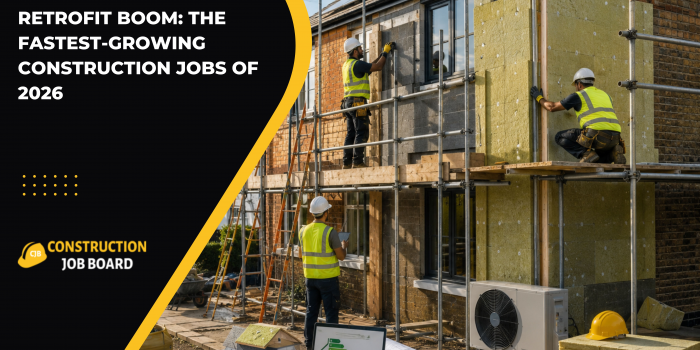
- Sustainability and energy efficiency projects
These drivers contribute to sustained workforce demand across multiple disciplines.
Scope and Neutrality Statement
This content is informational only. It does not recommend roles, employers, or career decisions and avoids commercial or advisory framing.
Summary
Construction jobs in the UK represent a diverse employment ecosystem covering skilled trades, engineering, commercial, and management roles. Understanding how these roles fit together helps contextualize the sector’s long-term relevance and employment stability.
FAQs (Informational, Non-Advisory)
1. What types of construction jobs are available in the UK?
Construction jobs include skilled trades, engineering roles, commercial and cost-focused positions, and management or supervisory roles.
2. Do construction jobs require formal qualifications?
Some construction roles require vocational training or apprenticeships, while technical and management roles often require formal education or professional experience.
3. Are construction jobs only site-based?
No. Construction employment includes both site-based roles and office-based positions such as design, planning, cost management, and project coordination.
4. How is construction employment structured?
Construction employment is commonly project-based and may include permanent roles, fixed-term contracts, or freelance arrangements.
5. What skills are commonly needed in construction roles?
Common skills include safety awareness, technical understanding, coordination ability, and familiarity with structured processes.
6. Is there long-term demand for construction jobs in the UK?
Yes. Ongoing infrastructure development, housing needs, and commercial projects contribute to sustained long-term workforce demand.