21/07/2026
Why Soft Skills Matter as Much as Technical Skills in Construction
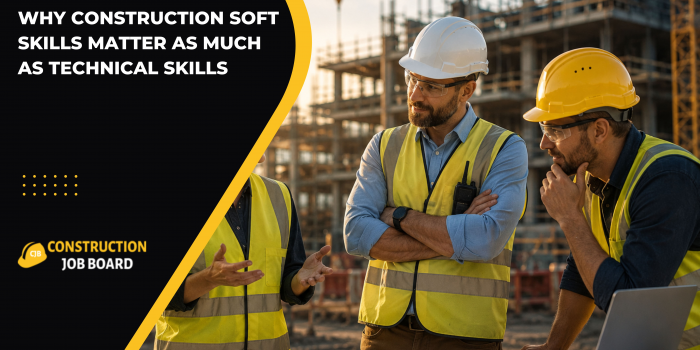
The UK construction industry has always valued technical expertise, from bricklaying and carpentry to electrical installation and site management. However, today's employers are increasingly recognising that Construction Soft Skills are just as important as technical abilities. While certifications, trade qualifications, and practical experience help candidates secure interviews, soft skills often determine who gets hired, promoted, and trusted with greater responsibilities.
Whether you're applying for your first role or aiming for a leadership position, developing strong interpersonal skills can significantly improve your career prospects. Employers want professionals who not only complete tasks efficiently but also communicate effectively, solve problems, collaborate with colleagues, and adapt to changing project requirements.
If you're currently searching for Construction Jobs, strengthening your soft skills alongside your technical qualifications can help you stand out in a competitive job market.
Why Soft Skills Have Become More Important
Construction projects today are more complex than ever before. Modern developments involve multiple contractors, specialist trades, architects, engineers, surveyors, suppliers, and clients working together under strict deadlines.
A successful project depends on more than technical expertise.
Employers increasingly look for professionals who can:
- Communicate clearly
- Work well within teams
- Solve unexpected problems
- Manage time effectively
- Adapt to changing site conditions
- Maintain professional relationships
- Prioritise safety
Technical knowledge helps build structures, but soft skills help build successful teams.
What Are Construction Soft Skills?
Soft skills are personal qualities and workplace behaviours that influence how individuals interact with others.
Unlike technical skills, they are transferable across almost every construction role.
Examples include:
- Communication
- Teamwork
- Leadership
- Problem-solving
- Time management
- Adaptability
- Professionalism
- Conflict resolution
- Attention to detail
- Reliability
These skills become increasingly valuable as professionals move into supervisory and management positions.
- Communication Skills
Communication is one of the most valuable skills on any construction site.
Workers communicate with:
- Supervisors
- Site Managers
- Architects
- Engineers
- Clients
- Suppliers
- Inspectors
- Other trades
Poor communication can lead to:
- Costly mistakes
- Delays
- Safety incidents
- Rework
- Material waste
Strong communication helps ensure everyone understands project requirements, safety procedures, and daily objectives.
Professionals aiming for Site Manager Jobs must demonstrate excellent communication skills because they coordinate multiple teams throughout a project.
- Teamwork
Construction projects depend on collaboration.
Even highly skilled tradespeople cannot complete large projects independently.
Successful teams rely on:
- Mutual respect
- Cooperation
- Shared responsibility
- Trust
- Clear communication
For example, electricians, plumbers, carpenters, steel fixers, and groundworkers often work sequentially. Delays or misunderstandings between teams can affect the entire project schedule.
Candidates applying for Labourer Jobs, Bricklayer Jobs, or Carpenter Jobs who demonstrate strong teamwork often receive positive feedback from employers.
- Problem-Solving
Unexpected challenges occur on almost every construction project.
Examples include:
- Material shortages
- Weather delays
- Design changes
- Equipment failures
- Safety concerns
- Budget constraints
Employers value workers who remain calm under pressure and help identify practical solutions rather than simply reporting problems.
Problem-solving demonstrates initiative and professionalism—qualities that often lead to career progression.
- Time Management
Construction projects operate under strict schedules.
Missing deadlines can increase costs and delay other contractors.
Good time management includes:
- Planning daily tasks
- Meeting deadlines
- Prioritising important work
- Reducing downtime
- Preparing equipment in advance
Workers who consistently complete tasks efficiently become trusted members of the team and are more likely to receive additional responsibilities.
- Adaptability
The construction industry continues to evolve through new regulations, sustainability requirements, and digital technologies.
Workers may need to adapt to:
- New equipment
- Modern building methods
- Digital reporting systems
- BIM software
- Health and safety updates
- Environmental regulations
Employers appreciate candidates who embrace change and are willing to learn new skills throughout their careers.
Professionals interested in technology-focused roles may also explore CAD Technician Jobs, where digital skills complement traditional construction knowledge.
- Leadership Skills
Leadership isn't limited to managers.
Experienced tradespeople frequently mentor apprentices, coordinate small teams, and support supervisors.
Leadership involves:
- Taking responsibility
- Motivating colleagues
- Making informed decisions
- Supporting team members
- Maintaining high standards
Developing leadership skills early can prepare professionals for future Contracts Manager Jobs or senior site management positions.
Why Employers Prioritise Soft Skills During Recruitment
During interviews, employers often assume candidates possess the required technical qualifications listed on their CV. What differentiates one applicant from another is frequently their ability to communicate confidently, explain previous experiences, demonstrate teamwork, and show a positive attitude toward learning.
Construction companies understand that technical skills can be developed through training, but qualities such as reliability, professionalism, and collaboration are much harder to teach. Candidates who combine recognised qualifications with excellent soft skills are therefore more likely to receive job offers and progress within the organisation.
Why Soft Skills Matter as Much as Technical Skills in Construction
7. Attention to Detail
In construction, even minor mistakes can have significant consequences. Incorrect measurements, overlooked safety procedures, or poor-quality workmanship can lead to costly rework, project delays, and potential safety hazards.
Employers value professionals who consistently pay attention to detail by:
- Following drawings and specifications accurately
- Completing work to a high standard
- Identifying defects before they become major issues
- Maintaining quality control
- Following health and safety procedures
Whether you're applying for Quantity Surveyor Jobs, CAD Technician Jobs, or Site Manager Jobs, attention to detail demonstrates professionalism and reduces project risks.
8. Reliability and Professionalism
Construction projects rely on dependable workers who consistently arrive on time, complete tasks responsibly, and maintain a positive attitude.
Professionalism includes:
- Being punctual
- Meeting deadlines
- Following company policies
- Wearing appropriate PPE
- Respecting colleagues and clients
- Maintaining a positive work ethic
Reliable employees quickly build trust with supervisors, increasing their chances of promotion and long-term employment.
Construction employers often prefer retaining dependable employees rather than repeatedly recruiting and training new staff.
9. Conflict Resolution
Construction sites bring together professionals from different trades, contractors, suppliers, and project stakeholders. Differences in priorities or unexpected project challenges can occasionally lead to disagreements.
Strong conflict resolution skills help workers:
- Resolve misunderstandings professionally
- Listen to different viewpoints
- Focus on practical solutions
- Maintain productive working relationships
- Keep projects moving forward
Professionals who handle difficult situations calmly often become natural leaders within their teams.
10. Emotional Intelligence
Emotional intelligence refers to the ability to understand your own emotions while recognising and responding appropriately to the emotions of others.
In construction, emotional intelligence supports:
- Better teamwork
- Improved leadership
- Stronger communication
- Effective decision-making
- Positive workplace culture
Managers with high emotional intelligence are often more successful at motivating teams, handling workplace pressure, and maintaining productivity during challenging projects.
As more companies focus on employee wellbeing and collaboration, emotional intelligence has become an increasingly valuable workplace skill.
How to Improve Your Construction Soft Skills
Unlike technical qualifications, soft skills are developed through experience, practice, and self-awareness.
Here are several practical ways to strengthen them:
Improve Communication
- Ask questions when instructions are unclear.
- Listen carefully during site briefings.
- Communicate problems early before they become major issues.
- Practice giving clear and concise updates.
Build Teamwork
- Support colleagues when workloads increase.
- Respect different trades and their responsibilities.
- Share knowledge with apprentices and new team members.
- Be willing to learn from experienced professionals.
Strengthen Leadership
- Volunteer to coordinate small tasks.
- Mentor junior workers where appropriate.
- Take ownership of your responsibilities.
- Lead by example through safe working practices.
Develop Problem-Solving Skills
- Analyse situations before reacting.
- Consider multiple solutions.
- Learn from previous project challenges.
- Stay calm under pressure.
Embrace Continuous Learning
The construction industry continues to evolve through digital technologies, sustainability initiatives, and modern construction methods.
Workers who actively develop both technical and interpersonal skills remain highly competitive throughout their careers.
Professionals interested in expanding their digital expertise may also explore Architect Jobs, Property Jobs, or Contracts Manager Jobs, where communication, leadership, and technology increasingly overlap.
Demonstrating Soft Skills on Your CV
Many candidates focus only on listing qualifications and previous job titles.
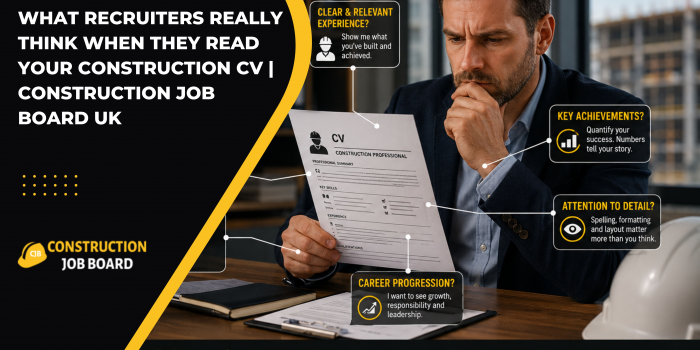
However, employers also want evidence of workplace behaviours.
Instead of simply listing responsibilities, describe achievements that demonstrate soft skills.
For example:
Instead of:
- Worked on residential construction projects.
Write:
- Collaborated with multi-disciplinary teams to complete residential developments on schedule while maintaining high safety and quality standards.
Another example:
Instead of:
- Managed construction workers.
Write:
- Led a team of 15 site operatives, improving productivity through effective communication and daily planning.
These examples show employers how you've applied soft skills in real workplace situations.
Demonstrating Soft Skills During Interviews
Construction interviews increasingly include behavioural questions designed to assess how candidates respond to workplace situations.
Common examples include:
- Tell us about a time you solved a difficult problem on-site.
- Describe a project where teamwork was essential.
- How do you handle disagreements with colleagues?
- How do you prioritise multiple tasks?
- Describe a situation where you adapted to unexpected changes.
Using real examples demonstrates authenticity and provides employers with confidence in your abilities.
Why Soft Skills Will Become Even More Important
The future of construction is changing rapidly.
Digital technologies, Building Information Modelling (BIM), off-site manufacturing, automation, and sustainable construction methods require closer collaboration between different specialists.
As projects become more connected and multidisciplinary, employers will continue seeking professionals who can:
- Communicate across teams
- Adapt to new technologies
- Lead diverse workforces
- Solve complex problems
- Build strong client relationships
Technical expertise will always remain essential, but professionals who combine it with excellent interpersonal skills will enjoy greater career opportunities and long-term success.
Conclusion
Technical qualifications may help you secure an interview, but Construction Soft Skills often determine how far your career progresses. Employers increasingly value professionals who can communicate effectively, collaborate with colleagues, solve problems, demonstrate leadership, and adapt to changing workplace demands.
Whether you're beginning your career in Labourer Jobs, progressing into Site Manager Jobs, or pursuing leadership opportunities such as Contracts Manager Jobs, developing strong soft skills alongside your technical expertise will help you stand out in an increasingly competitive construction industry.
By investing in continuous learning, maintaining a positive attitude, and building strong workplace relationships, you'll position yourself for long-term success in one of the UK's most dynamic industries.
Frequently Asked Questions
1. What are construction soft skills?
Construction soft skills are personal and interpersonal abilities such as communication, teamwork, leadership, problem-solving, adaptability, and time management that help professionals work effectively with colleagues, clients, and stakeholders.
2. Why are soft skills important in construction?
Soft skills improve teamwork, workplace safety, productivity, and communication. Employers value these skills because they contribute to successful project delivery and effective collaboration on-site.
3. Which soft skill is most important for construction workers?
Communication is often considered the most important soft skill, as it supports safety, coordination, teamwork, and efficient project management. However, reliability, adaptability, and problem-solving are equally valuable.
4. Can soft skills help me get promoted?
Yes. Employees who demonstrate leadership, professionalism, initiative, and strong communication are often considered for supervisory and management roles ahead of equally qualified candidates with weaker interpersonal skills.
5. How can I improve my construction soft skills?
You can improve your soft skills by seeking feedback, participating in team projects, improving communication, taking on leadership opportunities, managing your time effectively, and embracing continuous learning both on and off the job.