
Back

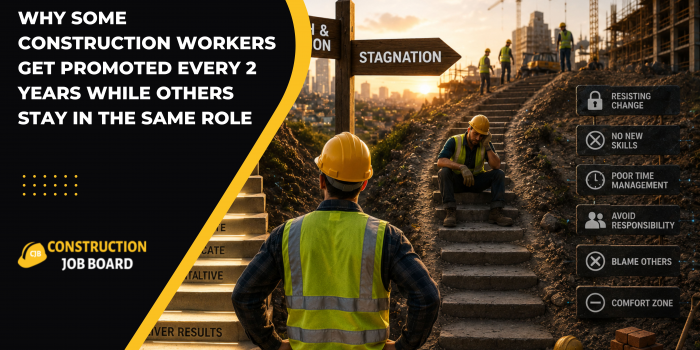
Why Some Construction Workers Get Promoted Every 2 Years While Others Stay in the Same Role

Why Some Construction Workers Get Promoted Every 2 Years While Others Stay in the Same Role

Two people join the same construction company.

Both start as Site Engineers.

Both have similar qualifications.

Both work on similar projects.

Five years later, one has become a Project Manager leading multi-million-pound developments, while the other remains in the same role, wondering why promotions never seem to come.

This situation is surprisingly common across the UK construction industry.

Many professionals believe promotions depend mainly on experience or time served. While experience certainly matters, it is rarely the only factor. Employers promote people who consistently demonstrate the ability to take on greater responsibility, solve problems, and help projects succeed.

Understanding what separates fast career progression from career stagnation can help you take control of your own professional development.

Promotion Isn't Just About Experience

A common misconception is that promotions happen automatically after spending enough years in a role.

In reality, construction companies promote people because they believe they can succeed at the next level—not simply because they've been with the business the longest.

Imagine two Site Engineers with five years of experience.

One focuses only on completing assigned tasks.

The other looks for ways to improve site processes, helps junior colleagues, communicates effectively with subcontractors, and volunteers to lead meetings when opportunities arise.

Which person would you trust with greater responsibility?

For most employers, the answer is obvious.

Experience gets you noticed.

Impact gets you promoted.

Habit 1: They Take Ownership

Successful construction professionals don't wait to be told what to do.

When problems arise, they look for solutions rather than excuses.

For example, if a delivery is delayed or a subcontractor misses a deadline, they don't simply report the issue—they help develop a practical plan to keep the project moving.

This proactive attitude builds trust with managers.

Employers notice people who think like leaders long before they officially become leaders.

Habit 2: They Keep Learning

The construction industry changes every year.

New regulations, digital tools, sustainability standards, and modern construction methods mean yesterday's knowledge may not be enough for tomorrow's projects.

Professionals who progress quickly usually invest in continuous learning.

This might include:

  • Completing health and safety qualifications.
  • Learning BIM software.
  • Improving project management skills.
  • Understanding commercial contracts.
  • Attending industry training sessions.

Learning demonstrates ambition.

Managers often prefer promoting someone who is constantly developing rather than someone who relies only on past experience.

Habit 3: They Solve Problems, Not Just Identify Them

Anyone can point out a problem.

High-performing employees also suggest practical solutions.

For example:

Instead of saying,

"The programme is behind schedule."

They might say,

"The programme is behind schedule. If we resequence these activities and increase labour on two key tasks, we could recover three days."

This type of thinking shows commercial awareness and leadership potential.

Construction projects value people who reduce risk rather than create additional work.

Habit 4: They Build Strong Relationships

Construction is built on teamwork.

Project success depends on collaboration between:

  • Clients
  • Architects
  • Engineers
  • Quantity Surveyors
  • Site Managers
  • Subcontractors
  • Suppliers

Professionals who communicate respectfully, listen carefully, and build positive working relationships often progress faster because they make projects easier to manage.

Technical knowledge is important.

People skills are equally valuable.

Habit 5: They Understand the Business

Many employees focus entirely on technical work.

Future managers think differently.

They ask questions such as:

  • How does this delay affect the budget?
  • Can this design change reduce costs?
  • Is there a better procurement option?
  • How will this decision affect programme delivery?

Understanding the commercial side of construction demonstrates readiness for leadership positions.

Managers aren't responsible only for building projects.

They're responsible for delivering profitable projects.

Habit 6: They Stay Calm Under Pressure

Construction projects rarely go exactly according to plan.

Unexpected weather, labour shortages, material delays, and design changes all create pressure.

Employees who remain calm, make logical decisions, and support their teams during difficult periods often earn greater trust from senior management.

Leadership is tested during challenges—not during routine days.

Habit 7: They Think Beyond Their Job Description

The fastest-growing professionals don't ask,

"Is this my responsibility?"

Instead, they ask,

"How can I help the project succeed?"

This mindset often leads to opportunities that wouldn't otherwise exist.

Managers naturally remember people who consistently contribute beyond minimum expectations.