13/02/2026
Understanding Construction Employment in the UK: Roles, Categories, and Workforce Distribution
Construction employment in the UK refers to the structured workforce involved in building, infrastructure, and civil engineering projects. It includes skilled trades such as electricians, carpenters, and bricklayers; technical roles such as engineers and surveyors; and supervisory positions such as site managers and project managers. The workforce operates across residential, commercial, and infrastructure projects, with roles distributed across planning, construction, installation, and completion phases. Employment arrangements may include permanent, contract, and subcontractor positions, depending on project requirements and operational structure.
Construction employment is organized into hierarchical levels, including executive management, technical professionals, skilled operational workers, and administrative support roles. These roles collectively support project planning, execution, safety compliance, and completion within the UK construction sector.
Overview of the UK Construction Employment Structure
Construction employment in the UK operates within a multi-layered structure involving several key organizational levels:
- Project owners and clients
- Main contractors
- Subcontractors
- Specialist contractors
- Engineering consultants
- Site-based operational teams
- Technical and administrative support personnel
Each layer contributes to project planning, execution, compliance, and completion.
The workforce is broadly divided into:
- Skilled trades
- Technical professionals
- Engineering roles
- Supervisory and management roles
- Support and operational functions
This layered structure enables coordination between planning, design, and physical construction activities.
Major Construction Job Categories in the UK
Construction employment can be grouped into several primary occupational categories.
Skilled Trade Roles
Skilled trades form the operational foundation of construction projects. These roles involve hands-on work related to building, installation, and structural assembly.
Common skilled trade roles include:
- Carpenters and joiners
- Electricians
- Plumbers
- Bricklayers
- Painters and decorators
- Plasterers
- Roofers
- Groundworkers
- Steel fixers
These roles focus on implementing structural, mechanical, and finishing components of construction projects.
Plant and Equipment Operation Roles
Construction projects require specialized machinery and equipment for excavation, lifting, and transport.
Examples include:
- Excavator operators
- Crane operators
- Bulldozer operators
- Forklift operators
- Heavy machinery operators
These roles support material handling, structural placement, and site preparation.
Engineering and Technical Roles
Engineering and technical professionals contribute to structural integrity, safety, and project planning.
Examples include:
- Civil engineers
- Structural engineers
- Site engineers
- Mechanical engineers
- Electrical engineers
These roles focus on technical implementation, structural analysis, and compliance with engineering standards.
Site Supervision and Management Roles
Supervisory and management personnel oversee project execution, timelines, and coordination.
Examples include:
- Site managers
- Construction managers
- Site supervisors
- Project managers
- Contracts managers
These roles ensure construction activities align with project plans, safety standards, and operational objectives.
Surveying and Planning Roles
Surveying and planning roles focus on measurement, planning, and resource coordination.
Examples include:
- Quantity surveyors
- Land surveyors
- Planning engineers
- Cost estimators
These roles support budgeting, measurement, and project planning processes.
Specialist Construction Roles
Specialist roles support niche areas of construction, including:
- HVAC technicians
- Scaffolding specialists
- Demolition specialists
- Fire protection installers
- Facade specialists
These roles focus on specific technical systems and structural elements.
Administrative and Support Roles
Administrative roles support operational coordination and project logistics.
Examples include:
- Construction administrators
- Document controllers
- Procurement staff
- Health and safety coordinators
- Project coordinators
These roles facilitate communication, compliance, and documentation.
Workforce Distribution Across Construction Projects
Construction workforce distribution varies depending on project size, complexity, and phase.
Typical project phases include:
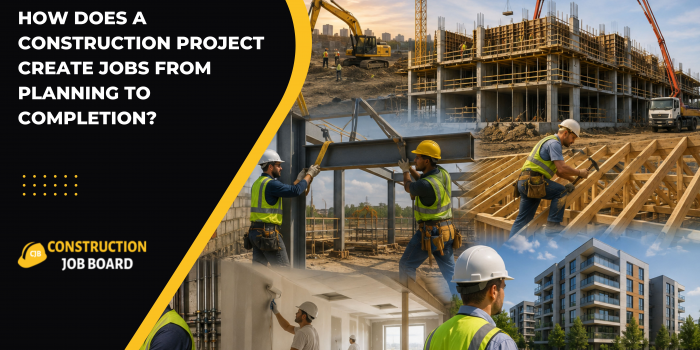
- Planning and design phase
- Site preparation phase
- Structural construction phase
- Mechanical and electrical installation phase
- Finishing and completion phase
Different occupational roles become active at different stages.
For example:
- Engineers and planners are more active during early phases
- Skilled trades dominate structural and finishing phases
- Supervisory roles remain active throughout the project lifecycle
This distribution ensures efficient project progression.
Employment Arrangements in Construction
Construction employment includes multiple employment formats.
Permanent Employment
Permanent roles include:
- Engineering staff
- Management roles
- Administrative positions
These roles support ongoing operations and long-term projects.
Contract-Based Employment
Contract roles are commonly used for:
- Skilled trades
- Specialist technicians
- Project-specific functions
These roles are typically linked to project duration.
Subcontractor Workforce
Subcontractors provide specialized services, including:
- Electrical installation
- Plumbing
- Structural steel installation
- Mechanical systems installation
Subcontracting allows projects to access specialized expertise.
Geographic Distribution of Construction Employment
Construction employment is distributed across:
- Urban development areas
- Infrastructure project locations
- Residential housing zones
- Industrial development regions
Major UK construction activity is commonly concentrated in:
- London
- South East England
- Midlands
- Northern England
- Scotland
Regional construction activity varies based on infrastructure development and economic investment.
Role Hierarchy Within Construction Projects
Construction workforce hierarchy typically includes:
Executive Level
- Project directors
- Senior project managers
Management Level
- Site managers
- Contracts managers
Technical Level
- Engineers
- Surveyors
- Technical specialists
Operational Level
- Skilled trades
- Equipment operators
Support Level
- Administrative staff
- Compliance personnel
This hierarchical structure supports project coordination.
Safety and Compliance Roles
Construction projects include dedicated safety and compliance personnel.
Examples include:
- Health and safety officers
- Compliance coordinators
- Risk assessment specialists
These roles ensure adherence to safety regulations and operational standards.
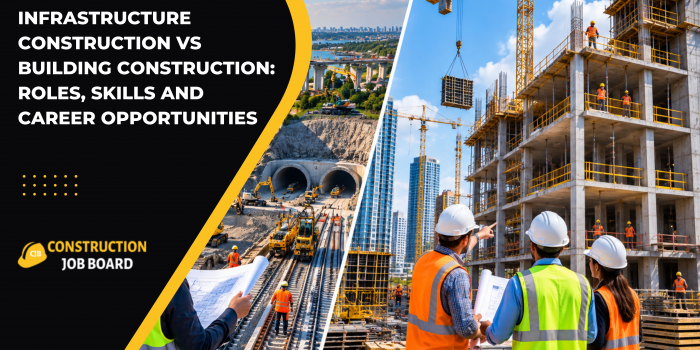
Infrastructure vs Residential Construction Employment
Construction employment may differ depending on project type.
Residential Construction
Focus areas include:
- Housing development
- Apartment construction
- Residential renovation
Typical roles include trades, supervisors, and site engineers.
Infrastructure Construction
Focus areas include:
- Roads and highways
- Rail systems
- Bridges
- Public infrastructure
These projects often involve larger technical and engineering teams.
Workforce Integration and Coordination
Construction projects involve coordination between multiple teams.
This includes interaction between:
- Engineers and trades
- Management and operational teams
- Contractors and subcontractors
- Planning and execution personnel
Effective coordination supports project completion.
Labour Market Significance
Construction employment contributes significantly to:
- Infrastructure development
- Housing supply
- Commercial development
- Public works implementation
The workforce supports both private and public sector projects.
Neutral Observations
This article provides a structural overview of construction employment in the UK. It does not provide career advice, employment recommendations, salary data, or application guidance. It focuses exclusively on workforce categories, occupational roles, and industry structure for informational purposes.
FAQs: Construction Employment in the UK
What types of jobs exist in construction in the UK?
Construction jobs include skilled trades, engineers, site managers, surveyors, equipment operators, and administrative support roles.
What are skilled trade roles in construction?
Skilled trade roles include carpenters, electricians, plumbers, bricklayers, and painters who perform hands-on construction work.
What do site managers do in construction?
Site managers oversee construction operations, coordinate teams, and ensure projects follow plans and safety standards.
What is the role of engineers in construction?
Engineers support structural design, technical planning, and implementation of construction systems.
How is construction employment structured?
Construction employment includes management, technical, operational, and administrative roles working together across project phases.
What types of employment arrangements exist in construction?
Employment arrangements include permanent roles, contract-based work, and subcontractor positions.