07/07/2026
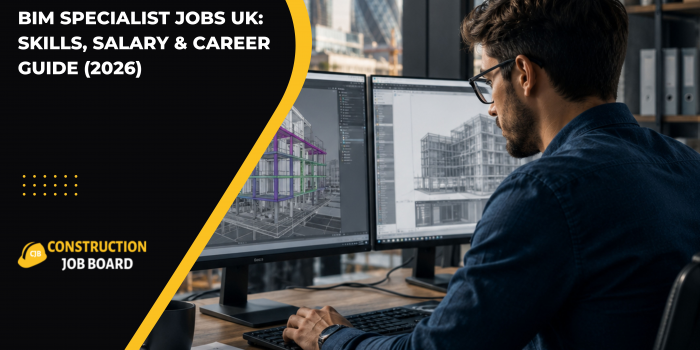
BIM Specialist Jobs UK: Skills, Salary & Career Guide
The UK construction industry is becoming more digital than ever before, and Building Information Modelling (BIM) is at the heart of this transformation. From major infrastructure developments to residential housing projects, organisations increasingly rely on BIM to improve collaboration, reduce costs, and deliver projects more efficiently. As a result, BIM Specialist jobs in the UK are growing rapidly, creating exciting opportunities for professionals with technical expertise and a passion for digital construction.
Whether you're a graduate exploring career options, an experienced CAD technician looking to specialise, or a construction professional interested in digital technologies, becoming a BIM Specialist can lead to a rewarding and future-proof career.
This guide explains what BIM Specialists do, the skills employers expect, qualifications you'll need, salary expectations, career progression, and the future of BIM careers in the UK.
What Is a BIM Specialist?
A BIM Specialist is responsible for creating, managing, and coordinating digital models used throughout the construction lifecycle. These models contain far more than 3D drawings—they include detailed information about building components, materials, costs, scheduling, sustainability, and maintenance.
Instead of relying solely on traditional blueprints, architects, engineers, contractors, and project managers work together using BIM software to ensure every stage of a project is accurately planned before construction begins.
Typical responsibilities include:
- Creating and maintaining BIM models
- Producing accurate construction documentation
- Coordinating architectural, structural, and MEP disciplines
- Detecting clashes before construction starts
- Managing project data within Common Data Environments (CDE)
- Supporting project teams throughout design and construction
- Ensuring BIM standards and company procedures are followed
As digital construction becomes standard across the UK, BIM Specialists have become essential members of multidisciplinary project teams.
Why Are BIM Specialists in High Demand?
The UK's construction sector is embracing digital technologies to improve productivity and reduce costly project delays. Government infrastructure programmes, commercial developments, healthcare facilities, transport projects, and residential housing schemes increasingly require BIM workflows.
Employers are looking for professionals who can manage digital information efficiently while improving collaboration across multiple disciplines.
Demand is particularly strong in sectors including:
- Commercial construction
- Residential developments
- Civil engineering
- Rail infrastructure
- Healthcare projects
- Education buildings
- Renewable energy developments
- Smart city projects
This growing demand means qualified BIM Specialists often enjoy competitive salaries and excellent long-term career prospects.
Essential Skills Every BIM Specialist Needs
Success as a BIM Specialist requires a combination of technical knowledge, construction expertise, and communication skills.
1. BIM Software Proficiency
Employers expect candidates to be comfortable using industry-leading software platforms.
Common software includes:
- Autodesk Revit
- AutoCAD
- Navisworks
- BIM 360
- ArchiCAD
- Tekla Structures
- Civil 3D
Revit remains one of the most requested skills in UK BIM job advertisements because it enables architects, engineers, and contractors to collaborate using intelligent building models.
Learning multiple BIM platforms significantly improves employability.
- Understanding Construction Processes
Software skills alone are not enough.
A BIM Specialist must understand how construction projects move from concept through design, procurement, construction, and facilities management.
Knowledge of the following areas is highly valuable:
- Building design principles
- Construction sequencing
- Building regulations
- Structural systems
- Mechanical and electrical services
- Project delivery methods
- Facilities management
This knowledge enables BIM professionals to create practical models that support real-world construction.
- Communication and Collaboration
Construction projects involve many stakeholders, including architects, structural engineers, contractors, quantity surveyors, and clients.
BIM Specialists regularly coordinate information between these teams, making communication one of the most important soft skills.
Employers look for candidates who can:
- Present technical information clearly
- Resolve design conflicts
- Work collaboratively
- Support project meetings
- Coordinate multidisciplinary teams
Strong interpersonal skills often separate senior BIM professionals from entry-level technicians.
- Data Management Skills
Modern BIM involves managing significant amounts of digital information.
Professionals should understand:
- Common Data Environments (CDE)
- Document control
- Data validation
- Information management
- Model coordination
- ISO 19650 standards
- Version control
BIM Specialist Salary Guide UK
One of the biggest attractions of a BIM career is its excellent earning potential. As organisations continue investing in digital construction technologies, experienced BIM professionals are becoming increasingly valuable.
Salaries vary depending on location, project complexity, industry sector, qualifications, and software expertise. Professionals working in London and the South East generally earn higher salaries due to larger commercial and infrastructure projects.
|
Job Role
|
Typical UK Salary
|
|
Junior BIM Technician
|
£28,000–£35,000
|
|
BIM Technician
|
£35,000–£45,000
|
|
BIM Coordinator
|
£45,000–£55,000
|
|
Senior BIM Coordinator
|
£55,000–£65,000
|
|
BIM Manager
|
£60,000–£80,000+
|
|
Digital Construction Manager
|
£80,000–£100,000+
|
Professionals with expertise in Revit, Navisworks, BIM 360, ISO 19650, and multidisciplinary project coordination often command higher salaries. Additional certifications and leadership experience can further increase earning potential.
Emerging Trends Shaping BIM Careers
BIM is evolving rapidly, and today's specialists are expected to keep pace with new technologies transforming the construction industry.
Digital Twins
Digital twins are virtual replicas of physical buildings and infrastructure. They use real-time data to monitor building performance, predict maintenance needs, and improve operational efficiency.
As more organisations adopt digital twins, BIM Specialists with experience in data integration and asset management will become increasingly valuable.
Artificial Intelligence (AI)
AI is beginning to automate repetitive BIM tasks, identify design clashes, optimise layouts, and improve project planning. Rather than replacing BIM professionals, AI enables them to work more efficiently by focusing on higher-value activities.
Professionals who understand AI-powered design tools and automation workflows will have a competitive advantage.
Modular and Offsite Construction
Prefabricated and modular construction methods rely heavily on accurate BIM models. Manufacturers require highly detailed digital information before components are produced offsite.
This trend is creating additional demand for BIM Specialists with experience in digital fabrication and design coordination.
Virtual and Augmented Reality
VR and AR technologies allow clients and construction teams to explore projects before construction begins.
These immersive visualisation tools improve communication, reduce design changes, and support better decision-making throughout project delivery.
Sustainable Construction
Net Zero targets are encouraging organisations to use BIM for energy analysis, carbon calculations, lifecycle assessments, and sustainable building design.
BIM professionals who understand environmental performance modelling are likely to see growing career opportunities.
How to Find BIM Specialist Jobs in the UK
Finding the right BIM role starts with building both your technical skills and your professional profile.
To improve your chances of securing interviews:
- Create a CV that highlights BIM software expertise and project experience.
- Build a portfolio showcasing Revit models, clash detection exercises, and construction documentation.
- Gain practical experience through internships, graduate programmes, or junior BIM roles.
- Keep your software skills updated as new BIM technologies emerge.
- Network with professionals through industry events and LinkedIn.
When applying for roles, tailor your CV to each vacancy and include measurable achievements, such as improving model accuracy, reducing clashes, or supporting successful project delivery.
Why Choose a Career as a BIM Specialist?
Few construction careers offer the same combination of technology, creativity, and long-term career growth as BIM.
Advantages include:
- High demand across the UK construction sector
- Competitive salaries
- Opportunities to work on landmark infrastructure and commercial projects
- Clear progression into management and leadership roles
- Exposure to cutting-edge technologies
- Transferable skills across architecture, engineering, and construction
- Strong future demand as digital construction continues to grow
Whether you're entering the construction industry or transitioning from CAD, architecture, or engineering, BIM offers a rewarding and future-focused career path.
Conclusion
Building Information Modelling has transformed the way construction projects are planned, designed, and delivered. As the UK's construction industry continues embracing digital technologies, BIM Specialists are becoming essential members of every project team.
By developing expertise in BIM software, understanding construction processes, and strengthening collaboration skills, you can build a successful career with excellent progression opportunities and competitive salaries.
If you're ready to take the next step, explore the latest BIM Specialist Jobs UK on ConstructionJobBoard.co.uk and discover opportunities with leading employers across architecture, engineering, and construction.
Frequently Asked Questions
1. What does a BIM Specialist do?
A BIM Specialist creates, manages, and coordinates digital building models that help architects, engineers, and contractors collaborate throughout a construction project.
2. What qualifications do I need to become a BIM Specialist?
Most employers prefer candidates with a degree in architecture, engineering, construction management, or architectural technology, alongside experience with BIM software such as Revit and Navisworks.
3. Which BIM software should I learn first?
Autodesk Revit is the most widely used BIM platform in the UK construction industry. Learning Revit first provides a strong foundation before expanding into Navisworks, AutoCAD, BIM 360, and Tekla Structures.
4. How much do BIM Specialists earn in the UK?
Salaries typically range from £28,000 for junior roles to £80,000 or more for experienced BIM Managers and Digital Construction Leaders, depending on location and experience.
5. Is BIM a good career in the UK?
Yes. BIM is one of the fastest-growing areas within construction, offering strong job demand, excellent salaries, and long-term career progression.
6. Can I become a BIM Specialist without an architecture degree?
Yes. Many professionals transition into BIM from civil engineering, structural engineering, CAD drafting, and construction management backgrounds, provided they develop strong BIM software skills.
7. What industries hire BIM Specialists?
BIM Specialists are employed across residential construction, commercial developments, infrastructure, rail, healthcare, education, energy, and facilities management.
8. Are BIM skills future-proof?
Yes. As digital construction, AI, digital twins, and sustainable building practices continue to expand, BIM skills are expected to remain highly valuable for years to come.