Construction Certifications That Employers Value Most in the UK (2026 Guide)
02/07/2026
Construction Certifications That Employers Value Most in the UK
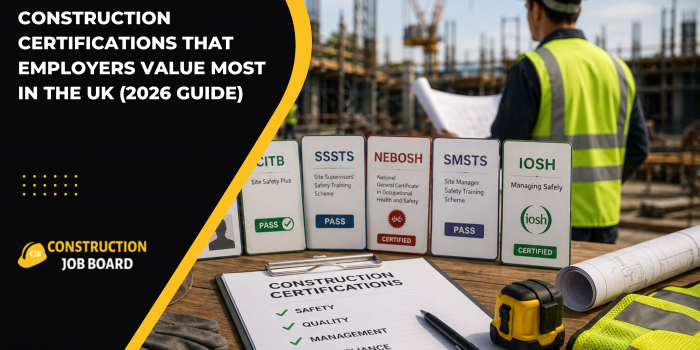
The UK construction industry continues to face skills shortages, increasing demand for qualified professionals across multiple trades and management roles. Construction Certifications have become one of the most important factors employers consider when hiring candidates. While experience remains valuable, recognised qualifications demonstrate that you have the knowledge, practical skills, and commitment needed to work safely and professionally on construction sites.
Whether you're starting your first construction job or aiming to progress into management, earning the right certifications can significantly improve your employability and earning potential. Many employers now actively prefer candidates who invest in continuous learning, as discussed in our guide on Why Continuous Learning Matters More Than Experience in Modern Construction. Certifications not only help you meet legal and safety requirements but also show recruiters that you're serious about building a long-term career.
In this guide, we'll explore the construction certifications employers value most in the UK, explain why they matter, and help you choose the right qualifications for your career goals.
Why Construction Certifications Matter
Construction today is very different from what it was a decade ago. Projects are becoming larger, technology is evolving, and health and safety regulations are becoming stricter.
Because of this, employers want workers who can demonstrate recognised industry standards.
Construction certifications help employers:
- Verify your skills
- Reduce workplace risks
- Meet legal compliance requirements
- Improve project quality
- Build stronger teams
- Increase client confidence
For job seekers, certifications often mean:
- Better job opportunities
- Higher salaries
- Faster promotions
- Access to larger construction projects
- Greater career security
In a competitive job market, qualifications can make the difference between being shortlisted for an interview or being overlooked.
- CSCS Card – The Essential Construction Qualification
For most construction workers in the UK, the Construction Skills Certification Scheme (CSCS) Card is the first qualification employers expect.
Although the card itself isn't legally required by law, many contractors and building sites require workers to hold the appropriate CSCS card before entering a site.
The CSCS card demonstrates that you:
- Understand health and safety
- Meet minimum competency standards
- Have relevant qualifications
- Can work safely on construction sites
There are different types of CSCS cards depending on your role, including:
- Labourer
- Skilled Worker
- Supervisor
- Manager
- Professionally Qualified Person
- Apprentice
Holding the correct CSCS card immediately improves your employment prospects.
- SMSTS (Site Management Safety Training Scheme)
For anyone planning to become a Site Manager, Project Manager, or Contracts Manager, SMSTS is one of the most respected certifications available.
The course focuses on:
- Site safety
- Risk assessments
- Legal responsibilities
- Environmental management
- Construction regulations
- Accident prevention
Many employers specifically ask for SMSTS certification when advertising senior site management positions.
If your goal is career progression, our Labourer to Site Manager: A Complete Career Roadmap explains how qualifications like SMSTS support long-term advancement.
- SSSTS (Site Supervisor Safety Training Scheme)
SSSTS is designed for professionals moving into supervisory positions.
Typical job roles include:
- Site Supervisor
- Team Leader
- Foreperson
- Working Supervisor
The course teaches supervisors how to:
- Manage site safety
- Monitor teams
- Identify hazards
- Conduct toolbox talks
- Meet legal obligations
For experienced tradespeople looking for promotion, SSSTS is often the logical next step.
- NVQ Construction Qualifications
National Vocational Qualifications (NVQs) remain one of the most recognised ways to demonstrate practical competence.
Unlike classroom-based learning, NVQs assess your ability to perform real work.
Popular NVQs include:
- Bricklaying
- Carpentry
- Plumbing
- Groundworks
- Roofing
- Painting and Decorating
- Site Supervision
- Construction Management
Many CSCS card applications require an appropriate NVQ qualification.
Employers appreciate NVQs because they confirm practical experience rather than simply theoretical knowledge.
- CPCS Card
The Construction Plant Competence Scheme (CPCS) is essential for workers operating heavy machinery.
It covers equipment such as:
- Excavators
- Dumpers
- Cranes
- Telehandlers
- Rollers
- Loading shovels
Operating construction machinery safely requires specialist training.
Employers rarely allow plant operators onto sites without recognised certification.
Because infrastructure projects continue to expand across the UK, CPCS-qualified workers remain in high demand.
- IPAF Certification
Many construction projects involve working at height.
IPAF (International Powered Access Federation) training teaches workers how to safely operate:
- Scissor lifts
- Boom lifts
- Mobile elevated work platforms (MEWPs)
Falls remain one of the leading causes of accidents within construction.
Having IPAF certification shows employers that you understand safe working practices while operating access equipment.
This qualification is particularly valuable for electricians, maintenance engineers, steelworkers, and installers.
- PASMA Certification
PASMA focuses on the safe assembly and use of mobile access towers.
Workers learn how to:
- Assemble towers safely
- Inspect equipment
- Reduce fall risks
- Follow safety regulations
Construction companies often request PASMA certification for projects involving temporary access platforms.
It complements IPAF training and further strengthens a candidate's safety credentials.
- First Aid at Work Certification
Although not every construction role requires first aid training, employers highly value candidates who can respond during emergencies.
A First Aid at Work qualification demonstrates that you can:
- Treat injuries
- Respond to accidents
- Perform CPR
- Manage emergency situations
Construction sites are high-risk environments, making trained first aiders an important part of any workforce.
Many employers view this certification as an additional advantage during recruitment.
9. Temporary Works Coordinator (TWC)
Temporary works are an essential part of many construction projects, covering structures or systems needed during the construction process, such as scaffolding, formwork, falsework, excavation supports, and temporary bridges.
A Temporary Works Coordinator (TWC) certification equips professionals with the knowledge to safely plan, manage, and supervise temporary works.
The course typically covers:
- Legal responsibilities
- Risk management
- Planning and coordination
- Inspection procedures
- Communication with contractors
- Compliance with industry standards
Large contractors often prefer Site Managers and Project Managers who understand temporary works because it helps reduce risks and improve project efficiency.
- NEBOSH Health and Safety Certification
Health and safety remain top priorities across the UK construction industry. Employers increasingly value candidates who hold a NEBOSH Construction Certificate, particularly for supervisory and management positions.
This internationally recognised qualification focuses on:
- Health and safety legislation
- Hazard identification
- Risk assessment
- Incident investigation
- Safe systems of work
- Workplace safety culture
Holding a NEBOSH qualification can open doors to roles such as:
- Health and Safety Advisor
- Site Manager
- Project Manager
- Construction Safety Officer
For professionals aiming to move into leadership, NEBOSH is often seen as a valuable investment.
- Retrofit Qualifications – Preparing for the Future
One of the fastest-growing areas in UK construction is retrofit and energy-efficient building upgrades. As the country works towards improving the performance of existing buildings, employers are increasingly looking for professionals with retrofit-related qualifications.
Popular retrofit qualifications include:
- Retrofit Assessor
- Retrofit Coordinator
- Retrofit Designer
- Domestic Energy Assessor
- PAS 2035 training
These certifications prepare professionals to work on projects involving:
- Home insulation
- Heat pump installation
- Energy-efficient upgrades
- Sustainable building improvements
- Carbon reduction initiatives
If you're interested in emerging career opportunities, our article Why Retrofit Construction Is Creating Thousands of Jobs explores why retrofit is becoming one of the most promising sectors in construction.
Which Construction Certifications Can Increase Your Salary?
While no certification guarantees a higher salary on its own, combining recognised qualifications with practical experience can significantly improve your earning potential.
Generally, professionals with certifications such as SMSTS, NEBOSH, CPCS, or specialist retrofit qualifications are more competitive for higher-paying roles.
Certifications can also help you progress into supervisory and management positions, where salaries are typically higher than entry-level trade roles.
More importantly, they demonstrate professionalism and a willingness to develop your skills—qualities employers consistently value.
How to Choose the Right Certification
Not every qualification is suitable for every career path. The right certification depends on your current role and your long-term goals.
If you're starting your construction career
Consider:
- CSCS Card
- First Aid at Work
- NVQ Level 2
These provide a strong foundation for entering the industry.
If you're an experienced tradesperson
You may benefit from:
- SSSTS
- CPCS
- IPAF
- PASMA
These qualifications can support career progression and increase your responsibilities on site.
If you want to become a manager
Focus on:
- SMSTS
- NEBOSH
- NVQ Level 6
- Temporary Works Coordinator
These certifications are commonly requested for leadership roles.
If you're interested in future construction careers
Explore:
- Retrofit qualifications
- Digital construction training
- BIM-related certifications
- Sustainability courses
These areas are expected to grow as the industry continues to evolve.
Why Employers Prefer Candidates Who Keep Learning
Construction is changing rapidly due to advances in technology, sustainability, and safety regulations. Employers understand that successful professionals are those who continue developing their knowledge throughout their careers.
Holding recent certifications shows that you are committed to staying up to date with industry standards.
This is one of the reasons why continuous professional development is becoming increasingly important. As explained in our guide Why Continuous Learning Matters More Than Experience in Modern Construction, learning new skills helps workers remain competitive in an evolving job market.
Similarly, professionals aiming for leadership positions can benefit from reading The Career Decisions That Separate Site Managers from Project Directors, which explores the skills and decisions that support long-term career growth.
Final Thoughts
Construction certifications are more than just qualifications—they are evidence of your commitment to safety, professionalism, and career development. Whether you're entering the industry, progressing into management, or specialising in emerging areas like retrofit, the right certifications can improve your confidence and make you a stronger candidate in a competitive job market.
While practical experience remains invaluable, combining it with recognised qualifications can open doors to better opportunities, higher salaries, and greater career stability.
The construction industry is evolving, and employers increasingly value workers who invest in their skills. By choosing certifications that align with your career goals and staying committed to continuous learning, you'll be better prepared for both today's opportunities and the future of construction.
Frequently Asked Questions (FAQs)
1. Which construction certification is most important in the UK?
The CSCS Card is one of the most widely recognised certifications and is required by many employers before workers can access construction sites.
2. Do construction certifications help you get a job?
Yes. Certifications demonstrate your skills, improve workplace safety, and make you more competitive when applying for construction jobs.
3. Is SMSTS worth getting?
If you're aiming for a Site Manager or Project Manager role, SMSTS is highly respected and often requested by employers.
4. What qualifications do plant operators need?
Most employers expect plant operators to hold the appropriate CPCS certification for the machinery they operate.
5. Are retrofit qualifications becoming more valuable?
Yes. As energy-efficient building upgrades continue to grow across the UK, retrofit qualifications are becoming increasingly valuable for construction professionals.
6. Should experienced construction workers continue earning new certifications?
Absolutely. Continuous learning helps workers adapt to new technologies, regulations, and industry demands, improving both employability and career progression.