What Does a Fire Stopping Installer Do? Skills, Training and UK Construction Career Opportunities
25/11/2026
What Does a Fire Stopping Installer Do? Skills, Training and UK Construction Career Opportunities
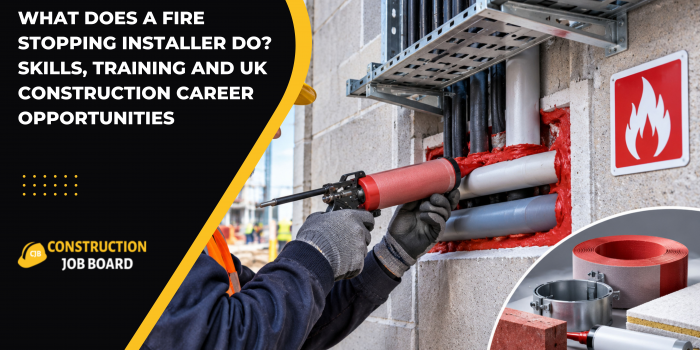
A Fire Stopping Installer installs specialist materials and systems designed to maintain the fire resistance of walls, floors and other building elements. In the UK construction industry, fire stopping is an important part of passive fire protection because it helps prevent fire and smoke from spreading through openings, joints and service penetrations.
Fire Stopping Installer jobs in the UK can involve new-build construction, building refurbishment, residential developments, commercial properties and fire safety improvement projects. The work requires practical installation skills, attention to detail and an understanding of approved installation methods.
For people interested in specialist construction careers, fire stopping offers a technical route that combines building knowledge, installation work and safety awareness.
What Are the Main Responsibilities of a Fire Stopping Installer?
Fire Stopping Installers work with passive fire protection materials and systems to maintain the required fire resistance of building components.
Typical responsibilities include:
- Installing fire-resistant materials around service penetrations.
- Sealing openings around electrical cables and pipework.
- Installing specified cavity barriers.
- Applying approved fire-resistant sealants and products.
- Installing fire-resistant materials around building joints.
- Following approved installation details.
- Checking product compatibility and installation requirements.
- Recording completed installations.
- Reporting damaged materials or unsuitable site conditions.
- Coordinating with other construction trades.
For example, electrical cables and plumbing services may pass through a fire-resisting wall. The opening around the services may require a tested and specified fire-stopping arrangement.
The installer must follow the relevant system details rather than selecting products or installation methods based only on appearance.
Why Is Fire Stopping Important in Construction?
Modern buildings contain many service installations, including electrical cables, heating systems, ventilation equipment and plumbing.
These services can create openings through walls and floors that are designed to provide fire resistance.
If the openings are not correctly protected, they may create routes through which fire and smoke can spread.
Fire stopping forms part of passive fire protection alongside other building components, such as fire-resistant walls, floors, doors and cavity barriers.
Correct installation is important because even a suitable product may not perform as intended if it is installed incorrectly or used outside its tested application.
What Types of Fire Stopping Work Are Available?
Fire stopping involves several types of installation activities.
Service penetration sealing: Protecting openings where cables, pipes and other services pass through fire-resisting walls and floors.
Cavity barriers: Installing specified barriers within concealed spaces to restrict the spread of fire.
Linear joint sealing: Protecting joints between building components using appropriate fire-resistant systems.
Fire-resistant sealants: Applying approved products in accordance with the relevant installation details.
Fire protection remedial work: Identifying and correcting unsuitable or damaged fire-stopping installations through an approved process.
The products and installation methods vary according to the construction details, fire strategy and manufacturer's technical information.
What Skills Does a Fire Stopping Installer Need?
Employers commonly look for a combination of practical ability and technical awareness.
Product knowledge: Understanding different passive fire protection materials and their intended applications.
Installation accuracy: Measuring, preparing and applying materials according to approved details.
Technical drawing interpretation: Understanding installation drawings, specifications and system documentation.
Attention to detail: Identifying gaps, incorrect installations and unsuitable materials.
Safety awareness: Following site safety procedures and working within training and competence.
Record keeping: Maintaining accurate installation records and photographic evidence where required.
Teamwork: Coordinating with electricians, plumbers, dryliners, mechanical contractors and other site professionals.
What Training or Qualifications Are Needed in the UK?
There is no single qualification that automatically covers every type of fire stopping work.
Entry routes may include:
- Employer-provided installation training.
- Specialist passive fire protection training.
- Relevant construction vocational qualifications.
- Supervised practical experience.
- Competence assessment appropriate to the work.
- Additional product or system-specific training.
Employers may also look for recognised third-party certification or evidence that installers have been assessed as competent for the relevant activities.
The Association for Specialist Fire Protection provides an industry competence framework covering passive fire protection activities.
Training alone does not necessarily prove practical competence. Candidates should understand the knowledge, skills, experience and assessment required for the work they intend to undertake.
A CSCS card or site-access credential may be requested by an employer, but it should not be treated as automatic proof of fire-stopping installation competence.
Where Do Fire Stopping Installers Work?
Fire Stopping Installers can work across several construction environments.
Residential construction: New housing developments, apartment buildings and residential refurbishment projects.
Commercial construction: Offices, retail buildings, hotels and commercial facilities.
Healthcare and education: Hospitals, schools and other public buildings requiring suitable passive fire protection arrangements.
Industrial construction: Factories, warehouses and industrial facilities.
Building refurbishment: Existing buildings undergoing fire safety improvements, alterations and service upgrades.
Some roles involve travelling between several sites, while others are based on a large construction or refurbishment project.
What Is the Difference Between a Fire Stopping Installer and a Fire Safety Engineer?
A Fire Stopping Installer carries out specified installation work involving passive fire protection materials and systems.
A Fire Safety Engineer generally undertakes broader technical work relating to fire safety design, risk assessment and building fire strategies, depending on their professional competence and appointment.
Both roles contribute to building fire safety, but they involve different levels of technical responsibility and professional expertise.
What Career Progression Is Available?
With suitable experience and further training, Fire Stopping Installers may progress into:
- Senior Fire Stopping Installer.
- Passive Fire Protection Supervisor.
- Fire Stopping Inspector.
- Passive Fire Protection Quality Manager.
- Fire Protection Project Coordinator.
- Specialist Installation Manager.
Progression depends on technical competence, experience, additional training and the responsibilities of the employer.
How Can You Prepare Your CV for Fire Stopping Installer Jobs?
Your CV should demonstrate practical experience and the types of passive fire protection work you are qualified to undertake.
Include:
- Experience with fire-stopping products and systems.
- Types of service penetrations completed.
- Experience installing cavity barriers or linear seals.
- Relevant training and competence assessments.
- Knowledge of manufacturer installation instructions.
- Experience interpreting drawings and specifications.
- Quality inspection and photographic records.
- Relevant site credentials.
- Project types and working environments.
Do not claim competence with systems or products you have not been trained and assessed to install.
You can explore relevant Construction Jobs in the UK through Construction Job Board UK.
For specialist technical guidance, refer to the Association for Specialist Fire Protection's competence framework.
Key Takeaways
- Fire Stopping Installers work with passive fire protection systems.
- Their work helps maintain the fire resistance of building elements.
- Accurate installation and product compatibility are essential.
- Training and competence requirements depend on the installation activities.
- Career progression may lead to supervisory, inspection and specialist management roles.
Frequently Asked Questions
- What does a Fire Stopping Installer do?
A Fire Stopping Installer installs specified passive fire protection systems around service penetrations, joints and other building openings to help maintain the fire resistance of building elements.
- Do you need qualifications to become a Fire Stopping Installer?
Requirements vary. Employers may request specialist training, supervised experience and appropriate evidence of competence for the installation work.
- Is fire stopping part of passive fire protection?
Yes. Fire stopping is an important element of passive fire protection because it helps maintain fire-resistant barriers around openings and joints.
- Can a general construction worker become a Fire Stopping Installer?
Potentially. Construction workers may move into the specialism through relevant training, supervised experience and appropriate competence assessment.
- What career progression is available for Fire Stopping Installers?
Possible progression includes senior installation work, passive fire protection supervision, inspection, quality management and specialist project coordination.