01/10/2026
Construction Apprenticeship vs Skills Bootcamp: Which Route Leads to Construction Careers?
Choosing how to enter the construction industry can be difficult, particularly when there are several training routes available. Construction apprenticeship vs Skills Bootcamp is an increasingly useful comparison for people deciding between structured workplace training and a shorter, skills-focused programme.
An apprenticeship generally combines employment, practical experience and structured learning over a longer period. A Skills Bootcamp is typically designed to develop specific skills within a shorter, more intensive training format. The right route depends on the learner's career goals, existing experience, preferred learning style and the type of construction role they want to pursue.
What is the difference between a construction apprenticeship and a Skills Bootcamp?
A construction apprenticeship normally involves learning while working in a real construction environment. Apprentices develop occupational skills alongside formal training and gain experience that can support longer-term career progression.
A Skills Bootcamp is generally more focused on developing particular job-related skills within a shorter training programme. It may be suitable for people who want to build new capabilities, change career direction or strengthen existing skills.
The main difference is therefore the structure and purpose of the training.
|
Area
|
Construction Apprenticeship
|
Skills Bootcamp
|
|
Training style
|
Work-based learning plus structured study
|
Intensive skills-focused learning
|
|
Typical approach
|
Longer-term development
|
Shorter-term development
|
|
Practical experience
|
Built into the employment route
|
Depends on the programme
|
|
Suitable for
|
New entrants and developing workers
|
New entrants, career changers and existing workers
|
|
Main focus
|
Occupational development
|
Targeted skills
|
|
Employment connection
|
Usually closely connected to an employer
|
May support progression into employment
|
|
Career development
|
Can provide a structured long-term pathway
|
Can provide targeted skills for a specific role
|
How does a construction apprenticeship work?
A construction apprenticeship combines employment with training.
Instead of learning only in a classroom, an apprentice develops practical experience while carrying out real work under appropriate supervision.
Depending on the occupation, an apprenticeship can provide exposure to areas such as:
- Site operations
- Construction methods
- Health and safety
- Materials and equipment
- Technical processes
- Quality procedures
- Planning and coordination
- Digital construction tools
- Trade-specific skills
This approach can be particularly useful for people who prefer learning by doing.
Construction apprenticeships can also cover a wide range of occupations, from skilled trades through to technical, supervisory and professional pathways.
What is a construction Skills Bootcamp?
A Skills Bootcamp is generally a short, intensive training programme designed around specific employment or occupational skills.
For construction candidates, the subject matter can vary depending on the programme and provider. Training may focus on areas such as:
- Digital construction
- Construction management
- Technical skills
- Site-related skills
- Sustainability
- Building information modelling
- Project-related skills
- Specialist construction occupations
The key feature is targeted learning rather than a long-term apprenticeship structure.
For someone who already has experience in construction, this type of training can be useful for developing an additional skill without committing to a lengthy training pathway.
Which route is better for someone new to construction?
There is no single route that suits every new entrant.
An apprenticeship can be useful for someone who wants to develop a construction occupation through sustained workplace experience. It provides an opportunity to learn how construction projects operate while developing occupational competence.
A Skills Bootcamp may be useful when the objective is to gain specific skills relatively quickly.
For example, someone considering a career in a digital construction environment may want targeted training in a particular technology or skill area rather than beginning a longer occupational pathway.
The important question is not simply which programme is shorter. It is which type of learning matches the career objective.
Which route provides more practical construction experience?
The answer depends on the programme, but apprenticeships are specifically structured around work-based learning.
An apprentice normally gains experience within a working environment while developing their occupational knowledge and skills.
Skills Bootcamps can also contain practical learning, but the amount and type of workplace exposure varies between programmes.
Candidates comparing programmes should therefore look beyond the course title and check:
- How much practical learning is included?
- Is workplace experience provided?
- What equipment or software will be used?
- Who delivers the training?
- What skills are assessed?
- What progression opportunities are available?
- Is there an employer connection?
These questions can make the comparison more meaningful than simply looking at course duration.
Can Skills Bootcamps help people change careers into construction?
They can be relevant to career changers because their shorter, targeted structure may allow learners to focus on particular skills.
Someone moving from another industry may already have transferable abilities such as:
- Project coordination
- Communication
- Commercial awareness
- Data analysis
- Leadership
- Problem solving
- Customer management
- Digital skills
A targeted construction training programme can help bridge the gap between those existing capabilities and construction-specific knowledge.
However, the suitability of a Skills Bootcamp depends on the role. Some construction occupations require substantial practical experience, formal qualifications or industry-specific competence that cannot be developed through a short programme alone.
What skills can construction apprentices develop?
Apprenticeships can provide a combination of technical, practical and workplace skills.
Depending on the occupation, these may include:
Technical construction skills
Apprentices can learn how materials, tools, equipment and construction processes are used within their chosen occupation.
Health and safety
Understanding safe working practices is fundamental across construction occupations.
Communication
Construction projects involve interaction between trades, supervisors, contractors, consultants, clients and other stakeholders.
Teamwork
Site work requires professionals to coordinate activities and understand how individual tasks contribute to wider project delivery.
Problem solving
Construction environments can change quickly. Workers may need to respond to technical, logistical or operational issues.
Digital skills
Modern construction increasingly uses digital tools for design, planning, reporting, documentation and project coordination.
What skills can Skills Bootcamps provide?
Skills Bootcamps are generally focused on a defined skills gap or occupational requirement.
A construction-focused programme could potentially help learners develop skills in areas such as:
- Digital construction
- BIM
- Construction technology
- Project coordination
- Sustainability
- Technical processes
- Management
- Specialist construction activities
The exact content depends on the programme, so candidates should examine the curriculum before enrolling.
Which route is more suitable for experienced construction workers?
For an experienced worker, a Skills Bootcamp may be attractive when the objective is to add a specific capability.
For example, a construction professional with strong site experience may want to develop digital skills, sustainability knowledge or another specialist capability.
An apprenticeship can still be relevant when someone wants to retrain into a different occupation, particularly where a recognised occupational pathway is required.
The decision should therefore be based on the skill gap rather than simply the learner's age or existing job title.
How do construction employers view apprenticeships and Skills Bootcamps?
Employers can value both routes, but they address different development needs.
An apprenticeship can demonstrate structured occupational development combined with workplace experience.
A Skills Bootcamp can demonstrate recent training in a specific area.
When applying for construction jobs, candidates should explain what they actually learned rather than simply listing the programme name.
For example, instead of writing:
Completed construction training.
A CV could explain the specific capabilities developed, such as:
Developed practical knowledge of digital construction workflows, project documentation and construction technology.
This gives recruiters more useful information about the candidate's skills.
Are digital skills becoming important in construction training?
Digital skills are increasingly relevant across construction occupations.
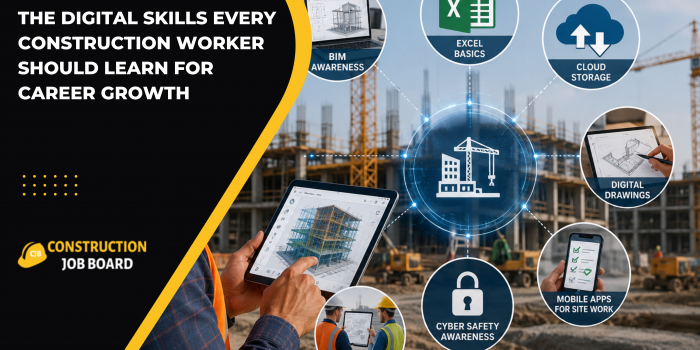
Construction projects can involve technologies such as:
- BIM
- Digital drawings
- Cloud-based project platforms
- Digital site reporting
- Drones and surveying technology
- Construction planning software
- Data dashboards
- Digital quality management
- AI-assisted tools
This does not mean every construction worker needs advanced technical knowledge.
The appropriate level of digital capability depends on the occupation. However, understanding the technology used in a particular construction environment can strengthen a candidate's employability.
How should candidates choose between an apprenticeship and Skills Bootcamp?
Candidates can compare the two routes by considering five questions.
1. What role do you want?
Identify the specific occupation first.
A person interested in becoming a skilled tradesperson may need a different training pathway from someone targeting construction management, digital construction or sustainability.
2. How much experience do you already have?
Someone entering construction for the first time may benefit from structured workplace development.
Someone already working in the sector may need targeted upskilling instead.
3. Do you need a longer training pathway?
If the target occupation requires substantial occupational development, an apprenticeship may provide a more suitable structure.
4. Are you trying to develop one specific skill?
If the objective is targeted upskilling, a Skills Bootcamp may be worth investigating.
5. What progression does the programme provide?
Candidates should check what happens after training.
Consider whether the programme provides:
- A recognised qualification
- Practical experience
- Employer connections
- Further training opportunities
- Progression into employment
- Skills relevant to current vacancies
Can apprenticeships and Skills Bootcamps both support construction careers?
Yes. They can support different stages and types of career development.
An apprenticeship can provide a structured route into an occupation, while a Skills Bootcamp can provide focused training for people who need particular skills.
They should not necessarily be viewed as competing alternatives.
A construction professional could potentially complete an apprenticeship earlier in their career and later undertake shorter specialist training as their role develops.
This reflects an important change in construction careers: learning does not necessarily stop after the first qualification.
What does this mean for construction job seekers?
Job seekers should consider training as part of a wider career strategy.
A qualification or training programme is most useful when it connects to a clear occupational goal.
For example:
Construction apprentice → skilled worker → experienced worker → supervisor
or:
Existing construction worker → specialist training → additional technical skills → new role
The pathway will vary according to occupation, experience and employer requirements.
Candidates should also make sure their CV clearly connects training to practical capabilities.
How should construction training be presented on a CV?
Training should be presented alongside evidence of what was learned and how it can be applied.
A useful CV structure could include:
Training: Construction Skills Programme
Skills developed: Site safety, construction methods, digital reporting and project documentation
Practical application: Used digital reporting processes during construction project activities
This approach gives employers more context than a list of course names.
For apprentices, it can also be useful to describe the balance between formal learning and practical workplace experience.
Key Takeaways
- A construction apprenticeship combines workplace experience with structured learning.
- Skills Bootcamps generally focus on targeted skills within a shorter training format.
- Apprenticeships can suit people developing an occupation from the beginning.
- Skills Bootcamps can be relevant to targeted upskilling and career changes.
- Practical experience can be particularly important when entering construction.
- Digital, sustainability and technology skills are increasingly relevant across construction roles.
- Candidates should compare programmes based on skills, experience, progression and employer relevance.
- Training should be connected to a specific construction career objective.
- Both routes can form part of a longer-term construction career development strategy.
FAQs
Is a construction apprenticeship better than a Skills Bootcamp?
They serve different purposes. An apprenticeship generally provides longer-term work-based occupational development, while a Skills Bootcamp focuses on targeted skills over a shorter training period.
Can I use a Skills Bootcamp to start a construction career?
A Skills Bootcamp may support entry into construction depending on the programme and occupation. Candidates should check the skills covered, practical experience and progression opportunities before choosing a programme.
Do construction apprentices get practical experience?
Yes. Work-based experience is a central part of apprenticeship training, although the exact duties and experience depend on the occupation and employer.
Are Skills Bootcamps useful for experienced construction workers?
They can be useful for targeted upskilling, particularly when an experienced worker wants to develop a specific technical, digital, management or specialist construction capability.
Which construction training route should I choose?
The choice depends on your target role, current experience, preferred learning style, required qualifications and the type of skills you need to develop. Comparing the actual content and progression opportunities of individual programmes is important.
Conclusion
The choice between a construction apprenticeship vs Skills Bootcamp depends largely on the learner's starting point and career objective.
An apprenticeship can provide a structured combination of employment, practical experience and learning, making it relevant to people developing an occupation over time. A Skills Bootcamp can provide focused training for people looking to develop particular capabilities or move towards a new career direction.
For construction job seekers, the most useful approach is to identify the target occupation first and then choose the training route that develops the skills, experience and qualifications associated with that role.