31/08/2026
Is Construction a Good Career in the UK? What the Industry Really Offers Beyond a Building Site
Is construction a good career in the UK?
For many people, the answer may be yes — but not necessarily for the reasons they expect.
Construction is still associated with hard hats, building sites, physical labour and working outdoors. Those jobs certainly exist, but they represent only one part of a much broader industry.
Modern construction needs engineers, quantity surveyors, architects, planners, project managers, estimators, digital specialists, sustainability professionals, skilled trades and many other roles.
That breadth matters at a time when the UK construction industry is expected to need thousands of additional workers over the coming years.
CITB's latest Construction Workforce Outlook forecasts the UK construction workforce to reach approximately 2.68 million by 2030, compared with around 2.61 million in 2025. It estimates that an average of 41,200 additional workers will be needed every year between 2026 and 2030, including workers needed to replace people leaving the industry.
So the more useful question is not simply whether construction is a good career.
It is:
Which construction career could be right for you?
Why is construction considered a good career in the UK?
Construction offers something that many careers struggle to provide: a visible connection between your work and the finished result.
A construction professional might help:
- Build a home
- Design a school
- Deliver a hospital
- Construct a railway
- Develop commercial buildings
- Upgrade existing buildings
- Improve energy efficiency
- Deliver infrastructure
- Manage major engineering projects
That sense of purpose can be important.
CITB research into career choices found that construction can offer meaningful work, clear progression pathways and a wide variety of roles, although many people outside the industry remain unaware of its full range of opportunities.
The industry also offers different routes into employment.
University is one option.
But it is not the only one.
People can enter construction through:
- Apprenticeships
- College courses
- Technical qualifications
- Graduate programmes
- Entry-level jobs
- Employer training
- Career changes
- Specialist certifications
That flexibility is one of construction's biggest advantages.
Is construction only for people who enjoy physical work?
No.
This is one of the biggest misconceptions about construction.
Some construction careers are highly physical.
Bricklayers, carpenters, roofers, groundworkers and other trades may spend much of their working day on site.
But other roles can involve very different types of work.
For example, a quantity surveyor may spend significant time working with costs, contracts and commercial information.
A BIM professional may work extensively with digital models.
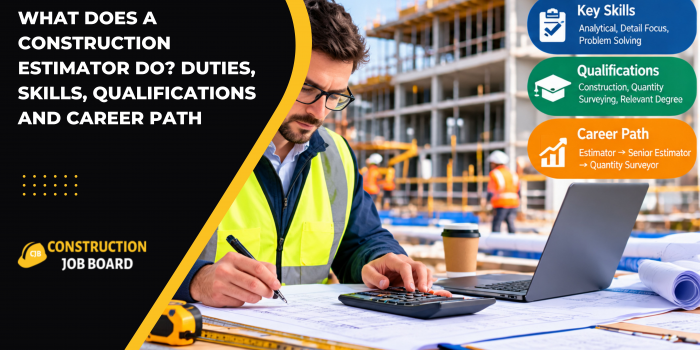
An estimator may analyse drawings, quantities and project requirements.
A civil engineer may combine design, calculations, site visits and project coordination.
A project manager may spend much of the day coordinating people, programmes, budgets and risks.
The Federation of Master Builders highlights the breadth of construction careers, including trades, estimating, quantity surveying, building surveying, civil engineering, CAD, BIM, project management, sustainability, administration, finance and marketing.
So if someone says:
“I don't want to work on a building site, so construction isn't for me.”
They may be ruling out an entire industry without realising how many different careers it contains.
What types of careers are available in construction?
Construction can broadly be divided into several career areas.
Skilled trades
These include:
- Bricklayers
- Carpenters
- Electricians
- Plumbers
- Roofers
- Plasterers
- Painters and decorators
- Groundworkers
- Steelworkers
- Plant operators
These roles are essential to physically delivering construction projects.
Engineering
Engineering careers can include:
- Civil engineers
- Structural engineers
- Site engineers
- Mechanical engineers
- Electrical engineers
- Infrastructure engineers
These professionals help turn designs and technical requirements into buildable projects.
Commercial roles
Commercial construction careers include:
- Quantity surveyors
- Estimators
- Commercial managers
- Procurement specialists
- Contract managers
These roles focus heavily on costs, contracts, procurement and financial control.
Project and site management
This area includes:
- Site managers
- Project managers
- Construction managers
- Contracts managers
- Planners
- Supervisors
These professionals help coordinate the people, resources, schedules and processes required to deliver projects.
Design and digital construction
Construction increasingly needs people working in:
- Architecture
- Architectural technology
- CAD
- BIM
- Digital construction
- Building surveying
- Design coordination
Sustainability and environmental roles
As the built environment focuses more heavily on energy efficiency and environmental performance, opportunities are developing around:
- Retrofit
- Sustainability
- Energy efficiency
- Environmental management
- Low-carbon construction
This variety means there is no single definition of a “construction worker”.
Can you build a construction career without going to university?
Yes.
One of the biggest advantages of construction is the range of entry routes.
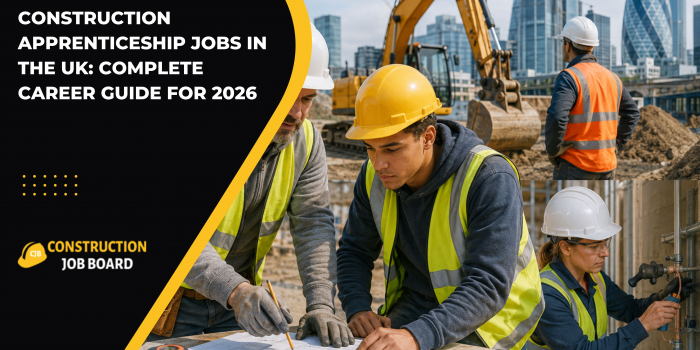
Apprenticeships are particularly important because they combine practical experience with structured learning.
CITB reported that its New Entrant Support Team supported 5,913 apprentices to enter construction during the 2025–26 financial year, an increase of 43% from the previous year. It also engaged with more than 20,000 employers about apprenticeship recruitment.
This reflects a wider effort to create more accessible routes into construction.
The government has also highlighted apprenticeships and technical pathways as important ways of developing the workforce needed for construction, including for housing, retrofit and infrastructure.
For someone who prefers learning through practical experience rather than spending several years in full-time university education, construction can therefore be an attractive option.
Are construction apprenticeships a good way to start a career?
For many people, yes.
An apprenticeship can allow someone to develop practical skills while gaining workplace experience.
Instead of learning everything in a classroom before entering employment, apprentices can experience the working environment while developing their qualifications.
That can help build:
- Technical competence
- Workplace confidence
- Communication skills
- Health and safety awareness
- Problem-solving ability
- Industry contacts
- Practical experience
Construction apprenticeships can also lead to long-term progression.
A person could potentially begin as an apprentice and later move into skilled employment, supervision, management or technical specialisation.
The important point is that an apprenticeship should not be viewed as a lesser alternative to university.
For certain construction careers, it can be a highly relevant route into the profession.
Can construction offer good career progression?
Yes, although progression depends on the occupation, employer, qualifications and individual performance.
One of construction's strengths is that there can be several different directions to move in.
A skilled tradesperson might progress towards:
Apprentice → Skilled Worker → Senior Skilled Worker → Supervisor → Site Manager
A quantity surveying career could develop through:
Trainee → Assistant Quantity Surveyor → Quantity Surveyor → Senior Quantity Surveyor → Commercial Manager
A site engineering pathway could develop through:
Graduate/Assistant Engineer → Site Engineer → Senior Engineer → Project Engineer → Project Manager
These are examples rather than guaranteed career paths.
However, they demonstrate an important point:
Construction does not have to be a short-term job. It can be a long-term profession.
CITB specifically identifies progression pathways as one of the strengths that can make construction attractive to potential entrants.
Is there job security in construction?
Construction can offer strong long-term employment prospects, but it is important not to describe any industry as completely recession-proof.
Construction is influenced by:
- Economic growth
- Interest rates
- Housing demand
- Infrastructure investment
- Government policy
- Commercial development
- Materials costs
- Business confidence
Therefore, individual projects can be delayed or cancelled.
However, the UK's underlying need for buildings and infrastructure does not disappear.
Homes still need to be built.
Existing buildings still need maintenance.
Infrastructure still needs investment.
Buildings increasingly need to be upgraded for energy efficiency.
This creates ongoing demand for construction skills.
CITB's current outlook expects UK construction output to grow over the 2026–2030 period after a weaker short-term period, with particularly strong average annual growth forecast for public new housing, infrastructure and private new housing.
Why could construction skills remain in demand?
The workforce itself is part of the reason.
The industry has to replace people leaving the workforce while also supporting additional construction activity.
CITB estimates that 41,200 additional workers per year will be required on average between 2026 and 2030.
That figure includes more than simple industry expansion.
Workers leave through:
- Retirement
- Career changes
- Relocation
- Attrition
- Other employment
Those workers have to be replaced.
This creates a continuing need for new entrants and people willing to develop specialist skills.
Does construction offer opportunities for career changers?
Yes.
Construction is not only for school leavers.
Someone already working in another industry may have transferable skills that are useful in construction.
For example:
A person with financial experience could explore commercial construction roles.
Someone with strong organisational skills could consider project coordination.
A person with engineering experience may be able to transition into construction-related engineering.
Someone with digital skills could explore BIM or digital construction.
A sales professional could potentially move into construction business development.
A facilities professional could explore building or property-related careers.
Career changers may need additional qualifications or sector experience, but construction can provide pathways beyond traditional entry routes.
CITB's recruitment research specifically identifies career changers as part of the opportunity for expanding the industry's talent pool.
Is construction a good career for people who want to earn while they learn?
It can be.
This is particularly relevant to apprenticeships.
Rather than following a purely academic route before entering employment, apprentices can develop skills while working.
The appeal of this model has become more visible as young people and parents consider alternatives to traditional university pathways.
The Construction Industry Council reported in 2026 that 42% of surveyed parents of 16–24-year-olds said they would prefer their child to “earn while they learn”, while 75% said they would support their child working in construction.
This does not mean apprenticeships are automatically better than university.
It means young people now have more than one credible route into a professional career.
Can construction lead to professional careers?
Absolutely.
Construction includes many professionally regulated or highly technical occupations.
Examples include:
- Civil engineering
- Structural engineering
- Quantity surveying
- Building surveying
- Architecture
- Project management
- Construction management
- Planning
- Commercial management
Some of these careers involve university degrees or professional qualifications.
Others have alternative technical pathways.
This makes construction unusual because the same industry can accommodate someone who wants highly practical work and someone who prefers technical, analytical or managerial work.
Is construction becoming more digital?
Yes.
Digitalisation is changing how construction projects are designed, managed and delivered.
Professionals increasingly encounter:
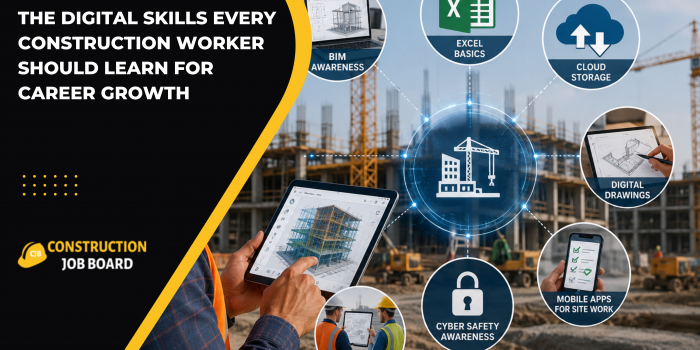
- BIM
- Digital twins
- 3D modelling
- CAD
- Digital surveying
- Project management software
- Data analysis
- Site monitoring
- Drones
- AI-supported tools
This creates an important opportunity for people who enjoy technology.
Construction is no longer simply about physical materials.
Modern projects also depend on information.
A building can involve thousands of drawings, specifications, measurements, schedules, contracts and data points.
People who can understand both construction and technology can therefore become increasingly valuable.
Will AI replace construction jobs?
It is unlikely to replace construction as a whole.
AI may automate or assist with some activities, particularly administrative and analytical tasks.
It may help with:
- Document analysis
- Scheduling
- Estimating support
- Data processing
- Design assistance
- Risk identification
- Reporting
But physical construction still requires people.
Someone needs to install components, operate equipment, inspect work, manage sites, solve practical problems and coordinate activities.
The more likely outcome is that AI changes the tasks within construction jobs rather than eliminating the industry.
This means future construction professionals may benefit from combining traditional knowledge with digital capability.
Is construction a good career for someone interested in sustainability?
Increasingly, yes.
The built environment has an important role to play in energy efficiency, retrofit and reducing environmental impact.
That creates opportunities connected to:
- Building retrofit
- Energy efficiency
- Sustainable materials
- Low-carbon construction
- Environmental management
- Building performance
- Renewable energy infrastructure
The construction industry is therefore closely connected to the UK's wider transition towards more energy-efficient buildings and infrastructure.
Someone interested in environmental issues does not necessarily need to choose between sustainability and construction.
They can potentially combine the two.
Can women have successful careers in construction?
Yes, although the industry still has work to do to improve representation.
CITB's recruitment research notes that women represent approximately 14% of the construction workforce, highlighting significant room for greater diversity.
Women work across construction in roles including:
- Engineering
- Quantity surveying
- Architecture
- Project management
- Site management
- Skilled trades
- Design
- Commercial management
- Administration
- Health and safety
The industry's future workforce will need to draw from a broader talent pool.
That means construction employers increasingly need to focus not only on recruitment but also on workplace culture, flexibility, progression and accessibility.
Is construction suitable for people who prefer office-based work?
Yes.
Many construction roles combine office work with site visits, while others are predominantly office-based.
Examples include:
- Quantity surveyors
- Estimators
- Planners
- BIM specialists
- Architects
- Commercial managers
- Designers
- Project coordinators
- Construction administrators
This is important because someone can work in construction without spending every day outdoors.
The industry includes both site-based and office-based careers.
Can construction provide opportunities outside London?
Definitely.
Construction demand exists throughout the UK.
CITB's Construction Workforce Outlook provides separate workforce and demand forecasts for the English regions and devolved nations, reflecting differences in local project pipelines and occupational requirements.
Major construction markets exist in places such as:
- Manchester
- Birmingham
- Leeds
- Liverpool
- Bristol
- Glasgow
- Edinburgh
- Cardiff
- Belfast
- Newcastle
The right location depends on the occupation and project type.
Someone looking for civil engineering opportunities may have different options from someone looking for residential bricklaying work.
Is construction a good career if you want to become self-employed?
It can be.
Self-employment is particularly common in parts of the skilled trades.
Experienced professionals may eventually choose to:
- Work as subcontractors
- Become independent tradespeople
- Start a construction company
- Provide specialist services
- Become consultants
Running a business brings additional responsibilities, including:
- Tax
- Insurance
- Contracts
- Client management
- Cash flow
- Health and safety
- Marketing
- Business development
So self-employment is not simply “working for yourself”.
But for people with strong technical and business skills, construction can provide a pathway towards entrepreneurship.
What qualifications do you need for a construction career?
There is no single qualification that covers the whole industry.
The requirements depend on the role.
A skilled trade may involve:
- Apprenticeship
- NVQ
- SVQ
- Technical qualification
- Trade certification
- Site-specific requirements
Professional careers may require:
- Degree-level qualifications
- Professional accreditation
- Industry-specific certifications
- Relevant experience
Some entry-level jobs may have fewer formal requirements but still require appropriate site training and safety awareness.
This is why jobseekers should research the specific occupation rather than asking only:
“What qualification do I need for construction?”
The better question is:
“What qualification does my target construction career require?”
Does construction offer opportunities for people without experience?
Yes, although entry requirements vary.
Potential entry routes include:
- Apprenticeships
- Trainee roles
- Junior positions
- College placements
- Work experience
- Entry-level site roles
- Employer training
The industry also needs people to develop into skilled workers over time.
CITB's latest workforce planning shows why new entrants remain important: thousands of additional workers are required every year to meet demand and replace people leaving the sector.
For someone without experience, the key is to identify a realistic entry route and then build skills progressively.
What skills are most useful for a construction career?
Technical ability matters, but employers also value transferable skills.
Important skills can include:
Communication
Construction projects involve multiple teams, contractors and stakeholders.
Problem-solving
Unexpected issues are common on complex projects.
Teamwork
Construction rarely happens through isolated work.
Reliability
Projects depend on people completing tasks when expected.
Safety awareness
Construction involves significant health and safety responsibilities.
Organisation
Schedules, materials, drawings and documentation all need to be managed.
Digital literacy
Modern construction increasingly depends on digital tools.
Adaptability
Construction methods, technology and regulations continue to evolve.
These skills can help people progress beyond their first role.
Can construction offer a career with a sense of purpose?
For many people, yes.
Construction creates things that people use every day.
Workers can contribute to:
- Homes
- Schools
- Hospitals
- Roads
- Railways
- Offices
- Energy infrastructure
- Community facilities
That creates a direct connection between work and the built environment.
CITB's research found that meaningful work is one of the qualities that can make construction attractive to potential entrants.
The challenge is making sure potential workers understand this.
Why do people still have misconceptions about construction careers?
Because many people simply do not see the full picture.
CITB's research identifies several barriers, including:
- Limited awareness of the breadth of roles
- Outdated perceptions
- Inconsistent careers guidance
- Practical barriers to entering the industry
CITB also notes that young people may not understand the range of technical, creative, digital and managerial careers available.
The Construction Industry Council similarly reported in 2026 that although two-thirds of surveyed 16–24-year-olds had a positive view of construction careers, only around 30% said they would consider working in the sector.
That gap is revealing.
People may like the idea of construction but still not see themselves working in it.
Better careers information can help close that gap.
Is construction a good career compared with university?
It depends on the individual.
University can be the right route for many professions and personal goals.
Construction can also provide degree-based careers.
But construction offers something different:
You can often combine education with practical experience much earlier.
Apprenticeships can allow people to earn while developing skills.
Technical pathways can provide a route into specialist careers.
Graduate programmes can combine higher education with workplace experience.
Therefore, the decision should not be framed as:
University versus construction.
A better comparison is:
Which route gives me the skills, experience and career opportunities I actually want?
What does the future look like for construction careers in the UK?
The medium-term outlook is significant.
CITB expects construction output to strengthen after a subdued 2026, with forecast growth across the UK through 2030. Its current workforce outlook estimates approximately 2.68 million construction workers by 2030 and around 206,000 additional workers needed over the five-year period.
At the same time, the industry faces a skills challenge.
CITB's Industry Picture identifies four connected pressures:
- Fewer people available to the industry
- Construction skills demand growing faster than supply
- Workers leaving the industry too soon
- Productivity not improving quickly enough to compensate for shortages
That combination creates both a challenge and an opportunity.
People with relevant skills may find strong demand.
People entering the industry have an opportunity to develop those skills before shortages become even more significant.
So, is construction a good career in the UK?
For the right person, yes.
Construction can offer far more than a job on a building site.
It can offer:
- Skilled trades
- Engineering careers
- Professional careers
- Digital jobs
- Management
- Commercial roles
- Design
- Sustainability
- Apprenticeships
- Career progression
- Self-employment
- Long-term professional development
The industry also has a substantial workforce requirement ahead.
CITB estimates that around 41,200 additional workers will be needed each year between 2026 and 2030, while its research shows that the industry needs to improve how it attracts, develops and retains people.
So the real question is not whether construction is a good career.
It is whether you can find the right part of construction for your strengths and ambitions.
If you enjoy practical work, a skilled trade could be a strong option.
If you enjoy numbers, quantity surveying or estimating may suit you.
If you like technology, BIM or digital construction could be worth exploring.
If you enjoy solving complex problems, engineering could be a better fit.
If you like leadership, construction or project management may provide a long-term pathway.
And if you want to earn while learning, an apprenticeship could be an excellent starting point.
Construction is not one career. It is an entire career ecosystem.
That is perhaps the most important fact for anyone considering entering the UK construction industry.
Frequently Asked Questions
Is construction a good career in the UK?
Construction can be a strong career choice for people interested in practical, technical, professional or management work. The industry offers multiple entry routes, career paths and opportunities for progression.
Does construction offer jobs outside building sites?
Yes. Construction employs people in engineering, quantity surveying, estimating, project management, BIM, CAD, architecture, commercial management, sustainability, administration and many other areas.
Can I work in construction without going to university?
Yes. Apprenticeships, technical qualifications, college courses, trainee positions and employer training can provide alternative routes into many construction careers.
Are construction apprenticeships worth considering?
For many people, yes. Apprenticeships combine workplace experience with structured learning and can provide a practical route into skilled construction careers.
Is there a future for construction jobs in the UK?
Yes. CITB's latest workforce outlook estimates that the UK construction industry will need an average of 41,200 additional workers each year between 2026 and 2030.
What are the highest-demand construction careers?
Demand varies by region and occupation, but construction requires skilled tradespeople, engineers, quantity surveyors, project managers, site managers, planners, digital construction professionals and other specialists.
Can women have careers in construction?
Yes. Women work across construction in professional, technical, managerial and skilled trade roles. However, industry research shows that women remain underrepresented in the construction workforce, indicating significant opportunity for greater participation.
Is construction becoming more technology-focused?
Yes. BIM, CAD, digital surveying, data systems, project management software, drones and AI-supported tools are increasingly influencing construction work.
Can construction be a good career for career changers?
Yes. Construction can use transferable skills from engineering, finance, management, administration, technology and other industries, although additional qualifications or experience may be required for specific roles.
Can construction workers become self-employed?
Yes. Experienced tradespeople and professionals can potentially become subcontractors, independent specialists, consultants or construction business owners.