07/10/2026
What Does a Plasterer Do? Duties, Skills, Qualifications and Career Path
What Does a Plasterer Do?
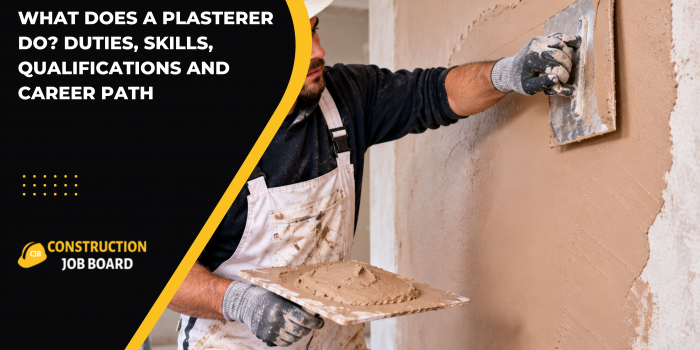
A plasterer prepares and finishes walls, ceilings and other building surfaces by applying plaster, render or related finishing materials. Plasterers in the UK work across new-build construction, commercial projects, refurbishment, housing, maintenance and specialist restoration. Their work creates smooth, level and durable surfaces that can subsequently be painted, decorated or finished.
Plastering requires more than simply applying material to a wall. A plasterer needs to prepare surfaces correctly, mix materials to the required consistency, apply coats evenly, control drying times and achieve a consistent finish.
What Are the Main Duties of a Plasterer?
A plasterer's responsibilities vary according to the project and type of plastering work, but common duties include:
Preparing Surfaces
Before plaster is applied, surfaces must be clean, stable and suitable for the chosen material. Plasterers may remove loose material, clean surfaces, repair minor defects and apply appropriate primers or bonding agents.
They may also work over different backgrounds, including brickwork, blockwork, concrete, plasterboard and existing plaster.
Measuring and Mixing Materials
Plasterers need to measure and mix materials accurately. The correct consistency can affect how easily plaster spreads, how well it adheres and the quality of the finished surface.
Materials may include different types of plaster, bonding compounds, finishing products, render and other specialist materials.
Applying Plaster
The core task is applying plaster to walls and ceilings using appropriate tools and techniques.
Depending on the specification, a plasterer may apply:
- Bonding coats
- Base coats
- Finishing coats
- Skim coats
- External render
- Decorative finishes
- Repair materials
The material must be distributed evenly and worked to the required thickness.
Creating Smooth and Level Finishes
Once plaster has been applied, plasterers use specialist techniques to level and smooth the surface. Trowels, floats and other tools help create the required finish.
Accuracy is particularly important because imperfections can become highly visible after painting or decorating.
Working on Ceilings
Plasterers may work on ceilings as well as walls. Ceiling work can involve plasterboard preparation, joint treatment, skimming and finishing around fittings or architectural features.
Repairing Existing Surfaces
Refurbishment and maintenance projects often require plasterers to repair damaged walls and ceilings.
Tasks can include:
- Repairing cracks
- Patching damaged plaster
- Removing failed finishes
- Re-skimming surfaces
- Repairing areas affected by building work
- Matching existing finishes
Where Do Plasterers Work?
Plasterers can work on a wide range of construction projects, including:
- New-build houses
- Apartments
- Commercial buildings
- Offices
- Schools
- Hospitals
- Retail developments
- Refurbishment projects
- Renovation projects
- Heritage buildings
- Maintenance projects
The working environment can change significantly between projects. A plasterer may spend one project working inside a new residential development and another working on a commercial refurbishment.
What Skills Does a Plasterer Need?
Good plastering depends heavily on practical ability and attention to detail.
Important plasterer skills include:
Manual Dexterity
Plastering involves repeated controlled movements with hand tools. Good coordination helps produce consistent surfaces.
Attention to Detail
Small variations can become noticeable once a wall is painted. Plasterers therefore need to identify imperfections and correct them before the surface is finished.
Measuring Skills
Accurate measurements are important when calculating quantities, preparing materials and working around openings, corners and other building features.
Physical Fitness
Plastering can involve standing for long periods, bending, lifting materials and working at different heights.
Knowledge of Materials
Different backgrounds and applications can require different products and preparation methods. Understanding material characteristics helps plasterers select and use them appropriately.
Problem-Solving
Existing buildings can present uneven surfaces, cracks, damaged backgrounds or unusual construction details. Plasterers need to identify the problem and determine an appropriate preparation and finishing approach.
Teamwork
Plasterers regularly coordinate with other trades, including bricklayers, carpenters, electricians, plumbers, decorators and site managers.
What Tools Do Plasterers Use?
Common plastering tools include:
- Trowels
- Hawks
- Floats
- Straight edges
- Darbies
- Mixing buckets
- Mixing drills
- Spatulas
- Scrapers
- Jointing tools
- Levels
- Measuring equipment
- Access equipment where required
The exact tools used depend on the type of plastering and the project specification.
What Qualifications Do Plasterers Need in the UK?
There are several routes into plastering. People can develop their skills through apprenticeships, college-based construction courses or workplace training.
Construction-related qualifications can provide knowledge of:
- Plastering techniques
- Surface preparation
- Health and safety
- Materials
- Tools and equipment
- Construction methods
Practical experience is particularly important because plastering is a hands-on trade.
Site access and card requirements can also depend on the type of construction work and the employer or contractor. Workers should check the current requirements for the specific site and occupation before starting work.
What Is the Difference Between a Plasterer and a Renderer?
A plasterer generally works on internal surfaces such as walls and ceilings, while rendering usually refers to applying protective or decorative coatings to external walls.
However, the two areas can overlap. Some tradespeople specialise in internal plastering, while others develop experience in both plastering and external rendering.
What Types of Plastering Can a Plasterer Specialise In?
Experienced plasterers may develop specialist skills in areas such as:
- Internal plastering
- Dry lining and finishing
- Skimming
- External rendering
- Decorative plasterwork
- Heritage restoration
- Commercial plastering
- Residential plastering
- Plaster repair
- Specialist finishes
Specialisation can allow tradespeople to target particular types of construction projects.
What Is a Typical Day Like for a Plasterer?
A typical day can begin with checking the day's work, preparing materials and inspecting the surfaces to be plastered.
The plasterer may then:
- Prepare the working area.
- Check the condition of the background.
- Measure and mix materials.
- Apply the required coat.
- Level and smooth the surface.
- Allow the material to reach the appropriate stage for finishing.
- Complete the final finish.
- Clean tools and the work area.
- Check completed surfaces against the required standard.
The exact sequence depends on the project and specification.
How Can a Plasterer Progress Their Career?
Plastering can provide several career-development routes.
A person may start as a trainee or apprentice, develop practical experience and progress towards working independently as a plasterer.
With experience, a plasterer may move into:
- Specialist plastering
- Decorative plasterwork
- Heritage restoration
- Supervisory positions
- Site supervision
- Self-employment
- Subcontracting
- Construction management
Some experienced tradespeople also build businesses by taking on contracts and employing or subcontracting other workers.
How Should a Plasterer Write a CV?
A plasterer's CV should focus on practical experience and specific construction skills rather than using only a general job description.
Useful information includes:
- Years of plastering experience
- Types of projects worked on
- Internal and external plastering experience
- Skimming and rendering skills
- Surface preparation
- Materials used
- Tools and equipment
- Construction qualifications
- Relevant site cards
- Health and safety training
- Previous employers or contracts
Where possible, candidates should describe the type and scale of work they have actually completed.
Why Are Plasterers Important in Construction?
Plasterers contribute to the quality and appearance of completed buildings. Their work provides finished surfaces for decorating and can also contribute to the protection and durability of building elements.
A well-prepared and properly finished surface can make a significant difference to the final appearance of residential, commercial and refurbishment projects.
Key Takeaways
- Plasterers prepare and finish walls, ceilings and other building surfaces.
- Their work includes surface preparation, mixing materials, application and finishing.
- Plasterers work across residential, commercial, refurbishment and specialist projects.
- Practical ability, accuracy and attention to detail are important skills.
- Apprenticeships, college courses and workplace training can provide routes into the trade.
- Experienced plasterers can specialise, supervise other workers or become self-employed.
- A construction CV should clearly show practical plastering experience, qualifications and site skills.
Frequently Asked Questions
1. What does a plasterer do?
A plasterer prepares and finishes walls, ceilings and other surfaces using plaster, render and related materials. The work can include preparation, application, smoothing, repairs and specialist finishes.
2. What qualifications does a plasterer need in the UK?
People can enter plastering through apprenticeships, college construction courses or workplace training. The qualifications and site-access requirements can vary according to the role and employer.
3. Is plastering a skilled trade?
Yes. Plastering requires practical training, knowledge of materials, accurate application techniques and the ability to produce consistent finished surfaces.
4. Can plasterers become self-employed?
Yes. Experienced plasterers can work as subcontractors or establish their own businesses, depending on their skills, experience and ability to secure contracts.
5. What is the difference between plastering and rendering?
Plastering commonly refers to finishing internal walls and ceilings, while rendering generally involves applying coatings to external walls. Some tradespeople work across both areas.