07/10/2026
What Does a Carpenter Do? Duties, Skills, Qualifications and Career Path
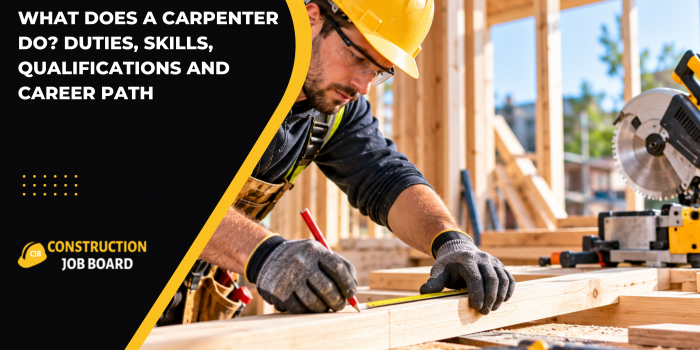
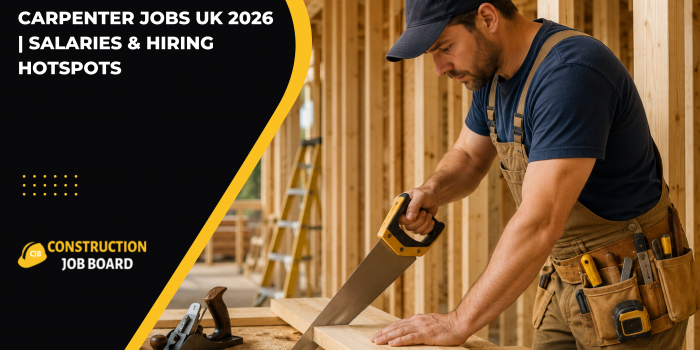
Carpenters are skilled construction professionals who work with timber and other materials to create, install, repair and maintain components of buildings. Their work can include structural timber, doors, floors, roofs, partitions, staircases, fixtures and specialist joinery.
In simple terms, a carpenter measures, cuts, shapes and installs materials to create accurately constructed parts of a building. Depending on their specialism, carpenters can work on structural construction, interior finishing, roofing, refurbishment or specialist joinery.
Carpentry is used across residential, commercial, industrial and refurbishment projects throughout the UK.
What does a carpenter do?
A carpenter's responsibilities depend on the type of project and their particular trade specialism.
Common duties can include:
- Reading construction drawings
- Measuring and marking materials
- Cutting and shaping timber
- Constructing timber frames
- Installing floors
- Installing doors and frames
- Building partitions
- Constructing roofs
- Installing skirting and architraves
- Building staircases
- Repairing timber structures
- Using hand and power tools
- Checking measurements and finished work
- Following site health and safety requirements
The National Careers Service describes carpenters and joiners as professionals who measure, cut, shape and join materials to construct and repair building components.
Where do carpenters work?
Carpenters can work in many areas of the construction industry.
Residential construction
Housebuilding provides a wide range of carpentry work.
A carpenter may work on:
- Timber frames
- Roof structures
- Floors
- Doors
- Window frames
- Staircases
- Internal partitions
- Skirting boards
- Architraves
The exact responsibilities depend on the construction stage.
Commercial construction
Commercial buildings can require carpentry for structural work and internal fit-out.
Projects can include:
- Offices
- Retail buildings
- Hotels
- Schools
- Hospitals
- Warehouses
Refurbishment
Carpenters are also involved in renovation and refurbishment.
This can involve removing damaged timber, repairing existing structures and installing new components while working around an existing building.
Roofing
Some carpenters specialise in roof construction.
Roof carpenters may construct timber roof structures and install associated components according to project drawings and specifications.
Joinery
Carpentry and joinery overlap, but joinery is often associated with more detailed workshop-based work.
Joiners may produce items such as:
- Doors
- Windows
- Staircases
- Cabinets
- Bespoke timber components
Some professionals develop skills across both carpentry and joinery.
What are the different types of carpentry?
Carpentry covers several areas of construction.
First-fix carpentry
First-fix carpentry generally involves structural and construction work completed before many finishing trades begin.
This can include:
- Roof structures
- Floor structures
- Timber framing
- Stud partitions
- Structural timber components
Second-fix carpentry
Second-fix carpentry generally involves installing finished components after the main structural work has been completed.
Examples include:
- Doors
- Door frames
- Skirting
- Architraves
- Stair components
- Flooring
- Fixtures
Roofing carpentry
Roofing carpenters construct timber components of roofs.
Their work can involve measuring, cutting and assembling timber according to the design and requirements of the project.
Formwork carpentry
Formwork carpenters construct temporary moulds or structures used to contain concrete while it sets.
This can be particularly important on larger construction and civil engineering projects.
Bench joinery
Bench joiners generally work in workshops rather than directly on construction sites.
They may manufacture detailed timber components before they are transported to a project for installation.
What skills does a carpenter need?
Carpentry requires a combination of practical, technical and organisational skills.
Accurate measurement
Carpenters need to measure materials accurately before cutting or installation.
A small measurement error can affect the fit of an entire component.
Understanding drawings
Construction drawings provide dimensions, details and information about how components should be constructed.
A carpenter needs to interpret relevant drawings and specifications before beginning work.
Practical hand skills
Carpentry involves using tools to cut, shape, fix and finish materials.
Good hand-eye coordination is therefore important.
Mathematics
Basic mathematics is useful for:
- Measurements
- Angles
- Quantities
- Dimensions
- Material calculations
More advanced mathematical skills can be required for specialist structural or setting-out work.
Problem-solving
Construction sites rarely operate without unexpected challenges.
Existing structures, material variations and site conditions can require carpenters to identify practical solutions while staying within project requirements.
Attention to detail
Accurate joints, measurements and finishes are important to the quality of carpentry work.
Teamwork
Carpenters often work alongside other trades, supervisors and site managers.
The National Careers Service identifies practical skills, attention to detail, construction knowledge, teamwork and the ability to work with tools and materials as important capabilities for carpenters and joiners.
What tools do carpenters use?
Carpenters work with a wide range of hand and power tools.
Common examples include:
- Tape measures
- Squares
- Spirit levels
- Hammers
- Chisels
- Hand saws
- Circular saws
- Jigsaws
- Drills
- Routers
- Nail guns
- Planes
- Sanding equipment
The tools used depend on the particular type of carpentry.
A structural carpenter may use different equipment from a joiner producing detailed components in a workshop.
Carpenters must also follow manufacturer instructions and site safety requirements when using tools.
What materials do carpenters work with?
Timber remains central to traditional carpentry, but modern construction involves a wider range of materials.
These can include:
- Softwood
- Hardwood
- Plywood
- MDF
- OSB
- Engineered timber
- Composite materials
- Insulation products
- Fixings and fasteners
Engineered timber products are increasingly common in modern construction because they can provide consistent dimensions and properties for particular applications.
What qualifications do you need to become a carpenter?
There are several routes into carpentry.
The National Careers Service identifies college courses, apprenticeships and working towards occupational qualifications as possible routes.
A person can enter through a carpentry apprenticeship and gain practical experience while completing relevant training.
College courses can also provide foundational skills before entering employment.
Some people begin as construction labourers or mates and progress into skilled carpentry through workplace training.
Relevant qualifications can demonstrate competence and may be required for particular construction roles.
Do carpenters need a CSCS card?
The requirements depend on the construction site, occupation and type of work.
Many UK construction sites require workers to hold an appropriate CSCS card or an accepted equivalent.
The National Careers Service states that a CSCS card or equivalent is needed to train and work on a construction site for the carpenter and joiner occupation.
Workers should check the current requirements for the specific card and occupation before applying.
What is the difference between a carpenter and a joiner?
Carpentry and joinery are closely related trades, but the working environment and type of work can differ.
A carpenter commonly works on construction sites installing or constructing timber components.
A joiner often works in a workshop manufacturing detailed timber components that may later be installed on site.
However, the distinction is not always absolute.
Some tradespeople are trained and experienced in both carpentry and joinery.
What is first-fix carpentry?
First-fix carpentry covers many structural and preparatory timber activities carried out during the earlier stages of construction.
Examples include:
- Roof construction
- Timber floors
- Stud walls
- Timber framing
- Structural timber work
First-fix work generally takes place before many of the final finishes are installed.
What is second-fix carpentry?
Second-fix carpentry involves installing finished timber components after the main structural work.
Typical examples include:
- Doors
- Door frames
- Skirting
- Architraves
- Stair components
- Flooring
- Internal timber features
The work requires careful measurement and finishing because many second-fix components remain visible in the completed building.
Can carpenters specialise?
Yes.
Experienced carpenters can develop specialist skills in areas such as:
- Roofing
- Formwork
- Timber framing
- Heritage restoration
- Bench joinery
- Shopfitting
- Interior fit-out
- Staircase construction
- Bespoke joinery
Specialisation can depend on training, experience and the types of construction projects available.
Can a carpenter work as a self-employed contractor?
Yes.
Experienced carpenters may work as self-employed tradespeople or subcontractors.
Self-employed carpenters can work directly for customers, contractors or construction companies depending on their business model.
They need to manage areas such as:
- Quotes
- Invoicing
- Tax
- Insurance
- Tools
- Transport
- Health and safety
- Contracts
- Site requirements
Self-employment can therefore require both trade skills and business organisation.
What is the career progression for a carpenter?
Carpentry can provide several career pathways.
A possible progression route is:
Trainee Carpenter → Carpenter → Experienced Carpenter → Chargehand → Site Supervisor → Site Manager
Other possible directions include:
- Specialist joinery
- Roofing
- Formwork
- Shopfitting
- Construction supervision
- Site management
- Self-employment
- Construction training
The National Careers Service notes that experienced carpenters and joiners can progress into supervisory positions or develop specialist areas of work.
How can a carpenter improve their CV?
A carpenter's CV should clearly explain practical experience rather than simply stating the job title.
Useful details include:
- Years of experience
- First-fix experience
- Second-fix experience
- Roofing experience
- Timber framing
- Formwork
- Joinery
- Refurbishment
- Commercial projects
- Residential projects
- Construction drawings
- Relevant qualifications
- CSCS status
- Health and safety training
For example:
Carpenter – Commercial Fit-Out
- Installed doors, frames and internal timber components
- Completed second-fix carpentry
- Interpreted construction drawings
- Worked alongside multiple site trades
- Maintained accurate measurements and finished quality
- Followed site safety procedures
This gives an employer a clearer understanding of the candidate's practical experience.
What is the working environment like for carpenters?
Carpenters can work indoors and outdoors depending on their specialism.
Site carpenters may work in changing weather conditions, while joiners may spend more time in workshops.
Construction environments can involve:
- Noise
- Dust
- Manual handling
- Power tools
- Working at height
- Moving materials
- Changing site conditions
Appropriate personal protective equipment and site safety procedures are therefore important.
Why is carpentry important to construction?
Carpentry contributes to both the structure and finished appearance of buildings.
From roof structures and timber frames to doors, floors, staircases and internal finishes, carpenters can be involved at several stages of construction.
The trade also connects traditional craftsmanship with modern construction methods.
For people who enjoy practical work, accurate measurement and building physical components, carpentry offers a wide range of construction environments and potential career paths.
Key Takeaways
- Carpenters construct, install, repair and maintain timber components in buildings.
- Their work can include first-fix, second-fix, roofing, formwork and joinery.
- Accurate measurement and interpretation of construction drawings are essential skills.
- Carpenters work across residential, commercial, industrial and refurbishment projects.
- Apprenticeships, college courses and workplace training can provide routes into the trade.
- Many construction sites require an appropriate CSCS card or accepted equivalent.
- Experienced carpenters can specialise in areas such as roofing, formwork, heritage work and joinery.
- Career progression can lead towards chargehand, supervision, site management or self-employment.
Frequently Asked Questions
What does a carpenter do?
A carpenter measures, cuts, shapes, constructs, installs and repairs timber and other building components. Their work can include roofs, floors, doors, partitions, staircases and internal finishes.
What qualifications do you need to become a carpenter?
Possible routes include a carpentry apprenticeship, college course or workplace training leading to relevant occupational qualifications.
Do carpenters need a CSCS card?
Many construction sites require carpenters to hold an appropriate CSCS card or accepted equivalent. The exact requirement depends on the occupation and site.
What is the difference between first-fix and second-fix carpentry?
First-fix carpentry generally covers structural and preparatory timber work such as roofs, floors and stud walls. Second-fix carpentry generally covers finished components such as doors, skirting, architraves and stair components.
Can a carpenter become a site supervisor?
Yes. Experienced carpenters can develop leadership and supervisory skills and progress into chargehand, site supervisor and potentially site management positions.