06/10/2026
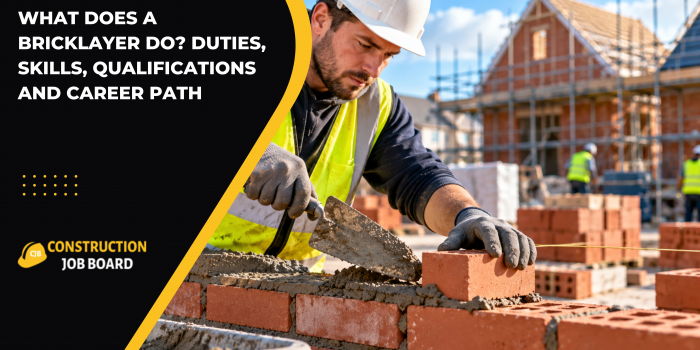
What Does a Bricklayer Do? Duties, Skills, Qualifications and Career Path
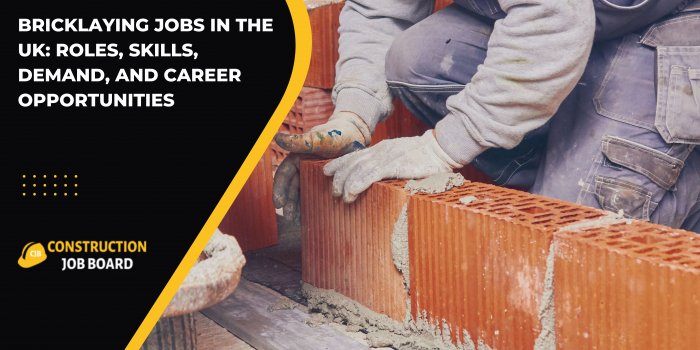
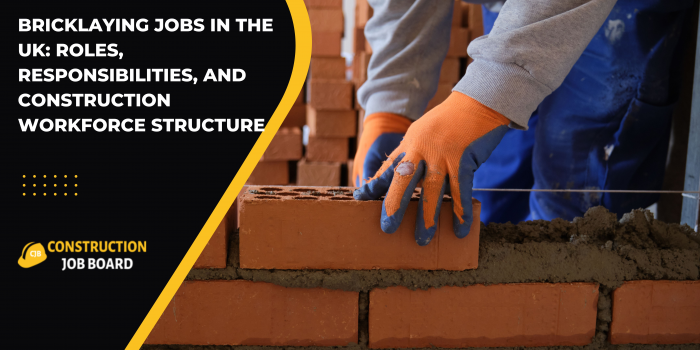
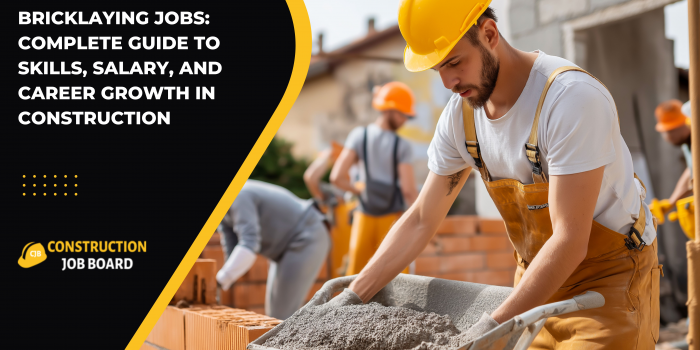
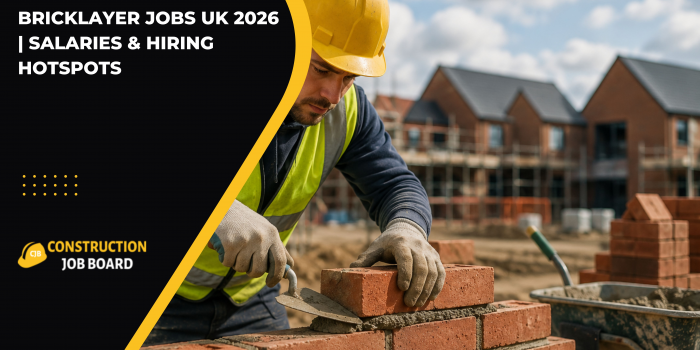
Bricklayers are skilled construction professionals who build, repair and maintain walls, structures and other masonry elements using bricks, blocks and mortar. Their work can range from new-build housing and commercial buildings to restoration, refurbishment and specialist brickwork.
In simple terms, a bricklayer turns construction drawings and specifications into accurately built masonry structures. The work requires practical skill, careful measurement, knowledge of materials and the ability to maintain consistent quality throughout a project.
Bricklayers work closely with other construction trades, including groundworkers, carpenters, roofers, electricians, plumbers and site supervisors.
What does a bricklayer do?
A bricklayer constructs and repairs structures using bricks, blocks and other masonry materials.
Typical responsibilities include:
- Reading construction drawings
- Measuring and setting out work
- Preparing mortar
- Laying bricks and blocks
- Building walls and partitions
- Constructing corners and openings
- Checking levels and alignment
- Cutting and shaping bricks
- Repairing damaged brickwork
- Repointing mortar joints
- Building decorative brickwork
- Working with other construction trades
- Following site health and safety procedures
The National Careers Service identifies reading building plans, measuring work areas, setting out bricks and blocks, mixing mortar, laying bricks, cutting materials and checking alignment among the day-to-day tasks of bricklayers.
Where do bricklayers work?
Bricklayers can work across a wide range of construction projects.
Residential construction
Housebuilding is one of the most familiar environments for bricklayers.
Work can include:
- External walls
- Internal blockwork
- Garages
- Garden walls
- Extensions
- New housing developments
Commercial construction
Bricklayers may also work on:
- Offices
- Retail buildings
- Schools
- Hospitals
- Warehouses
- Industrial buildings
The type of masonry and construction method depends on the building design.
Refurbishment and renovation
Existing buildings may require repairs, replacement brickwork or alterations.
Bricklayers may remove damaged sections and construct replacement masonry while matching existing materials and patterns.
Heritage and restoration
Specialist bricklayers can work on historic buildings and conservation projects.
This can require knowledge of traditional materials, older construction methods and specialist repair techniques.
The National Careers Service specifically identifies heritage and restoration work as an area in which bricklayers can specialise.
What are the main tasks involved in bricklaying?
Bricklaying involves several stages.
Reading construction drawings
Before work starts, bricklayers need to understand relevant drawings and instructions.
Drawings can show:
- Wall locations
- Dimensions
- Openings
- Wall thicknesses
- Materials
- Levels
- Construction details
Understanding drawings helps ensure masonry is built in the correct location and configuration.
Setting out
Setting out establishes where brickwork should begin.
A bricklayer may measure the work area and mark positions for walls, corners, openings and other features.
Accuracy at this stage is important because errors can affect subsequent construction work.
Preparing mortar
Mortar is used to bond masonry units together.
Bricklayers may use ready-mixed mortar or prepare mortar according to the requirements of the project.
The correct mix and consistency can depend on the type of construction and specification.
Laying bricks and blocks
The main task involves applying mortar and positioning bricks or blocks accurately.
Bricklayers need to maintain:
- Correct alignment
- Consistent joints
- Appropriate levels
- Correct dimensions
- Required bond patterns
The work is repeated across courses to create the required wall or structure.
Checking levels and alignment
Bricklayers use tools such as spirit levels, lines and other measuring equipment to maintain accuracy.
Modern construction sites may also use laser levels and other equipment.
The National Careers Service identifies spirit levels, laser levels and plumb lines among the equipment used to check brickwork.
What materials do bricklayers use?
Bricks are not the only material used by modern bricklayers.
Depending on the project, they may work with:
- Clay bricks
- Concrete blocks
- Lightweight blocks
- Engineering bricks
- Natural stone
- Mortar
- Reinforcement
- Damp-proofing materials
- Insulation-related masonry components
The material selected depends on the building design, structural requirements, appearance and project specification.
What bricklaying techniques are important?
A skilled bricklayer needs to understand different masonry techniques.
Brick bonds
Brick bonds determine how bricks are arranged within a wall.
Different patterns may be selected for structural, functional or visual reasons.
Examples include:
- Stretcher bond
- English bond
- Flemish bond
The appropriate bond depends on the construction requirements.
Corner construction
Corners need to be accurately constructed because they establish the alignment of adjoining walls.
Bricklayers need to maintain correct levels, dimensions and angles while building corners.
Openings
Brickwork may need to incorporate openings for:
- Windows
- Doors
- Ventilation
- Services
These areas require careful coordination with other parts of the building.
Repointing
Repointing involves removing deteriorated mortar from joints and replacing it with new mortar.
It is commonly associated with repair and maintenance work.
Decorative brickwork
Experienced bricklayers can also create decorative features using specialist patterns, shapes and masonry details.
What skills does a bricklayer need?
Bricklaying is a practical trade requiring both physical and technical skills.
Accuracy
Small errors can become more significant as a wall increases in size.
Bricklayers therefore need to maintain accurate measurements and alignment.
Hand skills
Bricklaying requires controlled use of tools and materials.
Good hand coordination is important when applying mortar, positioning bricks and finishing joints.
Construction knowledge
Bricklayers need to understand construction methods, materials and drawings.
Physical stamina
The work can involve standing, lifting, bending and working outdoors for extended periods.
Attention to detail
Consistent joints, levels and finishes are important to the quality of completed brickwork.
Teamwork
Bricklayers commonly work alongside other trades and site management teams.
The National Careers Service lists construction knowledge, attention to detail, teamwork, organisation, concentration and practical hand skills among the capabilities required for bricklayers.
What qualifications do you need to become a bricklayer?
There are several routes into bricklaying.
The National Careers Service identifies:
- College courses
- Apprenticeships
- Workplace training
as routes into the occupation.
Courses can include construction skills, bricklaying and relevant construction T Levels.
Apprenticeship routes include Level 2 and Level 3 bricklaying pathways.
Another route is to start as a construction site labourer or hod carrier and develop bricklaying skills through workplace training.
Do bricklayers need a CSCS card?
Bricklayers working on UK construction sites generally need the appropriate CSCS card or an accepted equivalent where the site requires it.
The specific card depends on the worker's qualification, occupation and level of responsibility.
The National Careers Service states that a CSCS card or equivalent is needed to train and work on a construction site for the bricklayer occupation.
Candidates should check the current CSCS requirements for their particular role before applying for a card.
What is the difference between a bricklayer and a mason?
The terms can overlap, but they can also describe different areas of masonry work.
A bricklayer generally specialises in constructing brick and block structures.
A mason may work more broadly with masonry materials, including natural stone.
Some experienced tradespeople develop skills across both brickwork and specialist masonry.
Can bricklayers specialise?
Yes.
With experience, bricklayers can develop specialist skills in areas such as:
- Heritage brickwork
- Restoration
- Stone masonry
- Repointing
- Decorative brickwork
- Refractory brickwork
- High-specification residential construction
- Commercial masonry
Specialist skills can be particularly relevant to refurbishment, conservation and technically demanding projects.
What is a typical bricklayer's working environment?
Bricklayers can work both indoors and outdoors.
Construction work may involve exposure to:
- Changing weather
- Dust
- Noise
- Construction materials
- Working at height
- Manual handling
Protective equipment and site-specific safety procedures may be required.
The National Careers Service describes bricklaying as physically demanding work that can take place outdoors in different weather conditions and sometimes at height.
Can a bricklayer become self-employed?
Yes.
Experienced bricklayers can work as self-employed contractors depending on their skills, experience, business arrangements and the requirements of individual projects.
Self-employed bricklayers may work directly for contractors or through subcontracting arrangements.
They need to understand their responsibilities regarding tax, insurance, documentation and any site-specific requirements.
What career progression is available for bricklayers?
Bricklaying can provide several progression routes.
A possible pathway is:
Trainee Bricklayer → Bricklayer → Experienced Bricklayer → Bricklaying Supervisor → Site Management
Other routes can include:
- Construction estimator
- Site inspector
- Specialist heritage bricklayer
- Stonemason
- Self-employed contractor
- Bricklaying business owner
- Bricklaying trainer
The National Careers Service specifically identifies progression to bricklaying team supervisor, construction estimator and site inspector, as well as specialisation in heritage brickwork or stonemasonry.
How can a bricklayer improve their CV?
A bricklayer's CV should show practical experience rather than simply stating the job title.
Useful information includes:
- Years of bricklaying experience
- Residential experience
- Commercial experience
- Blockwork
- Repointing
- Restoration
- Decorative brickwork
- Drawing interpretation
- Setting out
- Relevant qualifications
- CSCS status
- Health and safety training
- Supervisory experience
For example, instead of writing:
Bricklayer – 5 years' experience
a CV could describe specific responsibilities:
Bricklayer – Residential New Build
- Constructed external brickwork and internal blockwork
- Read construction drawings and specifications
- Set out walls and openings
- Maintained levels and alignment
- Worked alongside site supervisors and other trades
- Completed work according to project specifications
This gives employers more useful information when assessing practical experience.
Why does bricklaying remain important to construction?
Bricklayers contribute directly to the physical construction and repair of buildings.
Their work can involve structural masonry, external walls, partitions, repairs, restoration and architectural details.
Although construction methods continue to develop, skilled masonry remains an important part of residential, commercial, refurbishment and heritage construction.
The role also provides a pathway from practical trade work into specialist masonry, supervision and wider construction careers.
Key Takeaways
- Bricklayers construct, repair and maintain masonry structures.
- Their work includes bricks, blocks, mortar and specialist masonry materials.
- Reading drawings, setting out and maintaining accurate levels are important parts of the trade.
- Bricklayers can work on residential, commercial, industrial, refurbishment and heritage projects.
- College courses, apprenticeships and workplace training can provide routes into the occupation.
- A CSCS card or accepted equivalent may be required for site work.
- Experienced bricklayers can specialise in areas such as restoration, heritage work and decorative masonry.
- Career progression can lead towards supervision, estimating, inspection or self-employment.
Frequently Asked Questions
What does a bricklayer do?
A bricklayer builds, repairs and maintains walls and other masonry structures using bricks, blocks, mortar and related materials.
What qualifications do you need to become a bricklayer?
Possible routes include a college bricklaying course, apprenticeship or workplace training. Relevant qualifications can help demonstrate occupational competence.
Do bricklayers need a CSCS card?
A CSCS card or accepted equivalent is generally required where a construction site requires certification. The appropriate card depends on the worker's occupation and qualifications.
Can bricklayers work on heritage buildings?
Yes. Experienced bricklayers can specialise in heritage brickwork, restoration, repointing and other conservation-related masonry work.
Can a bricklayer become a site supervisor?
Yes. Experienced bricklayers can progress into supervisory roles and, with additional experience and qualifications, potentially move into wider construction management.