06/10/2026
What Does a Groundworker Do? Duties, Skills, Qualifications and Career Path
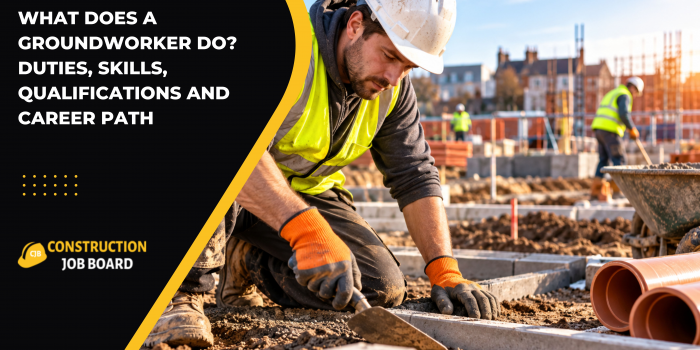
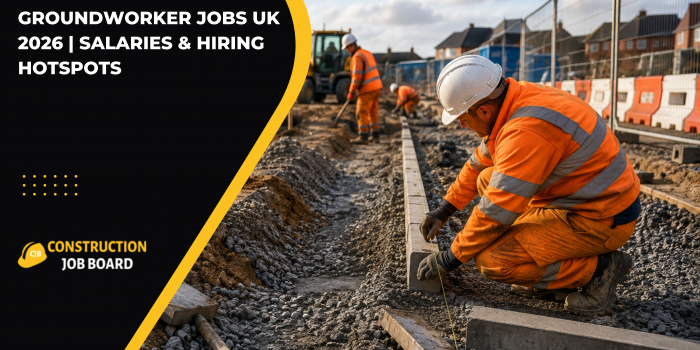
Groundworkers are responsible for many of the essential construction activities that happen before and around the main structure of a building or infrastructure project. Their work can include site preparation, excavation, drainage, foundations, concrete work, utilities and external works.
In simple terms, groundworkers prepare the site and create the foundations and below-ground infrastructure that allow other construction trades to carry out their work safely and effectively.
Groundwork is involved in many types of UK construction, including housing developments, commercial buildings, civil engineering projects, roads, utilities and infrastructure.
What does a groundworker do?
A groundworker carries out practical construction work at ground level and below ground.
The exact duties depend on the project and the groundworker's specialism, but common activities include:
- Preparing construction sites
- Excavating foundations and trenches
- Installing drainage systems
- Laying pipes and utilities
- Preparing concrete foundations
- Installing kerbs and paving
- Carrying out concreting work
- Reading construction drawings
- Setting out work areas
- Operating or assisting with construction plant
- Backfilling excavations
- Preparing areas for slabs and other structures
The National Careers Service describes construction labourers and groundworkers as supporting building work through activities such as digging trenches, mixing mortar and concrete, and operating machinery.
Why are groundworkers important in construction?
Groundwork is one of the earliest stages of many construction projects.
Before a building can be constructed, the site may need to be cleared, levelled and prepared. Foundations need to be excavated and constructed, drainage needs to be installed and underground services may need to be positioned.
If groundwork is not completed correctly, problems can affect later stages of construction.
For example, inaccurate setting out could affect foundation positions, while poorly installed drainage could create problems after a building has been completed.
This means groundworkers need practical skills as well as an understanding of drawings, measurements, materials and site procedures.
What are the main types of groundworks?
Groundworks can involve several different activities.
Site preparation
Site preparation can include clearing areas, removing unwanted material, levelling ground and preparing work zones.
The exact requirements depend on the existing condition of the site and the proposed development.
Excavation
Groundworkers may excavate trenches and foundation areas using hand tools or mechanical plant.
Excavation work requires careful attention to site conditions and safety procedures, particularly where workers are operating near existing services or working in excavations.
Foundations
Groundworkers can be involved in preparing and constructing foundations.
This may include:
- Excavating foundation trenches
- Preparing formation levels
- Installing reinforcement where required
- Preparing shuttering
- Placing concrete
- Backfilling
Foundation work must follow the project's drawings and specifications.
Drainage
Drainage is another major area of groundworks.
Groundworkers may install:
- Surface water drainage
- Foul drainage
- Inspection chambers
- Drainage pipes
- Gullies
- Manholes
Correct levels and gradients are particularly important when installing drainage systems.
Utilities
Some groundworkers work on underground utility installations.
Depending on the project, this can involve preparing trenches and installing or supporting work involving water, electricity, telecommunications or other services.
Specialist requirements vary depending on the utility and employer.
External works
Groundworkers may also be involved in external construction work such as:
- Kerbs
- Paving
- Hard landscaping
- Concrete paths
- Access routes
- Road preparation
- Car parks
This means the trade can extend beyond foundations and excavation.
What does a groundworker do on a typical day?
There is no standard working day because activities change according to the construction programme.
A groundworker might start by attending a site briefing and reviewing the day's planned activities.
The day's work could then involve:
- Checking drawings and work instructions.
- Preparing tools and equipment.
- Setting out the work area.
- Excavating ground.
- Installing drainage or other underground infrastructure.
- Preparing foundations or concrete.
- Checking levels and measurements.
- Backfilling completed excavations.
- Cleaning and securing the work area.
On larger projects, groundworkers may work as part of a specialist gang under a supervisor or foreman.
What skills does a groundworker need?
Groundworking is a practical trade, but it requires more than physical strength.
Understanding construction drawings
Groundworkers need to understand relevant drawings and instructions so they can locate foundations, drainage runs and other construction elements correctly.
Measuring and setting out
Accurate measurement is important.
Groundworkers may use tools such as:
- Tape measures
- Spirit levels
- Laser levels
- Optical or surveying equipment
- String lines
- Setting-out equipment
The equipment required depends on the project and level of responsibility.
Knowledge of materials
Groundworkers can work with materials including:
- Concrete
- Cement
- Aggregates
- Pipes
- Blocks
- Reinforcement
- Paving materials
Understanding how materials are used helps workers complete tasks correctly.
Practical problem-solving
Ground conditions can vary significantly from one site to another.
Unexpected ground conditions, water, obstructions or existing services can affect planned work.
Groundworkers therefore need to communicate problems quickly and follow site instructions.
Health and safety awareness
Groundwork can involve excavation, plant, lifting, concrete, underground services and moving vehicles.
Following site safety procedures is therefore essential.
What qualifications do you need to become a groundworker?
There are several routes into groundworking.
The National Careers Service identifies college courses, apprenticeships and direct applications as possible routes into construction labourer and groundworker work.
A person starting out may begin as a construction operative or trainee and develop practical experience on site.
An apprenticeship can provide another structured route.
Relevant training can cover areas such as:
- Groundworks
- Construction operations
- Drainage
- Foundations
- Concreting
- Site safety
For experienced workers, vocational qualifications can support progression into skilled groundworker roles.
Do groundworkers need a CSCS card?
Many construction sites require workers to hold the appropriate CSCS card or an accepted equivalent.
The exact card depends on the occupation, qualifications and responsibilities of the worker.
CSCS-related requirements should always be checked against the current requirements for the specific occupation and card type.
The National Careers Service states that a CSCS card or equivalent is needed to train and work on a construction site for the construction labourer/groundworker route.
Employers may also require additional site-specific training depending on the work involved.
Can groundworkers operate construction plant?
Some groundworkers develop additional plant-operating skills.
This can be useful because groundworks frequently involve excavation, movement of materials and site preparation.
Plant commonly associated with groundworks can include:
- Excavators
- Dumpers
- Rollers
- Telehandlers
- Loaders
However, operating plant is a separate competency from general groundworking.
Workers need the appropriate training, competence and certification for the specific equipment they operate.
Construction Job Board's current groundworker listings also show that employers may seek workers with relevant plant experience alongside groundworking skills.
What is the difference between a groundworker and a construction labourer?
The terms can sometimes overlap, particularly on job advertisements.
A construction labourer may support a range of general site activities, while a skilled groundworker normally has more specific experience in activities such as excavation, drainage, foundations, concreting and external works.
The National Careers Service lists groundworker as an alternative title within its construction labourer profile, illustrating the overlap between the occupations.
Employers should therefore be checked carefully for the actual duties, qualifications and experience required in each vacancy.
Can groundworkers specialise?
Yes.
With experience, groundworkers can develop specialist skills in areas such as:
- Drainage
- Utilities
- Foundations
- Concrete work
- Road construction
- Civil engineering
- Piling support
- Plant operation
- Setting out
Specialisation can depend on the type of projects available in a worker's region and the skills they choose to develop.
What career progression is available?
Groundworking can provide a pathway into several construction roles.
A possible progression route is:
Groundworker → Skilled Groundworker → Ganger/Lead Worker → Site Supervisor → Site Manager
Some experienced groundworkers may instead develop specialist technical skills or move into plant operation, setting out, civil engineering or other site-based occupations.
Progression depends on experience, qualifications, additional training and employer opportunities.
How can a groundworker improve their CV?
A groundworker's CV should make practical experience easy for an employer to understand.
Useful information includes:
- Years of groundworking experience
- Types of construction projects
- Foundation experience
- Drainage experience
- Excavation experience
- Concrete experience
- Utility work
- Plant experience
- Setting-out experience
- Relevant qualifications
- CSCS card
- Health and safety training
- Driving licence where relevant
Instead of simply writing “groundworker”, candidates can explain the specific construction activities they have carried out.
For example:
Groundworker – Residential Development
- Excavated foundation trenches
- Installed drainage systems
- Prepared concrete bases
- Assisted with setting out
- Operated relevant site equipment
- Worked alongside bricklaying and site management teams
This provides employers with a clearer picture of practical capability.
Where do groundworkers work?
Groundworkers can work across many construction environments.
These include:
- Residential developments
- Commercial buildings
- Industrial projects
- Civil engineering
- Roads
- Rail infrastructure
- Utilities
- Public-sector projects
- Refurbishment projects
- Large infrastructure developments
The type of work can therefore vary considerably between employers.
Key Takeaways
- Groundworkers prepare sites and carry out important below-ground and external construction activities.
- Common work includes excavation, drainage, foundations, concrete and utilities.
- Groundworkers need practical construction skills, accurate measurement and an understanding of drawings.
- Health and safety is particularly important when working around excavations, plant and underground services.
- Apprenticeships, college courses and direct entry are possible routes into the occupation.
- Many construction sites require an appropriate CSCS card or equivalent.
- Groundworkers can develop specialist skills in drainage, utilities, foundations, plant operation and civil engineering.
- Experienced groundworkers can progress towards supervisory and site-management positions.
Frequently Asked Questions
What does a groundworker do?
A groundworker prepares construction sites and carries out work such as excavation, drainage, foundations, concreting, utilities and external works.
What qualifications do you need to become a groundworker?
Possible routes include a construction course, apprenticeship or direct entry followed by workplace training. Relevant vocational qualifications can support progression into skilled groundworking roles.
Do groundworkers need a CSCS card?
Many UK construction sites require an appropriate CSCS card or accepted equivalent. The specific requirement depends on the occupation, qualification and site.
Can a groundworker operate an excavator?
Yes, a groundworker can develop excavator or other plant-operating skills, but appropriate training, competence and certification are required for the specific equipment.
Can a groundworker become a site supervisor?
Yes. With suitable experience, supervisory training and relevant qualifications, an experienced groundworker can progress into roles such as ganger, site supervisor and eventually site management.