26/08/2026
Can You Build a High-Paying Construction Career Without Going to University?
Can you build a high-paying construction career without going to university?
Yes, you can. The UK construction industry offers several career routes that do not require a traditional university degree. Skilled trades, apprenticeships, technical qualifications and work-based training can all provide pathways into construction.
However, there is an important distinction between not going to university and not needing qualifications.
Construction is a skilled industry. A person may not need a degree to become a successful electrician, bricklayer, carpenter, plant operator or construction professional, but they may still need recognised training, practical experience, health and safety knowledge and, depending on the occupation, specific certifications or qualifications.
For people searching for high paying construction jobs without a degree, the real opportunity is to build a valuable skill and then develop it over time.
Experience can lead from entry-level work to skilled positions, supervision, management, specialist contracting or self-employment.
The career path may look different from a university graduate's route, but it can be just as structured.
Do you need a university degree to work in construction?
No.
Construction includes hundreds of different occupations, and educational requirements vary considerably.
Some professional roles may require degrees or higher-level qualifications. For example, certain engineering, architecture and professional surveying careers have formal academic requirements.
But many construction careers are based primarily on practical competence, vocational qualifications and experience.
Examples include:
- Bricklayer
- Carpenter
- Electrician
- Plumber
- Painter and decorator
- Plasterer
- Roofer
- Groundworker
- Plant operator
- Scaffolder
- Dryliner
- Steel fixer
- Heating engineer
There are also technical and supervisory routes that can develop from practical experience.
The key point is that construction does not have one standard career pathway.
Which construction jobs can pay well without a degree?
Earnings vary considerably depending on experience, location, qualifications, employer, project type and whether someone is employed or self-employed.
Potentially well-paid construction careers without a traditional university degree include:
Electrician
Electrical work requires technical knowledge, training and appropriate qualifications. Experienced electricians can progress into specialist areas, supervision or contracting.
Plumber or heating engineer
Plumbing and heating remain essential across residential, commercial and industrial construction.
Bricklayer
Experienced bricklayers with strong productivity and specialist skills can build valuable careers.
Carpenter
Carpenters can work across structural construction, roofing, fit-out and finishing.
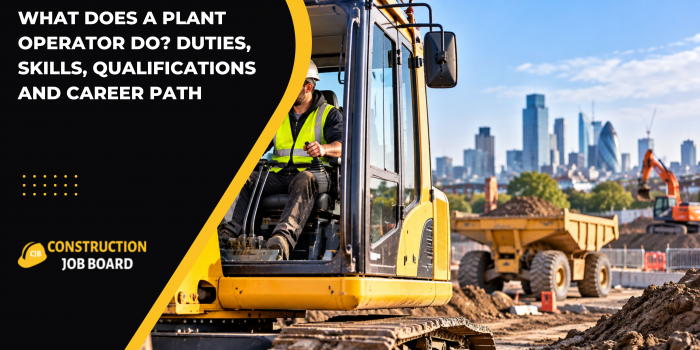
Plant operator
Operating excavators, cranes and other construction machinery requires appropriate competence and training.
Scaffolder
Scaffolding is specialist work involving safety-critical planning and practical skills.
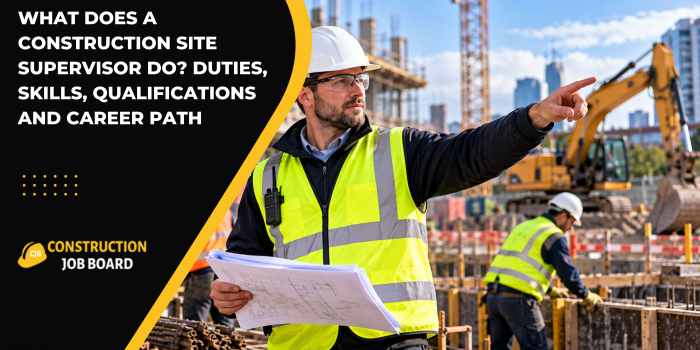
Site supervisor
Some supervisors progress through practical construction experience combined with appropriate training and qualifications.
The highest earning potential is not guaranteed by the job title alone.
Specialisation and experience matter.
Can a bricklayer earn a good income without university?
Yes.
Bricklaying is one of the clearest examples of a construction trade where practical skill can be more important than a university degree.
Bricklayers may work on:
- New housing
- Commercial buildings
- Extensions
- Renovation
- Restoration
- Infrastructure-related structures
Experienced bricklayers can also progress into supervisory positions or establish their own businesses.
Income can vary considerably depending on location, productivity, employment arrangement and experience.
A beginner should therefore avoid assuming that an advertised rate represents what every bricklayer earns.
The more useful question is:
How can someone progress from beginner to experienced specialist?
Can electricians build high-paying careers without university?
Yes, although electrical work requires proper training and competence.
Electricians can work in:
- Residential construction
- Commercial buildings
- Industrial facilities
- Infrastructure
- Maintenance
- Building services
- Renewable energy
- EV charging
- Specialist systems
The sector is also changing.
Energy efficiency, electrification, renewable technologies and changing building systems are creating new technical requirements.
An electrician who develops additional specialist knowledge may therefore have more opportunities than someone who remains limited to one narrow area of work.
Can plumbers earn well without a degree?
Plumbing is another construction occupation where practical expertise can create long-term career opportunities.
Plumbers can work on:
- Residential projects
- Commercial buildings
- Industrial sites
- Heating systems
- Maintenance
- Refurbishment
- New construction
Experienced professionals may eventually move into supervision, specialist contracting or business ownership.
Heating and low-carbon technologies can also create opportunities for workers who develop additional technical skills.
The important lesson is that a trade career does not have to remain at entry level.
Can you become a construction manager without a university degree?
This requires a more nuanced answer.
Construction management is a professional responsibility involving:
- Planning
- Programme management
- Cost awareness
- Health and safety
- Quality
- People management
- Client communication
- Risk management
Some employers may prefer candidates with degrees or higher-level qualifications.
However, construction managers can also come through experience-based routes.
A worker may progress from:
Labourer → skilled trade → supervisor → site manager → construction manager
This route can take years, but it demonstrates an important feature of construction careers:
practical experience can create progression opportunities.
Additional qualifications can strengthen this pathway.
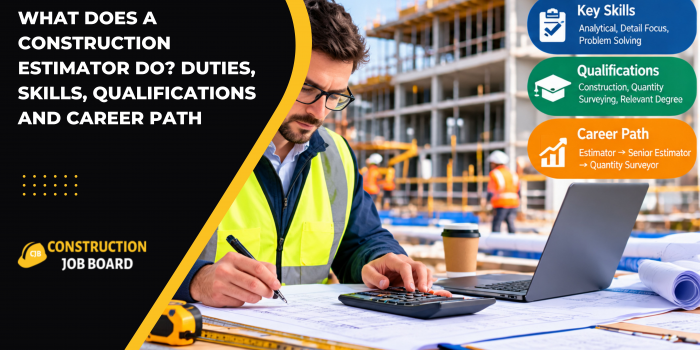
Can you become a quantity surveyor without university?
Quantity surveying is different from many traditional trades.
A quantity surveyor typically needs substantial knowledge of:
- Construction costs
- Contracts
- Procurement
- Commercial management
- Measurement
- Project finance
Many professional routes involve higher education or recognised professional qualifications.
However, people can enter commercial construction through alternative routes, including apprenticeships and work-based learning, depending on the employer and qualification pathway.
So the answer is not simply “yes” or “no”.
The construction industry contains multiple routes into professional careers, but requirements vary significantly by occupation.
Are construction apprenticeships a good alternative to university?
For many people, yes.
An apprenticeship combines practical employment with structured learning.
This can be attractive because the apprentice gains:
- Workplace experience
- Formal training
- Industry knowledge
- A qualification
- Income while learning
It also allows people to develop skills in a real construction environment.
However, apprenticeships should not be treated as an easy shortcut.
Construction apprentices still need to learn technical knowledge, follow safety procedures and demonstrate competence.
The benefit is that learning happens alongside practical experience.
Can you get paid while learning a construction trade?
Many apprenticeship routes allow learners to earn while they train, subject to the relevant employment and apprenticeship arrangements.
This is one of the biggest differences between an apprenticeship and a traditional full-time university route.
Instead of spending several years studying before entering employment, an apprentice can combine:
work + training + qualification
That does not mean apprenticeships are automatically better than university.
The right choice depends on the career.
A future architect may need a university route.
A future electrician may benefit more from vocational training and workplace experience.
A person interested in construction management may consider several possible routes.
What qualifications do construction workers need?
Requirements vary by occupation.
Depending on the role, workers may need:
- Trade qualifications
- NVQs
- Apprenticeship qualifications
- Health and safety training
- Equipment-specific training
- Site cards
- Occupational certifications
- Specialist qualifications
The CSCS scheme is also widely associated with demonstrating appropriate training and qualifications for construction site occupations.
However, workers should check the specific requirements of the job they want rather than assuming one qualification applies to every construction role.
Does experience matter more than qualifications in construction?
It depends on the job.
For many practical trades, experience is extremely valuable because construction work involves real-world conditions that cannot be fully learned from a classroom.
An experienced tradesperson may know how to:
- Identify problems quickly
- Work efficiently
- Interpret drawings
- Handle difficult materials
- Coordinate with other trades
- Work safely
- Adapt to site conditions
However, experience does not replace formal qualifications where legislation, employer requirements or professional standards require them.
The strongest construction careers often combine:
Qualification + experience + specialist skill
Can construction workers increase their earnings through specialisation?
Yes.
Specialisation can help workers differentiate themselves from general labour.
Examples include:
- Advanced electrical systems
- Industrial plumbing
- Specialist welding
- Heritage restoration
- Roofing
- Renewable energy systems
- Building services
- Plant operation
- Digital construction
- BIM
- Specialist fit-out
Specialist skills can become particularly valuable when relatively few workers have them.
But specialisation should be based on genuine industry demand.
A qualification is not automatically valuable simply because it is difficult to obtain.
Can construction workers earn more by becoming self-employed?
Self-employment can provide higher earning potential for some skilled tradespeople, but it also introduces additional responsibilities.
A self-employed tradesperson may need to manage:
- Tax
- Insurance
- Tools
- Transport
- Business expenses
- Customer acquisition
- Contracts
- Invoicing
- Health and safety
- Unpaid administrative time
Therefore, self-employed income should not be compared directly with an employee's salary without considering expenses and benefits.
Business skills become just as important as technical skills.
Can construction workers become contractors?
Yes.
An experienced tradesperson may eventually take on larger contracts and employ other workers.
This creates a progression route from:
Worker → specialist → subcontractor → contractor/business owner
But running a construction business requires much more than technical competence.
Successful contractors also need:
- Estimating
- Pricing
- Cash-flow management
- Project management
- Customer relationships
- Procurement
- Compliance
- Workforce management
This is one reason experienced construction professionals can develop careers beyond physically carrying out the work.
Is construction a good career for people who do not enjoy university?
It can be.
Not everyone learns best through traditional academic education.
Some people prefer:
- Practical work
- Learning by doing
- Working outdoors
- Using tools
- Solving physical problems
- Working as part of a team
- Seeing tangible results
Construction can suit these preferences.
However, it would be wrong to describe construction as a career requiring “no education”.
Modern construction requires significant technical knowledge.
A skilled electrician, engineer, surveyor or site manager may have to understand complex systems, regulations, drawings, technology and safety requirements.
Construction is practical education, not the absence of education.
Can construction offer career progression without university?
Yes.
Career progression can happen through experience, training and increasing responsibility.
For example:
Labourer
↓
Skilled worker
↓
Experienced tradesperson
↓
Supervisor
↓
Site manager
↓
Construction manager
Another route could be:
Apprentice electrician
↓
Qualified electrician
↓
Specialist electrician
↓
Supervisor
↓
Electrical project manager
The exact pathway depends on the occupation and employer.
The important point is that entry-level construction work does not have to be the final destination.
Which construction skills can increase long-term earning potential?
Workers should consider developing skills that employers struggle to source or that are increasingly important.
Potential areas include:
- Electrical systems
- Building services
- Digital construction
- BIM
- Renewable energy
- Retrofit
- Site management
- Commercial management
- Health and safety
- Specialist trades
- Plant operation
Soft skills matter too.
Communication, leadership, planning and problem-solving become increasingly important as workers move into senior positions.
Is construction better than university for earning money?
There is no universal answer.
University can be essential for certain professional careers.
Construction can offer earlier entry into paid employment through apprenticeships and vocational routes.
Someone entering a trade at 18 may start earning earlier than someone spending several years in higher education.
However, long-term earnings depend on:
- Occupation
- Qualifications
- Experience
- Location
- Career progression
- Industry demand
- Employment type
- Business ownership
The correct comparison is therefore not:
University vs construction.
It is:
Which training route gives me the best pathway into the career I actually want?
What mistakes should people avoid when choosing a construction career?
One of the biggest mistakes is choosing a trade purely because someone says it pays well.
Before choosing a career, consider:
- What does the work involve?
- What qualifications are required?
- How long does training take?
- What are the working conditions?
- Is demand strong locally?
- Is there career progression?
- Do I enjoy practical work?
- Can I develop specialist skills?
- What does experienced pay look like?
Also avoid assuming that an entry-level salary is representative of experienced earnings.
Construction income can change substantially throughout a career.
Can construction be a high-paying career without a degree?
Yes, but high earnings are normally the result of skill, experience, responsibility, specialisation or business ownership—not simply avoiding university.
A person who starts as an apprentice may eventually become a highly experienced tradesperson.
A skilled worker may progress into supervision.
A supervisor may become a site manager.
A tradesperson may build a successful contracting business.
A technical worker may specialise in a growing area such as building services or renewable energy.
The route is different for every person.
What is the best way to start a construction career without university?
Start by choosing the occupation rather than simply choosing “construction”.
Ask:
Do I want to work with electrical systems?
Consider electrical training.
Do I prefer structural and physical work?
Explore bricklaying, carpentry or groundworks.
Do I enjoy machinery?
Look at plant operations.
Do I prefer planning and management?
Explore supervisory, commercial or project-management pathways.
Do I enjoy technology?
Consider BIM, digital construction or construction technology.
Once the target occupation is clear, research the appropriate qualifications and entry routes.
What does the future look like for construction careers without university?
The future remains potentially strong for people with valuable practical and technical skills.
The construction industry needs workers to support housing, infrastructure, maintenance, retrofit and new technologies.
CITB's workforce outlook indicates that the UK construction industry will need significant additional workers over the coming years.
At the same time, construction is becoming more technologically advanced.
This means future workers may benefit from combining a traditional skill with modern capabilities.
An electrician who understands renewable technologies, for example, may have a different opportunity profile from someone whose skills have remained unchanged for decades.
So, can you build a high-paying construction career without going to university?
Yes.
But the most important lesson is that you do not need a university degree, but you do need valuable skills.
Construction provides multiple routes into employment, including apprenticeships, vocational qualifications, practical training and experience.
The highest earning potential generally comes from becoming genuinely competent, developing specialist expertise and taking on increasing responsibility.
For some people, that could mean becoming an expert tradesperson.
For others, it could mean moving into site management, commercial management, project management or business ownership.
The construction industry rewards people who can solve problems, work safely, deliver quality and adapt to changing technology.
So if university is not the right route for you, that does not mean your career options are limited.
It may simply mean your path into a successful career looks different.
Frequently Asked Questions
Can you get a high-paying construction job without a degree?
Yes. Many skilled construction occupations do not require a traditional university degree. Earnings depend on qualifications, experience, specialisation, location and employment type.
What are the highest-paying construction jobs without a degree?
Potentially well-paid routes can include experienced electricians, plumbers, specialist tradespeople, plant operators, supervisors and some construction management pathways. Actual earnings vary significantly.
Can I become a bricklayer without going to university?
Yes. Bricklaying can be entered through apprenticeships, vocational training and practical experience rather than a traditional university degree.
Can I become an electrician without university?
Yes. Electrical careers generally involve recognised technical training and qualifications rather than requiring a traditional university degree.
Can construction apprentices earn money while training?
Many apprenticeships are paid employment arrangements that combine workplace training with formal learning. Exact pay and conditions depend on the apprenticeship and employer.
Do construction workers need qualifications?
Many construction occupations require or strongly benefit from recognised qualifications. Requirements vary by occupation, employer, site and type of work.
Can you become a construction manager without a degree?
It is possible to progress into construction management through practical experience and additional training, although some employers may prefer or require higher-level qualifications for particular management positions.
Can construction workers become self-employed?
Yes. Experienced tradespeople can become self-employed or establish contracting businesses, although they take on additional responsibilities such as tax, insurance, pricing, administration and business management.
Is construction a good career for someone who does not want university?
Construction can be an excellent option for people who prefer practical, technical and work-based learning. However, construction still requires education, training and continuous skills development.
Can construction workers earn more as they gain experience?
Often, yes. Experience can allow workers to take on more complex work, specialise, supervise others, move into management or become self-employed.