31/08/2026
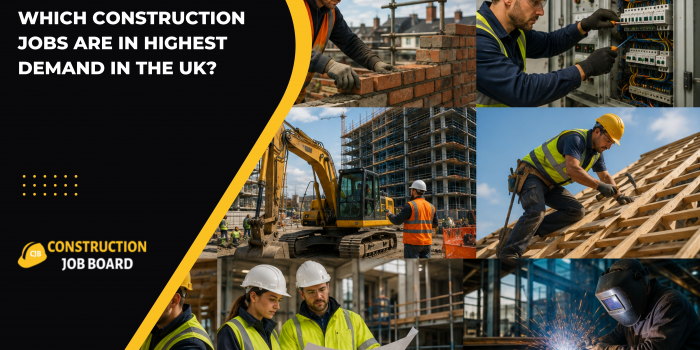
Which Construction Jobs Are in Highest Demand in the UK?
If you are considering a career in construction, one of the most useful questions to ask is not simply “Are construction jobs in demand?” but “Which construction jobs are likely to have the strongest demand?”
The answer is more complicated than choosing one occupation.
The UK construction industry includes skilled trades, engineers, project managers, surveyors, commercial professionals, plant specialists and increasingly digital and technical roles. Demand also varies between regions and types of construction work.
CITB's latest Construction Workforce Outlook 2026–2030 expects construction demand to strengthen over the medium term, although the industry continues to face recruitment and retention pressures. The outlook is designed to show where workforce demand is expected to grow and what skills will be required to support future construction activity.
For jobseekers, this creates an important opportunity.
People who understand where demand is developing can make better decisions about qualifications, training and career progression.
Which construction jobs are expected to grow fastest?
There is no single occupation that dominates every region of the UK.
CITB's regional workforce analysis shows that some occupations are expected to grow particularly strongly, including steel erectors and metal workers, scaffolders, civil engineers and plant mechanics or fitters in England over the relevant forecast period. Construction project managers are also forecast to be among the strongest-growing managerial occupations.
This is important because construction demand is not limited to traditional trades.
The future workforce will need people who can:
- Build structures
- Operate and maintain machinery
- Manage projects
- Design infrastructure
- Control costs
- Coordinate contractors
- Solve technical problems
- Manage safety
- Work with digital construction systems
That means there are opportunities for people with very different interests and abilities.
Are skilled construction trades still in demand?
Yes.
Skilled trades remain fundamental to construction because projects ultimately need people who can physically construct, install, repair and finish buildings and infrastructure.
Examples include:
- Electricians
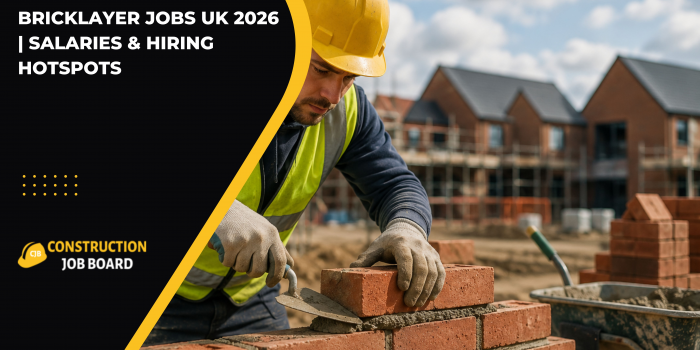
- Bricklayers
- Carpenters
- Plumbers
- HVAC specialists
- Scaffolders
- Roofers
- Plant operatives
- Steelworkers
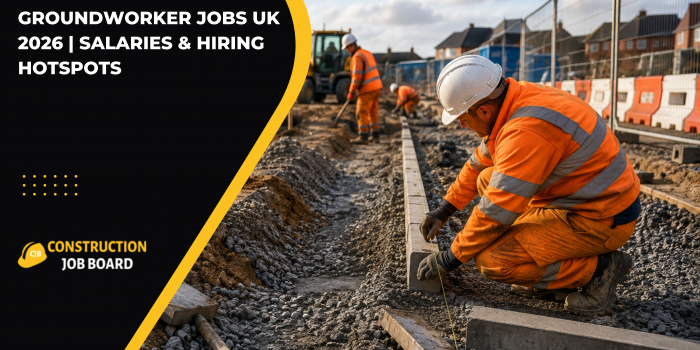
- Groundworkers
- Plasterers
- Painters and decorators
The exact level of demand varies by location and project type.
However, the wider skills shortage means employers continue to need appropriately trained people across the construction workforce. CITB's 2026 Industry Picture says the industry is facing four connected pressures: fewer people available, demand for skills growing faster than supply, workers leaving too soon and productivity not increasing enough to compensate.
For skilled tradespeople, that combination can create opportunities for people who have recognised qualifications, practical experience and a willingness to keep developing their skills.
Are electricians in demand in the UK?
Electrical installation remains an important part of construction because virtually every modern building depends on electrical systems.
Electrical professionals can work across:
- Residential construction
- Commercial buildings
- Industrial projects
- Infrastructure
- Refurbishment
- Building services
- Energy projects
The role is also changing.
Construction is becoming increasingly connected to electrification, energy efficiency, smart buildings and new technologies.
That means electrical skills can potentially be relevant well beyond traditional building projects.
CITB's workforce data has consistently identified electrical installation as one of the major construction occupational groups, while its latest workforce planning continues to highlight the need for additional workers across the industry.
Are bricklayers still in demand?
Yes, although demand for bricklayers can vary according to the housing market, regional construction activity and project pipeline.
Bricklaying remains an essential skill for many forms of residential and commercial construction.
It is also an occupation where practical experience matters significantly.
An experienced bricklayer can develop towards:
- Senior skilled work
- Supervisory positions
- Site management
- Specialist masonry
- Self-employment
- Construction business ownership
For someone who enjoys practical work and wants a trade-based career, bricklaying can therefore provide a route into construction that does not depend on a traditional university pathway.
Are civil engineering jobs in demand?
Civil engineering is one of the construction-related professions with strong long-term relevance.
Civil engineers can work on:
- Roads
- Railways
- Bridges
- Drainage
- Utilities
- Flood protection
- Infrastructure
- Groundworks
- Major public projects
CITB's England forecast identified civil engineers among the occupations with the strongest projected workforce growth, with average annual growth of around 1.3% over the forecast period.
The role is particularly significant because infrastructure investment can generate demand across multiple occupations.
A major infrastructure project does not require only engineers.
It also needs:
- Site managers
- Plant operators
- Skilled trades
- Surveyors
- Quantity surveyors
- Project managers
- Health and safety professionals
- Commercial specialists
This creates a multiplier effect around major projects.
Are construction project managers in demand?
Yes.
Large construction projects require people who can coordinate budgets, programmes, contractors, resources, risks and stakeholders.
That makes project management an important part of the construction workforce.
CITB's England forecast identifies construction project managers as the strongest-growing managerial occupation, with projected average annual workforce growth of approximately 1.1%.
A project manager may be responsible for coordinating an extremely complex chain of activities.
A typical project can involve:
Client → Designers → Consultants → Main Contractor → Subcontractors → Suppliers → Site Teams
Someone needs to keep those activities aligned.
That is why project management combines technical knowledge with communication, organisation and leadership.
Are quantity surveyors in demand?
Quantity surveyors occupy an important position between construction and commercial management.
They may work with:
- Cost planning
- Estimating
- Procurement
- Contracts
- Valuations
- Variations
- Cost control
- Final accounts
As construction projects become more complex, controlling costs becomes increasingly important.
A quantity surveyor therefore does much more than “count quantities”.
The profession combines construction knowledge with commercial and analytical skills.
This can make it attractive to people who enjoy numbers but also want to work within the built environment.
Are site managers in demand?
Site management remains essential because construction projects need experienced professionals who can coordinate work safely and efficiently on site.
Site managers can be involved in:
- Workforce coordination
- Programme management
- Health and safety
- Quality control
- Contractor coordination
- Materials
- Site logistics
- Client communication
- Problem-solving
The role can also provide a progression pathway for experienced construction workers.
Someone may start in a skilled trade or technical role and gradually take on greater responsibility.
That practical experience can become valuable when moving into supervision and management.
Are scaffolders in demand in the UK?
Scaffolding is a specialist occupation that supports work across many parts of construction.
CITB's England workforce forecast identified scaffolders among the occupations with particularly strong projected growth, at around 1.4% per year over the forecast period.
Scaffolding can be required for:
- New construction
- Refurbishment
- Maintenance
- Roofing
- Commercial projects
- Infrastructure
- Specialist access work
Because scaffolding is a specialist skill, properly trained and competent workers can be important to project delivery.
The role also requires a strong focus on safety, teamwork and technical competence.
Are steelworkers and metal workers in demand?
Steel erectors and metal workers are among the occupations highlighted by CITB's regional workforce analysis as having strong projected growth in England.
Demand can be influenced by:
- Infrastructure projects
- Commercial construction
- Industrial development
- Structural steelwork
- Major engineering projects
The occupation can involve specialist technical skills and working in challenging site environments.
For people interested in practical construction combined with engineering principles, metal and structural work can offer an interesting career path.
Are plant operators and plant mechanics in demand?
Modern construction depends heavily on machinery.
Plant can include:
- Excavators
- Cranes
- Loaders
- Dumpers
- Telehandlers
- Compaction equipment
- Specialist machinery
This creates demand for people who can operate and maintain construction equipment.
CITB's England forecast identifies plant mechanics and fitters among the occupations with particularly strong projected workforce growth.
This is a good example of how construction increasingly sits at the intersection of traditional building work and technical expertise.
Someone interested in mechanical systems and machinery may therefore find construction an attractive career option.
Are construction jobs growing outside traditional trades?
Yes.
Construction needs a large professional and technical workforce alongside trades.
This includes:
- Civil engineers
- Surveyors
- Architects
- Project managers
- Commercial managers
- Estimators
- Planners
- BIM specialists
- Technical staff
- Health and safety professionals
CITB's latest workforce planning emphasises that future demand will require both new entrants and workers replacing people leaving the industry.
This is why someone should not assume that “construction jobs” means only manual work.
The sector increasingly needs a combination of hands-on skills, professional knowledge and digital capability.
Is construction project management a good career option?
It can be particularly attractive for people who enjoy leadership and organisation.
Project managers sit at the centre of complex projects.
They may need to understand:
- Construction processes
- Budgets
- Programmes
- Contracts
- Risk
- Quality
- Safety
- Stakeholder management
The career can also provide progression into senior management.
However, project management is not simply an office job.
Many construction project managers spend time visiting sites and dealing with practical issues.
The best project managers often need to understand what is actually happening on the ground.
Are digital construction jobs becoming more important?
Yes.
Construction is becoming increasingly dependent on digital information.
Professionals may work with:
- BIM
- CAD
- Digital surveying
- Project management platforms
- Data analysis
- 3D modelling
- Digital documentation
- Site monitoring
- AI-supported tools
This means people with technology skills should not automatically assume construction is an old-fashioned industry.
Modern construction projects can involve significant amounts of digital coordination.
The combination of construction knowledge + digital skills may become increasingly valuable as employers look for ways to improve productivity.
CITB's Industry Picture specifically identifies better use of modern technologies as part of the action needed to address the industry's workforce and productivity challenges.
Are construction jobs available for people without experience?
Yes, but the easiest entry point depends on the occupation.
Potential routes include:
- Apprenticeships
- Trainee roles
- College programmes
- Work placements
- Entry-level site positions
- Employer training
- Graduate programmes
CITB reported that its New Entrant Support Team supported 5,913 apprentices to enter construction during 2025–26, representing a 43% increase from the previous financial year.
This demonstrates the scale of current efforts to bring new workers into the industry.
For someone starting from scratch, an apprenticeship can be particularly useful because it combines learning with workplace experience.
Which construction jobs are best for someone who likes practical work?
People who prefer hands-on work may want to investigate:
- Bricklaying
- Carpentry
- Electrical installation
- Plumbing
- Roofing
- Groundworks
- Scaffolding
- Plant operation
- Steelwork
- Plastering
The right choice depends on physical preferences, interests, qualifications and long-term goals.
Someone who enjoys working with their hands but also wants to move into management could choose a trade that provides a route towards supervision and site management.
Which construction jobs are best for someone who likes numbers?
People who enjoy mathematics, analysis and commercial decision-making could consider:
- Quantity surveying
- Estimating
- Commercial management
- Cost consultancy
- Planning
- Some engineering disciplines
Quantity surveying is particularly closely connected to cost management.
Engineering can also involve significant mathematical and analytical work.
The advantage is that these roles allow someone to work within construction without necessarily doing physically demanding site work every day.
Which construction jobs are best for people who enjoy technology?
Technology-focused construction careers include:
- BIM technician
- BIM coordinator
- CAD technician
- Digital construction specialist
- Surveying technology roles
- Construction data roles
The construction industry increasingly needs people who can understand digital information while also understanding how buildings and infrastructure are actually delivered.
This creates opportunities for people who might previously have assumed construction was unrelated to technology.
Which construction jobs are best for people who want management roles?
Potential pathways include:
Management roles generally require a combination of experience, technical knowledge, leadership and organisational ability.
People do not necessarily begin their careers as managers.
Many progress into management after developing experience in a trade, technical profession or junior management role.
Where are construction jobs growing fastest?
Location matters.
CITB's workforce forecasts show different growth patterns across English regions, meaning the strongest opportunity can depend on both occupation and geography.
In the previous England forecast period, London was projected to have the fastest workforce growth, followed by the South East and North West.
This illustrates why national headlines can sometimes hide regional differences.
A construction worker looking for opportunities should therefore consider:
What job do I want?
and
Where is that job growing?
These two questions should be considered together.
Are construction workers becoming less willing to travel?
Yes.
This could become increasingly important for employers and jobseekers.
CITB's workforce mobility research published in August 2026 found that workers are becoming less willing to travel long distances for employment.
During the previous 12 months:
- 34% of construction workers had worked no more than 20 miles from home
- 28% had worked more than 50 miles away
- 18% had worked between 50 and 100 miles away
- Only 10% had worked more than 100 miles away
The proportion working more than 100 miles away has fallen substantially compared with 2015.
This could make local construction recruitment increasingly important.
For jobseekers, it also means that opportunities closer to home may become more relevant than simply searching nationally.
Does the construction skills shortage mean salaries will rise?
Not necessarily in every occupation.
A shortage can increase competition for skilled workers, but pay also depends on:
- Experience
- Qualifications
- Location
- Employer
- Project type
- Specialisation
- Economic conditions
- Employment status
It is therefore better to think of skills shortages as an indicator of potential demand, rather than a guarantee of a particular salary.
Someone choosing a construction career should consider both current pay and future progression.
Which construction skills are likely to become more valuable?
The strongest candidates may increasingly combine traditional and modern skills.
For example:
Trade skill + digital literacy
Engineering + data
Project management + technology
Commercial knowledge + construction expertise
Site experience + leadership
The industry is not simply replacing old skills with new ones.
Instead, many roles are becoming combinations of different skill sets.
Why could construction skills remain in demand over the next five years?
The industry has two workforce challenges at the same time.
First, construction demand is expected to grow over the medium term.
Second, the existing workforce is ageing and people continue to leave the industry.
CITB's Industry Picture warns that if the gap between demand and workforce capacity continues to widen, the consequences could include delays to housing and infrastructure projects and increased tender prices as companies compete for scarce labour and skills.
That creates a strong argument for continued investment in recruitment and training.
What should someone learn if they want a future-proof construction career?
There is no completely “future-proof” job.
However, people can make themselves more adaptable by developing skills that remain useful across different projects.
These can include:
- Technical competence
- Health and safety knowledge
- Digital skills
- Communication
- Problem-solving
- Project awareness
- Leadership
- Continuous learning
A person who can adapt to new technology and construction methods may have an advantage over someone who relies entirely on one narrow skill.
Is an apprenticeship a good route into an in-demand construction job?
It can be.
An apprenticeship can provide:
- Practical experience
- Structured training
- Workplace exposure
- Industry contacts
- Qualifications
- A potential route into permanent employment
CITB's 2026–27 business plan specifically prioritises inspiring new entrants, developing training systems and helping employers train, develop and retain their workforce.
That means training and workforce development are becoming increasingly central to the industry's future.
What construction jobs could offer the best long-term career progression?
Career progression depends on the individual, but several occupations offer multiple potential pathways.
These include:
Quantity surveying
Trainee → Assistant Quantity Surveyor → Quantity Surveyor → Senior Quantity Surveyor → Commercial Manager
Civil engineering
Graduate/Assistant Engineer → Site Engineer → Senior Engineer → Project Engineer → Project Manager
Skilled trades
Apprentice → Skilled Worker → Senior Worker → Supervisor → Site Manager
Construction management
Trainee → Assistant Site Manager → Site Manager → Construction Manager → Senior Construction Manager
Digital construction
Trainee/BIM Assistant → BIM Technician → BIM Coordinator → BIM Manager → Digital Construction Manager
The important point is that the first job does not necessarily determine the final career destination.
Is there a construction job for almost every type of worker?
Not literally every person, but the breadth of construction means there are many different types of work.
Someone who enjoys:
Practical work may prefer a skilled trade.
Numbers may prefer quantity surveying.
Science and mathematics may prefer engineering.
Leadership may prefer project or construction management.
Technology may prefer BIM or digital construction.
Design may prefer architecture or technical design.
Problem-solving may prefer engineering or site management.
Business may prefer commercial management.
This diversity is one of the industry's greatest strengths.
What does the construction skills shortage mean for jobseekers?
The skills shortage does not mean that every construction job will automatically be easy to obtain.
Employers still want people who are competent, reliable and appropriately qualified.
However, the wider workforce outlook indicates that the industry will need substantial numbers of additional workers over the coming years. CITB's latest outlook says meeting future demand will require sustained recruitment, training and support for people entering construction, alongside replacing workers who leave.
For jobseekers, that means building relevant skills is likely to be more valuable than simply applying for large numbers of jobs.
What is the best construction career to choose?
There is no universal “best” construction job.
The best career depends on what you want from work.
If you want practical skills, consider a trade.
If you want professional qualifications, consider engineering, surveying or another technical profession.
If you enjoy business and numbers, consider quantity surveying or commercial management.
If you like leadership, consider project or construction management.
If you enjoy technology, explore BIM and digital construction.
If you want to work outdoors, site-based roles may suit you.
If you prefer a mixture of office and site work, project management, engineering, surveying and commercial careers may be worth exploring.
The best choice is therefore not necessarily the occupation with the biggest headline growth rate.
It is the occupation where your interests, abilities and the industry's future demand overlap.
So, which construction jobs are most promising in the UK?
The UK's construction employment market is broad, and current CITB evidence points towards continued workforce demand across multiple occupations rather than one single “winning” career.
Among the occupations highlighted in CITB's recent England workforce forecast are steel erectors and metal workers, scaffolders, civil engineers and plant mechanics/fitters, while construction project management is also expected to grow strongly within management occupations.
But the bigger story is the scale and diversity of future demand.
Construction needs people who can build, design, manage, calculate, operate, coordinate and modernise.
CITB's latest national outlook makes the same broader point: future demand will require the industry to attract new entrants, train people effectively and retain existing workers.
For someone choosing a career today, that makes construction worth investigating carefully.
You do not have to choose between being “a construction worker” and “a professional”.
Modern construction needs both.
And increasingly, it needs people who can combine the two.
Frequently Asked Questions
Which construction jobs are in highest demand in the UK?
Demand varies by region and occupation, but CITB's recent England forecast highlights steel erectors and metal workers, scaffolders, civil engineers and plant mechanics/fitters among occupations with strong projected workforce growth. Construction project managers are also expected to be a strong-growing managerial occupation.
Are skilled trades still in demand in the UK?
Yes. Skilled trades remain essential to construction, with demand influenced by housing, infrastructure, refurbishment and commercial development.
Are civil engineering jobs in demand?
Yes. CITB's England workforce forecast identifies civil engineers among the occupations with strong projected growth.
Are construction project managers in demand?
Yes. Construction project managers are forecast to be one of the stronger-growing managerial occupations in England.
Are electricians in demand?
Electrical installation remains a major construction occupation, and electrical skills are increasingly relevant to modern buildings, infrastructure, electrification and energy-related work.
Are apprenticeships a good way to enter construction?
Yes. Apprenticeships combine structured learning with workplace experience. CITB reported 5,913 apprenticeship starts supported through its New Entrant Support Team during 2025–26, 43% more than the previous financial year.
Are construction jobs available outside London?
Yes. Construction activity and workforce demand exist across the UK's regions, although the strongest opportunities vary according to occupation and project type.
Are construction workers travelling less for jobs?
Yes. CITB's 2026 workforce mobility research found that workers are increasingly less willing to travel long distances for employment.
Will construction jobs remain in demand?
CITB's latest Construction Workforce Outlook expects medium-term construction demand to grow while highlighting continuing recruitment and retention challenges.
What skills are useful for a future construction career?
Technical competence, safety awareness, communication, problem-solving, digital literacy and the ability to keep learning are increasingly valuable across construction careers.