06/07/2026
Construction Apprenticeships UK 2026: The Complete Guide
Construction apprenticeships UK-wide remain one of the most reliable routes into a long-term, well-paid career in the industry, without the debt that comes with a university degree. With demand for skilled tradespeople continuing to outstrip supply across the country, 2026 is a strong year to start one. This guide covers entry requirements, available trades, expected pay, and exactly how to apply.
What Is a Construction Apprenticeship?
A construction apprenticeship combines paid, on-the-job training with structured learning, usually delivered through a local college or training provider one day a week (or in block-release format). Apprentices work under a qualified tradesperson while completing a nationally recognised qualification — typically an NVQ or equivalent — over a period of one to four years depending on the trade and apprenticeship level.
Unlike a full-time college course, apprentices earn a wage from day one, gain real site experience, and finish with both a qualification and hands-on employment history, which is often more valuable to employers than academic study alone.
Apprenticeship Levels Explained
UK apprenticeships are structured by level, similar to academic qualifications:
- Level 2 (Intermediate): Equivalent to GCSE level, the standard entry point for most trades
- Level 3 (Advanced): Equivalent to A-level, often the next step after Level 2 or a direct entry point for candidates with stronger prior qualifications
- Level 4-5 (Higher): Equivalent to a foundation degree, common in site supervision, surveying, and construction management pathways
- Level 6-7 (Degree): Full degree-equivalent apprenticeships, increasingly offered for quantity surveying, civil engineering, and construction management roles
Most people entering a trade for the first time start at Level 2 and can progress through the levels as their career develops.
Popular Construction Trades Offering Apprenticeships
- Bricklaying
- Carpentry and Joinery
- Plumbing
- Electrical Installation
- Plastering
- Painting and Decorating
- Groundworks and Civil Engineering
- Construction Site Supervision
- Quantity Surveying (Higher/Degree level)
- Plant Operations
Electrical and plumbing apprenticeships tend to have the highest demand and longest waiting lists in most regions, so early application matters more for these trades.
Entry Requirements
Requirements vary by provider and trade, but the general expectations are:
- Age: Most apprenticeships accept applicants aged 16 and above, with no strict upper age limit for many programmes
- GCSEs: Level 2 apprenticeships often ask for GCSEs including English and Maths at grade 3/D or above, though some providers accept applicants without these and offer functional skills support alongside the apprenticeship
- Level 3 and above: Usually require existing Level 2 qualifications or relevant GCSE grades (typically grade 4/C or above in English and Maths)
- Physical fitness: Most trade apprenticeships involve physical site work, so a reasonable level of fitness is expected
Some training providers and employers run their own assessment days or interviews rather than relying purely on academic grades, particularly for candidates without traditional qualifications.
Apprentice Pay in 2026
Apprentice pay depends on age, trade, and employer, but general patterns for 2026 look like this:
- National Apprentice Minimum Wage: Around £7.55 per hour for apprentices under 19, or those in their first year regardless of age (rates reviewed annually)
- Year 2 onwards (age 19+): Entitled to the National Minimum Wage for their age band, which is significantly higher than the apprentice rate
- Many employers pay above minimum: Especially in high-demand trades like electrical and plumbing, where apprentices can often earn £12–£16 per hour by their second or third year
- Higher/degree apprenticeships: Often start at a higher base salary, sometimes £18,000–£22,000+ in year one, given the increased academic component
Pay typically increases each year of the apprenticeship as skills and responsibility grow, and many apprentices are offered a permanent role with a significant pay increase upon qualifying.
How to Apply for a Construction Apprenticeship
- Decide on a trade based on interest, local demand, and long-term earning potential.
- Search official apprenticeship listings through the UK government's apprenticeship service, training providers, and job boards like this one.
- Check entry requirements for your target level and trade before applying.
- Apply directly — most applications ask for a short application form, sometimes followed by an interview or assessment day with the employer or training provider.
- Prepare for the interview by researching the company, being ready to explain why you want to work in that specific trade, and showing basic awareness of site safety.
- Accept and enrol — once offered a place, you'll be registered with a training provider alongside starting paid work with your employer.
Career Progression After an Apprenticeship
Completing an apprenticeship is rarely the end point — it's usually the foundation for further progression. Many qualified tradespeople go on to:
- Take further NVQ levels to qualify for supervisory CSCS cards
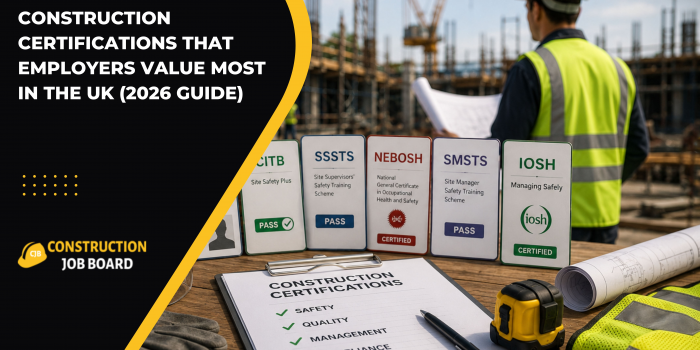
- Complete SSSTS or SMSTS to move into team leader or site manager roles
- Start their own contracting business once fully qualified and experienced
- Move into related professional routes, such as quantity surveying or building control, particularly from higher-level apprenticeship pathways
Final Thoughts
Construction apprenticeships UK-wide offer one of the clearest, lowest-debt routes into a stable, well-paid trade, with real earning potential from day one and strong long-term career progression. Choosing the right trade, meeting the entry requirements, and applying early — especially for high-demand trades like electrical and plumbing — gives you the best chance of starting a career that keeps paying off for decades.
Frequently Asked Questions
What age can you start a construction apprenticeship in the UK?
Most construction apprenticeships accept applicants from age 16, with no strict upper age limit for many programmes, meaning career changers can also apply successfully.
Do you need GCSEs to start a construction apprenticeship?
Level 2 apprenticeships often prefer GCSEs including English and Maths, though many providers accept candidates without these grades and offer functional skills support alongside the apprenticeship itself.
How much do construction apprentices get paid in the UK?
Apprentice pay starts around the National Apprentice Minimum Wage in year one, with many employers paying above this, especially in high-demand trades, and pay rising significantly from year two onwards.
Which construction trade has the best apprenticeship opportunities?
Electrical installation and plumbing consistently see the highest demand and strongest long-term pay, though bricklaying, carpentry, and groundworks also offer solid, stable career paths.
How long does a construction apprenticeship take to complete?
Most trade apprenticeships take between one and four years depending on the level and trade, with higher and degree-level apprenticeships in areas like quantity surveying typically taking longer.
Can you get a permanent job after finishing a construction apprenticeship?
Yes, many employers offer apprentices a permanent role with a pay increase upon successful completion, since the apprentice is already trained in that specific company's systems and site practices.