Construction Career Paths UK: Site, Office or Hybrid?
10/08/2026

How to Choose the Right Construction Career Path in the UK: Site, Office or Hybrid?
Choosing between different Construction Career Paths UK can be difficult because the industry offers far more options than traditional site-based roles. You could work directly on a construction site, manage projects from an office, combine office and site responsibilities, or move towards increasingly digital roles that allow more flexibility. The right choice depends on your skills, personality, career ambitions, preferred working environment and the type of projects you want to be involved in.
One of the biggest mistakes job seekers make is choosing a construction role simply because it has a good salary or because someone they know recommended it.
A role can be financially attractive but still be completely unsuitable for your preferred working style.
For example, someone who enjoys solving technical problems and analysing information may thrive as a quantity surveyor, planner or design professional but dislike spending every day managing a busy site.
Similarly, someone who enjoys working with people, making quick decisions and seeing physical progress may find an office-heavy role frustrating.
The good news is that construction offers enough variety for most people to find a career path that matches their strengths.
Construction Is No Longer Just a Site-Based Career
When people hear the word construction, they often imagine workers wearing PPE, operating machinery or building structures.
Those jobs remain essential, but the modern construction industry also requires professionals working in:
- Project management
- Quantity surveying
- Estimating
- Planning
- Design
- Procurement
- Commercial management
- Engineering
- Health and safety
- Digital construction
- Sustainability
- Contracts
- Building control
- Facilities management
This means you don't necessarily have to spend your entire career working outdoors or on a construction site.
You can move between different environments as your experience develops.
Site-Based Construction Careers
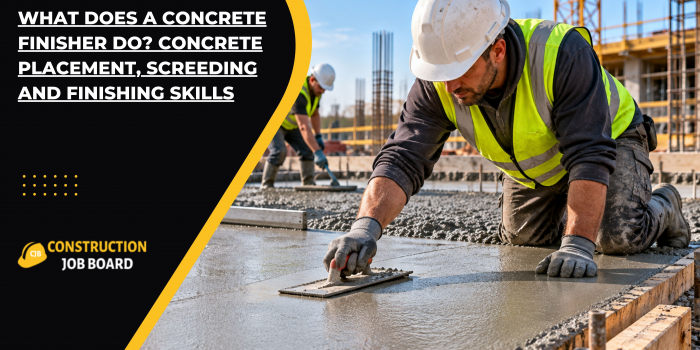
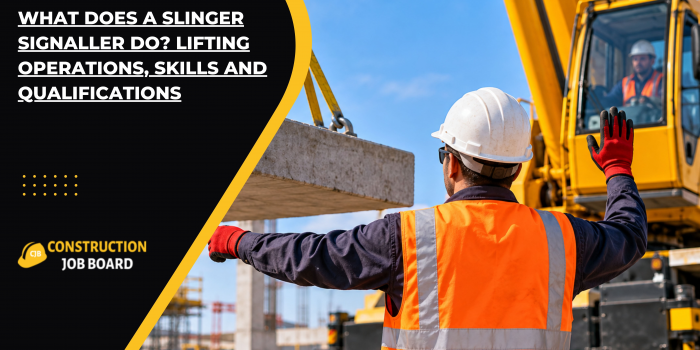
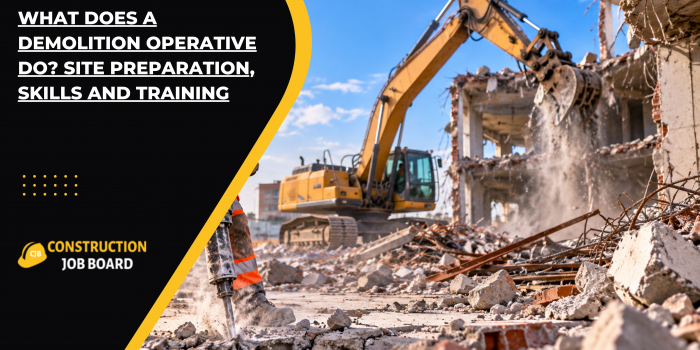
Site-based roles are ideal for people who enjoy practical environments, teamwork and seeing projects develop from plans into physical structures.
Depending on the position, you could spend most of your working day supervising workers, coordinating subcontractors, checking quality, monitoring safety or solving problems.
Common site-based roles include:
- Site Manager
- Site Supervisor
- Site Engineer
- General Labourer
- Groundworker
- Bricklayer
- Carpenter
- Electrician
- Plumber
- Plant Operator
- Construction Manager
Site work can be demanding.
You may need to work outdoors in different weather conditions, travel between projects, start early and deal with unexpected problems.
However, it can also be highly rewarding.
You can physically see the results of your work, develop strong leadership skills and gain experience that can lead to senior positions.
For someone who enjoys practical problem-solving and working with teams, site-based Construction Jobs UK can provide an excellent long-term career.
Office-Based Construction Careers
Not everyone wants a career that involves being on site every day.
Fortunately, the construction industry has a large professional workforce working primarily from offices.
Office-based roles can involve analysing project information, preparing budgets, managing contracts, creating programmes, producing designs or communicating with clients.
Examples include:
Quantity Surveyor
Quantity surveyors manage the commercial side of construction projects.
Their responsibilities can include:
- Cost planning
- Procurement
- Valuation
- Contract administration
- Budget management
- Commercial reporting
A quantity surveyor may visit sites regularly, but much of the work involves analysing information and managing commercial documentation.
If you're naturally analytical and comfortable with numbers, this could be one of the strongest Construction Career Options UK offers.
Construction Planner
Construction planners develop and monitor project programmes.
They need to understand:
- Project schedules
- Dependencies
- Resources
- Deadlines
- Construction sequences
- Potential delays
Planning is particularly suitable for people who enjoy organisation, forecasting and problem-solving.
Estimator
Estimators calculate how much construction projects are likely to cost.
They examine drawings, specifications, labour requirements, materials and subcontractor costs before preparing estimates.
This is another career where attention to detail can be more important than physical strength.
The Hybrid Construction Career
For many professionals, the most attractive option is somewhere between site and office.
Hybrid construction roles allow professionals to spend part of their time on site and part of their time dealing with planning, documentation, meetings or project management.
Examples include:
- Project Manager
- Contracts Manager
- Site Engineer
- Quantity Surveyor
- Construction Planner
- Design Manager
- Health and Safety Manager
- Project Coordinator
A project manager, for example, might attend a site meeting in the morning, visit a client later in the day and complete project documentation from an office afterwards.
This combination can provide variety while maintaining a strong connection with the physical construction process.
Which Construction Career Path Is Best for You?
Instead of asking which construction career is "best", ask which one matches how you naturally work.
If you enjoy practical work
Consider:
- Skilled trades
- Site supervision
- Site engineering
- Plant operation
- Groundworks
If you enjoy numbers
Consider:
- Quantity surveying
- Estimating
- Commercial management
- Cost consultancy
If you enjoy organisation
Consider:
- Construction planning
- Project coordination
- Project management
- Contracts administration
If you enjoy technology
Consider:
- BIM
- Digital construction
- CAD
- Construction data
- Smart building systems
If you enjoy people management
Consider:
- Site management
- Construction management
- Project management
- Contracts management
If you enjoy design
Consider:
- Architectural design
- CAD
- Engineering design
- Design management
The important point is that construction isn't one career. It is an entire ecosystem of interconnected professions.
Don't Choose a Career Based Only on Salary
Salary matters, but it shouldn't be your only consideration.
Two roles can offer similar salaries while providing completely different lifestyles.
Before accepting a position, consider:
Working environment:
Do you prefer an office, site or combination?
Travel:
Will you need to commute to different projects?
Working hours:
Are early starts, overtime or weekend work expected?
Responsibility:
How much decision-making will the role involve?
Career progression:
What could the position lead to after two, five or ten years?
Training:
Will the employer help you develop new skills?
Job stability:
Is the role linked to one project or part of a long-term business?
These questions can reveal whether an opportunity is genuinely suitable.
Construction Career Paths Can Change
You don't have to select one career and stay in it forever.
Construction professionals frequently move between disciplines.
For example:
Site Engineer → Project Engineer → Project Manager
or:
Assistant Quantity Surveyor → Quantity Surveyor → Senior Quantity Surveyor → Commercial Manager
Another possible route is:
Site Supervisor → Site Manager → Construction Manager → Project Director
Your first job doesn't have to determine your entire career.
Instead, think about your first role as the foundation for your next opportunity.
The Growing Role of Technology
Technology is also creating more crossover between construction and IT.
Modern construction projects increasingly depend on digital systems, data, software and connected devices.
That creates opportunities for professionals interested in technology alongside construction.
For example, construction companies may need people who understand:
- BIM platforms
- Data analysis
- Digital reporting
- Project management software
- Cloud collaboration
- IoT systems
- Digital asset management
This creates an interesting career bridge between construction and technology.
For readers interested in the wider technology sector, related opportunities can include IT Support Jobs, Data Analyst Jobs, Business Analyst Jobs, Software Engineer Jobs, Developer Jobs, and Cyber Security Jobs.
These roles are particularly relevant to professionals considering a long-term move from construction into technology-driven careers.
Don't Ignore Transferable Skills
One advantage of working in construction is that many skills transfer between roles.
For example, a site manager develops:
- Leadership
- Communication
- Planning
- Risk management
- Problem-solving
- Team management
- Decision-making
Those skills can support progression into project management, contracts management or operations leadership.
Likewise, a quantity surveyor develops commercial and analytical skills that can support roles involving procurement, contracts and business management.
Your current job may therefore be giving you skills that become valuable somewhere else.
How to Choose Your Next Construction Role
Before applying for your next position, create a simple career checklist.
Step 1: Identify your strongest skills
Ask yourself what you are genuinely good at.
Step 2: Decide your preferred environment
Would you rather work:
- Mostly outdoors?
- Mostly indoors?
- A mixture of both?
Step 3: Consider your long-term goal
Do you want to become:
- A technical specialist?
- A manager?
- A commercial expert?
- A project leader?
- A digital professional?
Step 4: Identify the skills you are missing
Look at job advertisements for your target role and compare their requirements with your current experience.
Step 5: Build those skills
This could involve:
- Formal qualifications
- Short courses
- Employer training
- Professional memberships
- Practical experience
- Digital learning
Step 6: Search strategically
Don't apply for every construction vacancy you see.
Search for roles that move you closer to your long-term objective.
What Does the Future of Construction Careers Look Like?
The future is unlikely to belong exclusively to either site workers or office professionals.
Instead, construction is moving towards professionals who can understand both the physical project and the information behind it.
A site manager who understands digital reporting can communicate more effectively with project teams.
A quantity surveyor who understands BIM can work with richer project information.
A civil engineer who understands data can make better-informed decisions.
A construction manager who understands sustainability can respond to changing client requirements.
This is why career planning should focus on building combinations of skills rather than collecting job titles.
Final Thoughts
There is no single "best" construction career.
The right choice depends on your strengths, working preferences and long-term ambitions.
If you enjoy practical work, site-based careers can provide strong progression and job satisfaction. If you prefer numbers, planning or analysis, office-based roles may suit you better. If you want variety, hybrid careers can combine the advantages of both.
The most successful professionals are often those who remain open to changing direction.
Your first construction job doesn't have to be your final destination. Treat every role as an opportunity to build experience, develop transferable skills and move closer to the career you actually want.
By understanding the different Construction Career Paths UK offers, you can make a more informed decision about where to invest your time, qualifications and experience—and ultimately choose opportunities that fit both your professional goals and your preferred way of working.
People Also Ask
What are the main Construction Career Paths UK offers?
The UK construction industry offers site-based, office-based and hybrid careers across skilled trades, engineering, surveying, planning, project management, commercial management, design and digital construction.
Is construction a good career for someone who doesn't want to work on site?
Yes. Quantity surveying, estimating, planning, design, commercial management and several technology-focused roles can involve substantial office-based work.
Can I move from a site-based construction role into an office job?
Yes. Site experience can be valuable when moving into planning, project management, estimating, quantity surveying or contracts-related roles, particularly when combined with relevant training.
Which construction jobs combine site and office work?
Project managers, quantity surveyors, site engineers, contracts managers, planners and design managers commonly divide their time between site and office environments.
Can construction experience help me move into technology?
Yes. Construction professionals with experience in digital systems, data, BIM or project technology can develop transferable skills for technology-focused roles.
Frequently Asked Questions
1. What are the best Construction Career Paths UK for long-term progression?
There is no single best path. Site management, project management, quantity surveying, engineering, planning, commercial management and digital construction can all provide strong progression depending on your skills and goals.
2. Can I build a construction career without working outdoors?
Yes. Many construction professions are primarily office-based, including estimating, quantity surveying, planning, design, commercial management and some digital construction roles.
3. Is site experience useful for office-based construction jobs?
Yes. Understanding how construction works in practice can be valuable in planning, project management, estimating, commercial and technical positions.
4. Can construction professionals move into IT careers?
Yes. Professionals who develop digital, analytical and technology skills can potentially transition into areas such as IT support, data analysis, business analysis or software-related careers.
5. How should I choose between construction career options?
Consider your preferred working environment, strengths, salary expectations, travel requirements, working hours, training opportunities and long-term progression before choosing a role.