Groundworker Jobs UK 2026 | Salaries & Hiring Hotspots
06/08/2026
Groundworker Jobs UK: Salaries, Hotspots and How to Get Hired in 2026
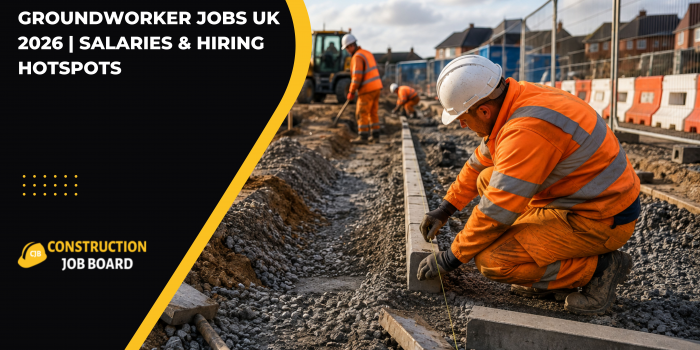
Groundworker jobs UK wide sit right at the foundation of nearly every construction project, from residential housebuilding through to major infrastructure and renewable energy schemes, making this one of the most consistently in-demand trades across the entire sector. Groundworkers are typically the first trade on site and among the most versatile, covering everything from excavation and drainage to foundations and utility installation. This guide covers what the UK groundworker job market looks like in 2026, typical earnings by region, where demand is strongest, and how to find the right opportunity.
Why Groundworkers Are Consistently in Demand
Groundworkers are essential to virtually every construction project regardless of sector, which gives this trade a level of demand stability that's harder to find in more specialised roles. Whether it's residential housebuilding, commercial development, infrastructure schemes or the UK's expanding renewable energy pipeline, groundworks is almost always the starting point — meaning demand for groundworkers tends to track the overall health of the construction sector as a whole, rather than being tied to any single project type. This breadth also means experienced groundworkers often have genuine flexibility to move between residential, commercial and infrastructure work depending on where demand and pay are strongest at any given time.
Groundworker Salaries by UK Region
Groundworker pay varies by region, specialism (general groundworks versus specialist drainage or utilities) and whether work is employed or subcontracted.
|
Region |
Entry-Level |
Experienced |
Specialist/Subcontract |
|
London & South East |
£30,000–£36,000 |
£40,000–£52,000 |
£52,000–£68,000+ |
|
Manchester & North West |
£25,000–£31,000 |
£33,000–£43,000 |
£42,000–£56,000 |
|
Yorkshire & Humber |
£23,000–£29,000 |
£31,000–£40,000 |
£38,000–£50,000 |
|
West Midlands |
£24,000–£30,000 |
£32,000–£42,000 |
£40,000–£54,000 |
|
Scotland |
£24,000–£31,000 |
£33,000–£43,000 |
£40,000–£58,000 |
Groundworkers with specialist plant operating tickets or drainage and utilities experience typically sit toward the upper end of, or above, these ranges.
Regional Hotspots for Groundworker Jobs
- London and the South East — strong demand tied to continued high-density residential and commercial development, alongside major infrastructure schemes
- Greater Manchester — one of the busiest regional groundworks markets outside London, spanning residential, logistics and commercial projects
- West Midlands — strong, steady demand tied to the region's substantial infrastructure investment and logistics construction pipeline
- Yorkshire — consistent demand across residential housebuilding in Leeds, Sheffield and Wakefield
- Scotland — steady demand across traditional residential and commercial groundworks, plus fast-growing opportunities tied to renewable energy site infrastructure and grid connection projects
Skills and Qualifications That Improve Job Prospects
- CSCS card — a baseline requirement for the vast majority of site-based groundworker roles across the UK.
- NVQ Level 2 in Groundworks — the standard formal qualification most employers look for, alongside relevant plant operating tickets where applicable.
- Plant operating tickets (CPCS or NPORS) — groundworkers who can also operate excavators, dumpers or rollers are consistently in stronger demand and command higher pay.
- Drainage and utilities experience — a genuine specialism within groundworks that commands a premium given relatively scarce specialist skills.
- Infrastructure or renewable energy site experience — increasingly valuable given growing demand from the UK's infrastructure and renewable energy construction pipeline.
How to Find Groundworker Jobs Effectively
- Use a specialist construction job board with trade-specific filtering to surface groundworker vacancies more efficiently than general job sites.
- Register with construction recruitment agencies that specialise in groundworks and civils, many of which maintain strong relationships with infrastructure and housebuilding contractors.
- Set up regional job alerts to catch new vacancies quickly, particularly for specialist drainage, utilities or plant-operating roles where demand often outpaces supply.
- Keep plant tickets and safety certifications current, since these are typically checked early in the recruitment process and can be the deciding factor between similar candidates.
- Consider infrastructure and renewable energy contract work — these sectors frequently offer strong rates for experienced groundworkers willing to work flexibly across project locations.
Final Thoughts
Groundworker jobs across the UK benefit from genuinely broad demand spanning residential, commercial, infrastructure and renewable energy construction. With strong regional hotspots across London, Manchester, the West Midlands, Yorkshire and Scotland, and real earning upside for those with plant tickets or specialist drainage and utilities experience, groundworks remains one of the most consistently in-demand trades in UK construction.
Frequently Asked Questions
What is the average groundworker salary in the UK?
UK groundworker salaries typically range from £23,000 to £43,000 for employed roles depending on region and experience, while specialist or subcontracted groundworkers can often earn £40,000–£68,000 or more.
Do I need plant tickets to work as a groundworker?
Not always, but groundworkers with CPCS or NPORS plant operating tickets are consistently in stronger demand and typically command higher pay than those without them.
Where is groundworker demand strongest in the UK?
London and the South East offer the highest pay, while Manchester, the West Midlands, Yorkshire and Scotland all show consistently strong demand tied to residential, infrastructure and renewable energy construction.
Is drainage and utilities work more profitable than general groundworks?
Yes, drainage and utilities specialists typically command a premium over general groundworks roles, reflecting relatively scarce specialist skills relative to demand.
Do I need a CSCS card for groundworker jobs?
Yes, a valid CSCS card is required for the vast majority of site-based groundworker roles across the UK and is typically checked before work can begin on site.
How can I find groundworker jobs quickly?
Using a specialist construction job board with trade and location filters, registering with groundworks and civils-focused recruitment agencies, and setting up regional job alerts are the most effective ways to find vacancies quickly.