How to Become a Slinger Signaller in the UK: Duties, Qualifications, Salary and Career Opportunities
06/11/2026
How to Become a Slinger Signaller in the UK: Duties, Qualifications, Salary and Career Opportunities
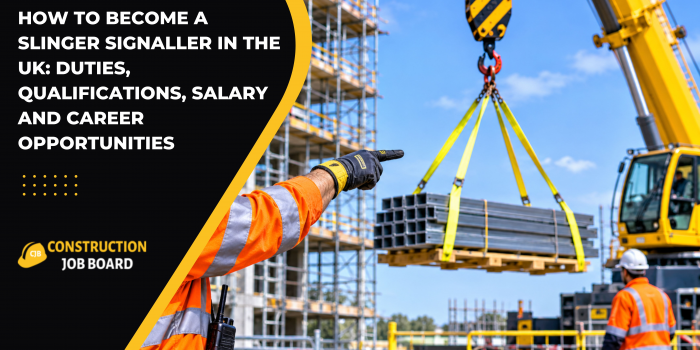
Slinger signaller jobs in the UK involve helping construction teams move heavy materials safely using cranes and other lifting equipment. A slinger signaller attaches loads to lifting equipment, checks lifting accessories and communicates with the crane operator using agreed hand signals or radio instructions.
The role is important on construction sites where materials such as steel beams, concrete components, scaffolding and plant equipment need to be lifted and positioned. People can enter the occupation through recognised training, practical experience and qualifications such as CPCS A40 or an appropriate NPORS route.
What Does a Slinger Signaller Do?
A slinger signaller supports lifting operations by connecting loads to lifting equipment and guiding their movement. The work must follow the approved lifting plan and the instructions of the responsible lifting team.
Typical responsibilities include:
- Checking the load's weight and dimensions against available information.
- Selecting suitable chains, slings and other lifting accessories.
- Inspecting lifting accessories before use.
- Attaching and securing loads correctly.
- Communicating with crane operators using hand signals or radios.
- Guiding loads during lifting, movement and positioning.
- Helping maintain exclusion zones around lifting activities.
- Reporting damaged or unsuitable lifting accessories.
- Storing equipment correctly after use.
- Following site safety procedures and reporting hazards.
The CPCS Slinger/Signaller A40 training standard covers the role's responsibilities, lifting accessories, load control, communication and hazard awareness.
Where Do Slinger Signallers Work?
Slinger signallers work wherever cranes and lifting equipment are used to move materials or components.
Common working environments include:
- Residential and commercial building sites.
- High-rise construction projects.
- Civil engineering and infrastructure developments.
- Bridge and road construction.
- Railway and transport projects.
- Industrial buildings and warehouses.
- Energy and utility developments.
- Demolition and major refurbishment projects.
The work may involve outdoor conditions, busy construction environments and changing project requirements. Some roles require early starts, weekend work, night shifts or travel between sites.
What Skills Are Needed for Slinger Signaller Jobs?
Slinger signallers need practical skills and a strong understanding of lifting safety.
Communication: Clear hand signals and radio communication are essential when directing crane movements.
Knowledge of lifting accessories: Workers need to understand different slings, chains, shackles and their safe working limits.
Load assessment: Understanding load weight, dimensions and centre of gravity helps workers select suitable lifting accessories.
Safety awareness: Recognising hazards, maintaining exclusion zones and following lifting plans are important.
Teamwork: Slinger signallers coordinate with crane operators, crane supervisors, appointed persons and other site workers.
Attention to detail: Equipment checks, attachment methods and instructions must be followed carefully.
Decision-making: Workers must report defects, unclear instructions or unsafe conditions rather than allowing a lift to continue without clarification.
The HSE guidance on lifting operations explains the importance of planning, supervision and competent personnel when lifting equipment is used.
What Qualifications Do You Need to Become a Slinger Signaller?
One recognised training route is the CPCS A40 Slinger/Signaller qualification.
CITB provides CPCS A40 training for people who need to develop or formalise their skills in slinging and signalling.
Training can cover:
- The responsibilities of a slinger signaller.
- Types of lifting equipment and accessories.
- Load weights and dimensions.
- Safe working loads and lifting limitations.
- Attaching and detaching lifting accessories.
- Slinging techniques and load control.
- Hand signals and radio communication.
- Equipment checks and defect reporting.
- Hazards around lifting operations.
The CITB CPCS A40 experienced operators course is intended for people who already have relevant practical experience and need formal recognition. Entry requirements include a recent CITB Health, Safety and Environment test, suitable English communication skills and valid identification.
The course route and assessment requirements depend on whether a candidate is a novice or experienced worker. The current CPCS A40 training standard explains the relevant training and assessment expectations.
Some employers also accept appropriate NPORS qualifications. Candidates should check the card and category required by the employer before booking training.
Can You Get an NVQ in Slinger Signalling?
Yes. The Level 2 NVQ Diploma in Controlling Lifting Operations (Construction) – Slinger/Signaller is a workplace-based qualification.
The qualification assesses a worker's ability to demonstrate practical competence while carrying out slinger signaller duties.
According to NOCN's Level 2 NVQ qualification information, the qualification is designed for achievement in a real workplace environment. Learners must be employed to undertake the workplace assessment.
This route can be useful for workers who already carry out lifting operations and want to demonstrate their competence through an accredited qualification.
What Is the Difference Between a Slinger Signaller and a Banksman?
The terms can sometimes be confused, but they do not always describe the same job.
A slinger signaller attaches loads to lifting equipment and communicates with crane operators during lifting operations.
A vehicle banksman or traffic marshal helps guide vehicles and plant movements, particularly when drivers have restricted visibility.
The responsibilities, training and qualifications can therefore differ. Candidates should check the exact duties in a vacancy rather than assuming that a banksman qualification automatically covers slinger signaller work.
How Much Does a Slinger Signaller Earn in the UK?
Slinger signaller pay varies according to experience, qualifications, location, employer and project requirements.
There is no single salary range that accurately represents every slinger signaller vacancy. Some employers advertise hourly-paid temporary roles, while others offer permanent positions or project-based contracts.
Factors that can influence earnings include:
- CPCS A40 or relevant NPORS qualification.
- Previous experience in lifting operations.
- Experience with different types of loads and lifting accessories.
- Work on major infrastructure or specialist projects.
- Shift patterns, overtime and weekend work.
- Travel requirements and project location.
- Additional responsibilities within the lifting team.
Candidates should compare current job advertisements and check whether advertised rates include overtime, travel allowances or other benefits.
Can a Slinger Signaller Become a Crane Supervisor?
Yes. Slinger signallers can develop their careers towards crane supervision by gaining further lifting operations experience and completing the relevant training.
A possible progression route includes:
- Trainee or novice slinger signaller: Learn lifting safety and basic equipment handling.
- Qualified slinger signaller: Demonstrate competence in attaching loads and communicating with crane operators.
- Experienced slinger signaller: Develop experience across different lifting operations.
- Crane supervisor: Complete the relevant training, such as CPCS A62, and take responsibility for supervising lifting activities.
- Appointed person: Develop the additional competence required to plan lifting operations.
The CITB Crane Supervisor A62 course explains the separate responsibilities involved in supervising crane operations.
Progression depends on training, experience and the responsibilities an individual is competent to undertake.
Where Can You Find Slinger Signaller Jobs in the UK?
Slinger signaller vacancies are advertised by construction contractors, crane hire companies, civil engineering businesses, infrastructure contractors and specialist lifting companies.
Useful job search terms include:
- Slinger signaller jobs UK.
- CPCS A40 jobs.
- Slinger jobs.
- Lifting operations jobs.
- Crane slinger jobs.
- Slinger signaller vacancies.
- NPORS slinger signaller jobs.
- Trainee slinger signaller jobs.
When reviewing vacancies, check the required qualification, card category, experience, project location, working hours and type of lifting operations involved.
Construction Job Board UK can help candidates explore construction vacancies and related opportunities.
Suggested internal links for Construction Job Board UK:
- Crane Supervisor Jobs – link to the relevant crane supervisor job search.
- Crane Operator Jobs – link to the crane operator category.
- Plant Operator Jobs – link to the plant operator category.
- Construction Labourer Jobs – link to the construction labour category.
- Site Supervisor Jobs – link to the site supervisor category.
Use the actual category URLs from the website CMS when adding these internal links.
Frequently Asked Questions
1. What qualification do you need to become a slinger signaller?
CPCS A40 is a recognised qualification route for slinger signallers. Relevant training, practical assessment and an appropriate card or qualification accepted by the employer may be required.
2. How long does slinger signaller training take?
Training duration depends on the candidate's experience, course format and assessment arrangements. CITB's published course information includes a four-day route for inexperienced candidates, while experienced-worker routes may be shorter.
3. Can you become a slinger signaller without experience?
Yes. Novice training routes are available for people with limited or no previous experience in the occupation. Basic construction site knowledge can be beneficial.
4. Is a slinger signaller the same as a banksman?
No. A slinger signaller attaches loads to lifting equipment and guides crane movements. A vehicle banksman generally helps guide vehicles and plant movements. The required training and responsibilities are different.
5. Can a slinger signaller become a crane operator?
Yes. With additional training, relevant experience and the required crane operator qualifications, a slinger signaller may progress into crane operation. The National Careers Service crane driver profile identifies slinger signaller work as one possible route towards crane driving.