How to Become a Piling Operative in the UK: Duties, Qualifications, Salary and Career Opportunities
04/11/2026
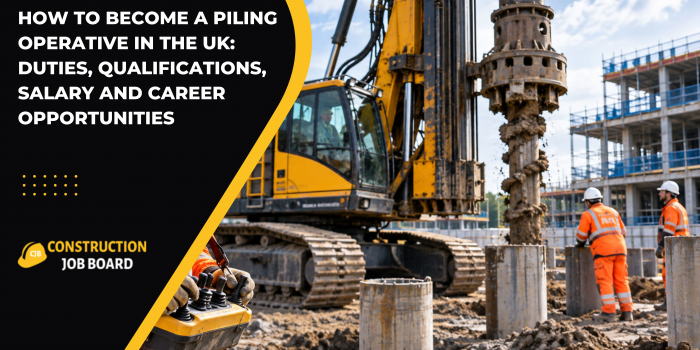
How to Become a Piling Operative in the UK: Duties, Qualifications, Salary and Career Opportunities
Piling operative jobs in the UK are part of the specialist construction sector responsible for creating stable foundations for buildings, bridges, roads and other major structures. Piling operatives support foundation work by preparing materials, assisting with machinery, guiding equipment and helping install piles into the ground.
A career in piling can suit people who enjoy practical, outdoor work and want to develop specialist construction skills. Entry routes include workplace training, apprenticeships and recognised vocational qualifications. With experience, workers may progress into specialist piling, rig operation or supervisory positions.
What Does a Piling Operative Do?
A piling operative supports the installation of piles that transfer the weight of a structure into stronger layers of soil or rock. These foundations are particularly important where ordinary shallow foundations may not provide sufficient stability.
Typical responsibilities include:
- Preparing materials, tools and equipment for piling operations.
- Loading, unloading and moving construction materials.
- Supporting piling rig operators and specialist piling teams.
- Measuring, marking and preparing materials.
- Guiding machinery and vehicles under established site procedures.
- Helping position equipment and maintain safe working areas.
- Assisting with concrete handling and related foundation activities.
- Inspecting, cleaning and maintaining tools and equipment.
- Monitoring work progress and reporting issues to supervisors.
The exact duties depend on the piling method, project requirements and level of responsibility.
Where Do Piling Operatives Work?
Piling operatives work on construction projects that require specialist foundations. Their work can take place on both large infrastructure developments and smaller building sites.
Common project types include:
- Residential and commercial building developments.
- Bridges, roads and transport infrastructure.
- Railway and station construction.
- Industrial buildings and warehouses.
- Energy and utility infrastructure.
- Marine and waterfront developments.
- Projects involving difficult ground conditions.
Piling work may involve restricted spaces, heavy machinery, lifting operations, noise and changing weather conditions. Workers must follow site-specific safety procedures throughout the project.
What Skills Are Needed for Piling Operative Jobs?
Employers look for practical ability, awareness of safety procedures and the willingness to work as part of a specialist team.
Important skills include:
Health and safety awareness: Understanding site rules, exclusion zones, lifting procedures and safe working practices is essential.
Teamwork: Piling operations involve coordination between rig operators, supervisors, slinger signallers and other construction workers.
Communication: Operatives must understand instructions, follow signals and report hazards or unexpected ground conditions.
Physical fitness: The role can involve manual handling, outdoor work and standing for extended periods.
Attention to detail: Measurements, equipment checks and work instructions must be followed carefully.
Practical problem-solving: Workers need to respond appropriately when equipment, materials or site conditions change.
Understanding construction drawings, method statements and risk assessments can also be useful as workers develop their experience.
What Qualifications Do You Need to Become a Piling Operative?
There is no single route into every entry-level piling role. Some employers recruit people with general construction experience and provide workplace training. Specialist positions may require relevant vocational qualifications and evidence of occupational competence.
A recognised qualification is the Level 2 NVQ Diploma in Piling Operations (Construction) – Piling Operative. It is designed to assess practical competence in a real workplace environment.
The qualification covers areas such as:
- Contributing to piling operations.
- General health and safety.
- Productive working practices.
- Moving, handling and storing resources.
- Slinging and signalling suspended loads.
The qualification is workplace-based, so learners normally need access to relevant work activities to demonstrate their competence.
Employers may also ask for a suitable construction site access card, depending on the project and the work being undertaken. Candidates should confirm the required card and training with the employer or site management before starting.
Is There a Piling Operative Apprenticeship in the UK?
Yes. An apprenticeship can provide a structured route into the piling industry.
The Level 2 Piling Attendant apprenticeship is designed for people who assist with driving, boring and forming piles. Apprentices support piling machinery operators and specialist operatives while developing practical skills.
Training can include:
- Handling and preparing materials.
- Supporting piling machinery operations.
- Guiding plant and vehicles.
- Maintaining equipment.
- Following construction drawings and work instructions.
- Applying health, safety and environmental procedures.
Skills England lists an apprenticeship duration of approximately 18 to 24 months for the Piling Attendant standard. The actual programme and availability depend on the employer and training provider.
An apprenticeship can be particularly useful for people entering the industry who want to learn while gaining workplace experience.
How Much Does a Piling Operative Earn in the UK?
Piling operative salaries vary according to experience, location, employer, project type and level of responsibility.
Go Construct gives an indicative salary range of approximately £25,000 for newly trained piling operatives to £45,000 for experienced workers. These figures are guidance rather than guaranteed earnings.
Factors that can affect pay include:
- Experience working on piling projects.
- Relevant NVQ qualifications and training.
- Specialist machinery or rig operation skills.
- Responsibility for guiding or supervising work.
- Project location and employer.
- Overtime, shift patterns and travel requirements.
Candidates should compare the salary, working hours, travel arrangements and training opportunities offered in individual vacancies rather than relying on a single national figure.
What Is the Difference Between a Piling Operative and a Piling Rig Operator?
These roles are connected, but they do not necessarily involve the same responsibilities.
A piling operative generally supports the piling process through material preparation, equipment handling, site coordination and other practical tasks.
A piling rig operator has responsibility for operating specialist piling machinery within their training and competence. This can include carrying out machine checks, positioning equipment and operating the rig to complete piling work.
Some workers progress from supporting operations into machinery-related roles after gaining suitable training, experience and recognised competence.
How Can You Progress in a Piling Career?
Piling offers opportunities to develop specialist construction experience.
A possible progression route is:
- Piling attendant or trainee: Learn the basic processes and support experienced workers.
- Piling operative: Develop practical competence and take on more responsibility during piling operations.
- Specialist piling operative: Build experience in particular piling methods and site activities.
- Piling rig operator: Complete the relevant training and demonstrate competence to operate specialist equipment.
- Charge hand or supervisor: Coordinate workers, monitor activities and support safe completion of operations.
Further progression may involve contracts management or other construction management roles, depending on qualifications and experience.
Where Can You Find Piling Operative Jobs in the UK?
Piling operative vacancies may be advertised by specialist foundation contractors, civil engineering companies, infrastructure contractors and wider construction employers.
When searching for opportunities, use related job titles as well as the exact phrase "piling operative". Useful search terms include:
- Piling attendant jobs.
- Piling labourer jobs.
- Piling rig attendant.
- Trainee piling operative.
- Piling operations jobs.
- Foundation construction operative.
- Piling rig operator.
Candidates should check the job description for required experience, qualifications, site location, travel expectations and machinery-related responsibilities.
Construction Job Board UK can be used to explore construction vacancies and related opportunities. Relevant internal links to consider include:
- Piling Operative Jobs – link to the relevant job search results.
- Construction Labourer Jobs – link to the construction labour category.
- Groundworker Jobs – link to the groundworker category.
- Plant Operator Jobs – link to the plant operator category.
- Civil Engineering Jobs – link to the relevant civil engineering category.
Use the live category URLs from the website CMS when adding these links.
Frequently Asked Questions
1. Do you need experience to become a piling operative?
Not every entry-level role requires previous piling experience. Some employers offer training to candidates with general construction experience, a suitable attitude and an understanding of site safety.
2. What NVQ do you need for piling operations?
The Level 2 NVQ Diploma in Piling Operations (Construction) – Piling Operative is a recognised qualification for demonstrating competence in the role.
3. How much can a piling operative earn in the UK?
Go Construct gives an indicative range of around £25,000 for newly trained workers to £45,000 for experienced piling operatives. Actual earnings vary by employer, location, experience and overtime.
4. Is piling work physically demanding?
Yes. The role can involve outdoor work, manual handling, equipment preparation, long periods on site and working around heavy machinery. Appropriate training and safe working procedures are important.
5. Can a piling operative become a piling rig operator?
Yes. With relevant experience, training and demonstrated competence, a piling operative may progress towards specialist machinery operation. The required qualifications and authorisations depend on the equipment and employer.
FAQ Schema Markup
Add the following JSON-LD to the article's FAQ schema field or the appropriate page-level schema area. The answers should match the visible FAQs above.