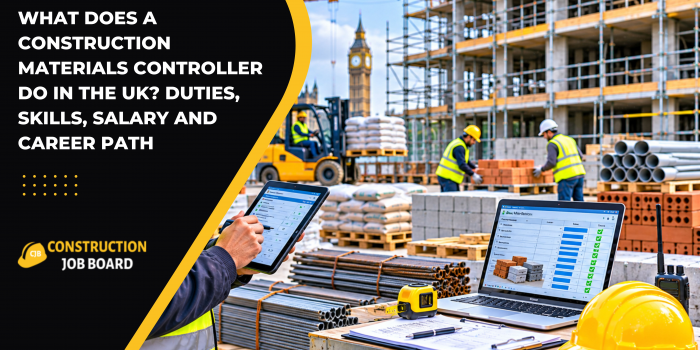
What Does a Construction Materials Controller Do in the UK? Duties, Skills, Salary and Career Path
03/11/2026
What Does a Construction Materials Controller Do in the UK? Duties, Skills, Salary and Career Path
Construction materials controllers play an important role in keeping building and infrastructure projects organised. They help ensure that the correct materials, equipment and supplies are available at the right time, in the right quantities and at the appropriate locations.
Construction materials controller jobs in the UK involve coordinating deliveries, monitoring stock levels, checking incoming materials, maintaining inventory records and communicating with suppliers and construction teams.
From residential developments to major infrastructure projects, effective materials management helps construction businesses reduce delays, control waste and maintain project schedules.
For people interested in construction operations, logistics or supply chain management, becoming a materials controller can provide a career route that combines organisation, communication, technical knowledge and practical site experience.
What Does a Construction Materials Controller Do?
A construction materials controller manages the movement, storage and availability of materials used during construction projects.
The role connects procurement teams, suppliers, warehouse staff, subcontractors and site management.
Typical responsibilities include:
- Receiving and checking construction material deliveries.
- Comparing delivery notes against purchase orders.
- Monitoring material quantities and stock levels.
- Recording materials received, issued and returned.
- Organising materials in designated storage areas.
- Coordinating deliveries with construction teams.
- Reporting damaged, missing or incorrect materials.
- Identifying potential material shortages.
- Maintaining inventory records and documentation.
- Supporting site managers with material requirements.
The responsibilities vary depending on the employer and project size. On a large infrastructure project, materials controllers may manage complex delivery schedules and specialist equipment. On smaller developments, the role may also involve general stores management and site logistics.
Why Is Materials Management Important in Construction?
Construction projects depend on materials arriving when different stages of work are ready to begin.
A delay in receiving concrete, steel, timber, electrical components or plumbing materials can affect several activities across a project.
Materials management helps construction teams maintain continuity and avoid unnecessary interruptions.
1. Preventing Material Shortages
Materials controllers monitor stock levels and communicate with procurement teams to identify shortages before they affect site activities.
2. Reducing Material Waste
Incorrect storage, excessive ordering and damaged deliveries can increase project costs.
Organised inventory management helps reduce unnecessary material losses.
3. Supporting Construction Schedules
Materials must be available when subcontractors and site teams need them.
Coordinating deliveries with construction programmes helps keep work activities organised.
4. Maintaining Accurate Records
Delivery notes, purchase orders, stock records and material issue documents help businesses monitor what has been received, stored and distributed.
5. Improving Site Organisation
Well-managed storage areas make it easier for workers to locate materials and equipment while supporting safer site operations.
What Are the Main Responsibilities of a Construction Materials Controller?
The role can involve several operational and administrative activities.
Receiving and Inspecting Materials
Materials controllers check deliveries when they arrive at a construction site or storage facility.
This can involve:
- Checking delivery quantities.
- Comparing goods against purchase orders.
- Identifying damaged materials.
- Recording missing items.
- Reporting delivery discrepancies.
- Updating receipt records.
Any damaged, incorrect or incomplete delivery should be reported through the employer's established procedures.
Monitoring Stock Levels
Maintaining appropriate stock levels is another important responsibility.
Materials controllers track available supplies and identify when additional materials need to be ordered.
They may use spreadsheets, inventory software or company-specific systems to maintain accurate records.
Coordinating Material Deliveries
Construction materials often need to reach different locations across a development.
Materials controllers coordinate with suppliers, transport providers and site teams to arrange deliveries according to project requirements.
Maintaining Inventory Documentation
Accurate records help construction companies understand how materials are being used.
Common documents include:
- Purchase orders.
- Delivery notes.
- Goods received records.
- Material issue notes.
- Stock registers.
- Inventory reports.
- Return documentation.
Organising Storage Areas
Materials must be stored appropriately to protect them from damage, deterioration, theft and environmental exposure.
Materials controllers may coordinate storage arrangements and help maintain organised, accessible and safe working areas.
What Skills Do You Need to Become a Materials Controller?
Construction materials controller jobs require a combination of organisational, administrative and practical abilities.
Organisational Skills
Materials controllers may handle several deliveries, stock records and requests simultaneously.
The ability to prioritise tasks and maintain accurate information is essential.
Communication Skills
The role involves regular communication with suppliers, procurement teams, site managers, subcontractors and warehouse staff.
Clear communication helps resolve delivery problems and coordinate material requirements.
IT and Spreadsheet Skills
Many employers use digital systems to monitor stock and maintain records.
Useful skills include:
- Microsoft Excel.
- Microsoft Outlook.
- Inventory management software.
- Stock control systems.
- Enterprise resource planning (ERP) systems.
- Digital delivery and procurement platforms.
Attention to Detail
Incorrect quantities, missing documentation and recording errors can affect material availability and project costs.
Materials controllers need to check information carefully.
Construction Material Knowledge
Understanding commonly used materials, storage requirements and construction activities helps workers coordinate supplies more effectively.
Problem-Solving
Unexpected delivery delays, stock shortages and damaged materials can affect site operations.
Materials controllers need to communicate issues quickly and help identify appropriate solutions.
What Qualifications Do You Need to Become a Construction Materials Controller?
There is no single mandatory qualification for every construction materials controller position in the UK.
Employers generally consider relevant experience, administrative skills, materials knowledge and the requirements of the individual project.
Possible entry routes include the following.
Construction or Logistics Training
Courses in construction operations, logistics, warehousing or supply chain management can help candidates develop relevant knowledge.
These subjects provide an understanding of stock management, procurement, delivery coordination and workplace procedures.
Supply Chain Qualifications
Qualifications in supply chain management and procurement can be useful for people interested in progressing into more senior materials management positions.
Construction Site Experience
Previous experience in construction stores, warehouse operations, site administration or materials coordination can provide relevant practical knowledge.
Health and Safety Training
Construction environments involve manual handling, vehicle movements, loading and unloading, and storage activities.
Relevant training helps workers understand workplace risks and follow site procedures.
Some employers also require a CSCS card or another site-access credential. Requirements depend on the actual duties and site arrangements.
Candidates should check individual vacancy descriptions before applying.
How Much Does a Construction Materials Controller Earn in the UK?
Construction materials controller salaries vary according to experience, location, employer, project size and responsibilities.
There is no single national salary that applies to every materials controller position.
Entry-level assistant materials controller roles may have different pay arrangements from experienced materials controllers working on major infrastructure or energy projects.
Factors that can influence earnings include:
- Previous construction experience.
- Knowledge of inventory management systems.
- Responsibility for large material stores.
- Experience coordinating suppliers and deliveries.
- Project complexity.
- Supervisory responsibilities.
- Permanent, temporary or contract employment.
Candidates should compare advertised salaries and hourly rates when researching materials controller jobs.
It is also important to check overtime, shift patterns, travel requirements and employment arrangements before accepting a position.
What Is the Difference Between a Materials Controller and a Procurement Officer?
Both occupations support the supply of materials, but their responsibilities are different.
|
Area |
Materials Controller |
Procurement Officer |
|
Main focus |
Managing materials after ordering and during project use |
Purchasing materials and services |
|
Stock management |
Monitors inventory and availability |
May review purchasing requirements |
|
Deliveries |
Checks and coordinates incoming supplies |
Coordinates orders with suppliers |
|
Documentation |
Maintains stock and delivery records |
Maintains purchasing and supplier records |
|
Main objective |
Ensure materials are available and controlled |
Obtain the required goods and services |
On smaller projects, some responsibilities may overlap. However, procurement generally focuses on purchasing, while materials control focuses on availability, movement, storage and records.
How Can You Find Construction Materials Controller Jobs in the UK?
Candidates can explore materials controller opportunities through specialist construction job boards, employer career websites and recruitment agencies.
Useful search terms include:
- Construction Materials Controller.
- Assistant Materials Controller.
- Materials Coordinator.
- Construction Stores Controller.
- Site Materials Coordinator.
- Construction Logistics Coordinator.
- Material Controller.
Construction Job Board UK provides a platform for searching construction vacancies, including materials management and site operations opportunities.
When reviewing vacancies, check:
- The project location.
- Required construction experience.
- Inventory management responsibilities.
- Relevant IT skills.
- Required site-access credentials.
- Employment type.
- Salary or hourly pay.
- Working hours and travel requirements.
Some opportunities are based on construction sites, while others involve working from project stores, distribution centres or logistics facilities.
What Career Progression Opportunities Are Available?
A construction materials controller can develop towards more senior roles by gaining experience in inventory management, procurement, logistics and project operations.
Possible progression routes include:
|
Starting role |
Potential career progression |
|
Stores Assistant |
Materials Controller |
|
Assistant Materials Controller |
Materials Coordinator |
|
Materials Controller |
Senior Materials Controller |
|
Materials Coordinator |
Logistics Coordinator |
|
Senior Materials Controller |
Materials Manager |
|
Logistics Coordinator |
Construction Logistics Manager |
Additional training in supply chain management, procurement, project coordination and digital inventory systems may support career development.
The specific progression route depends on the employer and the experience gained.
Is Construction Materials Management a Good Career Choice?
Construction materials management may suit people who enjoy organisation, coordination and practical problem-solving.
Unlike many site-based trade occupations, materials control combines administrative responsibilities with an understanding of construction operations.
It can be suitable for people with backgrounds in warehousing, stock control, purchasing, logistics or construction administration.
The role also provides exposure to different parts of a construction project, including procurement, delivery management, site operations and subcontractor coordination.
However, the work can involve tight deadlines, changing material requirements and responsibility for accurate records.
Understanding these demands can help candidates decide whether the occupation matches their interests and experience.
Conclusion
Construction materials controllers help building and infrastructure projects maintain an organised supply of essential materials and equipment.
Their responsibilities include checking deliveries, monitoring stock levels, maintaining records, coordinating suppliers and supporting construction teams.
A background in logistics, warehousing, construction administration or materials management can provide a useful starting point.
For people interested in construction operations without pursuing a traditional building trade, materials control offers an alternative career route with opportunities to develop into coordination, logistics and management positions.
Candidates can explore construction materials controller vacancies through specialist construction recruitment platforms and employer career websites.
Frequently Asked Questions
- What does a construction materials controller do?
A construction materials controller manages construction materials, monitors stock levels, checks deliveries, maintains inventory records and coordinates material distribution to site teams.
- Do you need a degree to become a materials controller in construction?
No. A degree is not universally required. Employers may accept relevant experience in construction, logistics, warehousing, stock control or administration.
- What software do construction materials controllers use?
Depending on the employer, materials controllers may use Microsoft Excel, inventory management software, ERP systems, procurement platforms and digital stock control tools.
- Is a CSCS card required for materials controller jobs?
Not for every position. Some construction sites require a CSCS card or another accepted site-access credential, depending on the role and employer.
- Can a materials controller progress into management?
Yes. With relevant experience and additional training, materials controllers may progress into senior materials control, logistics coordination, materials management or supply chain management positions.