How to Become a Crane Supervisor in the UK: Duties, Qualifications, Salary and Career Opportunities
05/11/2026
How to Become a Crane Supervisor in the UK: Duties, Qualifications, Salary and Career Opportunities
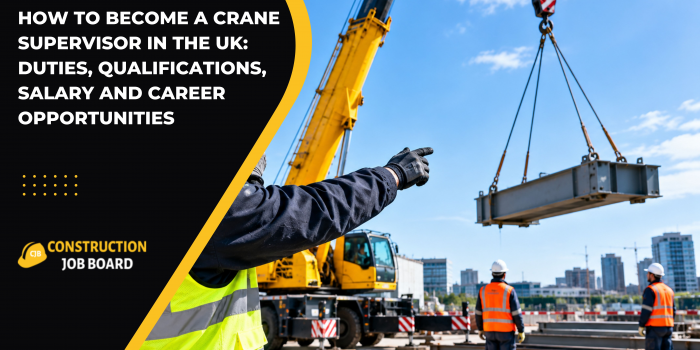
Crane supervisor jobs in the UK involve directing and supervising lifting operations on construction sites. Crane supervisors coordinate crane operators, slinger signallers and other site personnel to help ensure that lifting activities follow the approved lift plan and method statement.
The role is particularly important on projects involving tower cranes, mobile cranes, heavy construction materials and large infrastructure components. People entering this career generally need relevant construction or lifting operations experience, appropriate training and a recognised qualification such as the CPCS A62 Crane Supervisor card.
What Does a Crane Supervisor Do?
A crane supervisor is responsible for overseeing lifting operations and ensuring that work is carried out according to the agreed safety arrangements.
Typical responsibilities include:
- Supervising crane lifting activities on construction sites.
- Reviewing and following approved lift plans and method statements.
- Coordinating crane operators and slinger signallers.
- Checking that lifting equipment and accessories are suitable for the planned operation.
- Establishing and maintaining exclusion zones.
- Communicating lifting instructions to the team.
- Monitoring weather and site conditions that could affect lifting operations.
- Checking relevant equipment documentation and inspection records.
- Identifying hazards and reporting unsafe conditions.
- Stopping lifting operations if they become unsafe.
The Health and Safety Executive's guidance on lifting operations explains that lifting activities must be properly planned, appropriately supervised and carried out safely by competent people.
A crane supervisor must have sufficient authority to intervene when an operation does not follow the agreed safe system of work.
Where Do Crane Supervisors Work?
Crane supervisors are employed by construction contractors, crane hire companies, infrastructure businesses and specialist lifting contractors.
They may work on:
- High-rise residential and commercial developments.
- Large construction and civil engineering projects.
- Bridge and road construction.
- Railway and transport infrastructure.
- Industrial facilities and warehouses.
- Energy and utility developments.
- Major refurbishment and demolition projects.
- Projects involving heavy plant and machinery.
The working environment can change from one project to another. Some positions involve travelling between sites, while others are based on a single large construction project.
Shift patterns may include early starts, night work and weekend operations, particularly on infrastructure projects where lifting activities must fit around restricted working windows.
What Skills Are Needed for Crane Supervisor Jobs?
Crane supervisors need technical knowledge, practical experience and strong communication skills.
Lifting operations knowledge: Understanding crane capabilities, lifting accessories, load characteristics and safe working procedures is essential.
Communication: Supervisors must give clear instructions to crane operators, slinger signallers and other people involved in lifting activities.
Risk awareness: Recognising hazards such as unstable ground, overhead obstructions, adverse weather and unauthorised access is important.
Leadership: Crane supervisors need to coordinate teams and ensure that everyone understands their responsibilities.
Problem-solving: They must respond appropriately when site conditions or lifting requirements change.
Attention to detail: Lift plans, method statements, equipment records and safety checks must be followed carefully.
Decision-making: A supervisor must be confident enough to stop a lifting operation when they believe it is unsafe.
What Qualifications Do You Need to Become a Crane Supervisor?
One recognised training route is the CPCS A62 Crane Supervisor qualification.
The CITB CPCS Crane Supervisor A62 course covers the responsibilities and technical knowledge required to supervise crane lifting operations.
Course topics include:
- Legislation, regulations and industry codes of practice.
- Safe systems of work and method statements.
- Types of cranes and lifting terminology.
- Crane stability and duty charts.
- Crane documentation.
- Safety devices and equipment.
- Exclusion zones and site preparation.
- The responsibilities of crane supervisors and appointed persons.
- British Standard BS 7121.
CITB lists the course as four days, including classroom learning, practical exercises and technical testing.
The course also has entry requirements. These include a recent CITB Health, Safety and Environment Supervisor-level test, good spoken and written English and valid identification. Candidates should check the current requirements before booking.
Other employers may accept relevant NPORS qualifications, depending on the role and project requirements.
What Is the Difference Between CPCS A62 and A61?
CPCS A62 and A61 are associated with different responsibilities in lifting operations.
CPCS A62 – Crane Supervisor
The A62 qualification relates to supervising lifting operations. A crane supervisor oversees the lifting team and monitors whether the operation follows the approved lift plan and method statement.
CPCS A61 – Appointed Person: Lifting Operations
The A61 qualification relates to planning lifting operations. The appointed person has responsibility for organising and planning the lift, taking account of the equipment, site conditions, personnel and risks.
The CITB CPCS Appointed Persons A61 course covers lift planning, risk assessments, method statements, crane selection and lifting accessories.
The two roles are connected, but they are not interchangeable. Holding an A62 qualification does not automatically make someone competent to undertake every appointed person responsibility.
How Much Does a Crane Supervisor Earn in the UK?
Crane supervisor earnings vary according to experience, qualifications, employer, location and project complexity.
There is no single salary figure that applies to all crane supervisor vacancies. Some employers advertise permanent salaried positions, while others offer hourly rates for temporary or project-based work.
Pay can be influenced by:
- CPCS A62 or relevant NPORS qualifications.
- Previous experience supervising lifting operations.
- Experience on major infrastructure projects.
- Knowledge of lift plans and method statements.
- Understanding of LOLER and lifting equipment requirements.
- Night shifts, overtime and weekend work.
- Travel requirements and project location.
- Additional appointed person or supervisory responsibilities.
For example, a recent UK government-listed Lift Supervisor vacancy requested CPCS A62 certification and previous lifting supervision experience. The advert also highlighted the importance of understanding lift plans, method statements and safe working procedures.
Candidates should compare the pay arrangements and responsibilities in individual vacancies rather than relying on a general salary estimate.
What Is the Difference Between a Crane Supervisor and a Lift Supervisor?
The titles crane supervisor and lift supervisor are often used for closely related responsibilities.
A crane supervisor generally directs and monitors lifting activities involving cranes. A lift supervisor may have a broader role overseeing lifting operations involving different types of lifting equipment.
Both roles require appropriate competence, knowledge of the agreed lifting arrangements and the ability to communicate effectively with the lifting team.
The precise responsibilities depend on the employer, project and lifting operation.
How Can You Progress in a Crane Supervisor Career?
Crane supervision offers opportunities to develop specialist experience in construction lifting operations.
A possible career pathway includes:
- Construction operative or lifting team member: Develop experience in construction environments and lifting activities.
- Slinger signaller: Gain practical experience in directing and communicating during lifting operations.
- Crane operator: Develop the appropriate training and competence to operate crane equipment.
- Crane supervisor: Complete relevant training and take responsibility for supervising lifting operations.
- Appointed person: Develop the additional competence needed to plan lifting operations.
- Lifting operations manager: Take responsibility for coordinating lifting activities across projects or larger operations.
Progression depends on experience, training, qualifications and the responsibilities available within an organisation.
Where Can You Find Crane Supervisor Jobs in the UK?
Crane supervisor vacancies are advertised by crane hire businesses, specialist lifting contractors, civil engineering companies and construction employers.
Useful search terms include:
- Crane supervisor jobs UK.
- CPCS A62 crane supervisor jobs.
- Crane lift supervisor vacancies.
- Lifting supervisor jobs.
- Construction crane supervisor.
- Mobile crane supervisor jobs.
- Tower crane supervisor jobs.
- Lift operations supervisor.
When reviewing a vacancy, check the required card or qualification, previous project experience, working hours, site location and whether the role involves additional appointed person responsibilities.
Construction Job Board UK can help candidates explore construction vacancies and related career opportunities.
Suggested internal links for Construction Job Board UK:
- Crane Operator Jobs – link to the relevant crane operator category.
- Plant Operator Jobs – link to the plant operator category.
- Site Supervisor Jobs – link to the site supervisor category.
- Construction Manager Jobs – link to the construction management category.
- Health and Safety Jobs – link to the relevant health and safety category.
Use the actual category URLs available in the website CMS when adding these links.
Frequently Asked Questions
1. What qualification do you need to become a crane supervisor in the UK?
CPCS A62 Crane Supervisor is a recognised qualification route. Relevant experience, health and safety knowledge and successful completion of the required training and assessment are also important.
2. What does CPCS A62 mean?
CPCS A62 is the Crane Supervisor category. It relates to supervising crane lifting operations and understanding the relevant safety procedures, equipment and responsibilities.
3. What is the difference between CPCS A61 and A62?
A61 relates to the Appointed Person role, which involves planning lifting operations. A62 relates to the Crane Supervisor role, which involves supervising lifting activities according to the agreed plan.
4. Can a slinger signaller become a crane supervisor?
Yes. A slinger signaller may progress into crane supervision by gaining relevant lifting operations experience, developing the necessary knowledge and completing suitable supervisor training and assessment.
5. Is a crane supervisor responsible for stopping unsafe lifting operations?
Yes. A competent crane supervisor should have sufficient authority to stop a lifting operation if they believe it is dangerous to continue. They should communicate the concern and follow the project's reporting and escalation procedures.