02/10/2026
Traditional Construction vs Digital Construction: Skills, Roles and Career Opportunities
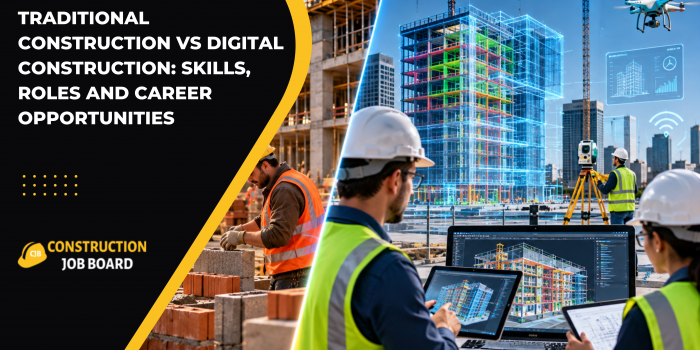
The comparison between traditional construction vs digital construction reflects how technology is changing the way construction projects are designed, planned, delivered and managed. Traditional construction relies heavily on established processes, physical documentation and conventional project workflows, while digital construction uses technologies such as BIM, cloud platforms, digital reporting, data systems and connected project tools.
Digital construction does not mean that traditional construction skills are disappearing. Instead, many projects are combining practical construction expertise with digital tools. This is creating new expectations for construction professionals and increasing demand for workers who can understand both physical construction processes and modern technology.
What is the difference between traditional and digital construction?
Traditional construction generally relies on established methods of planning, communication, documentation and site management.
Digital construction uses technology to create, share, analyse and manage project information throughout the construction lifecycle.
The difference can be seen across several areas:
|
Area
|
Traditional Construction
|
Digital Construction
|
|
Project information
|
Paper and separate documents
|
Digital and connected information
|
|
Drawings
|
Printed drawings
|
Digital models and drawings
|
|
Communication
|
Meetings, phone and email
|
Collaborative digital platforms
|
|
Reporting
|
Manual reports
|
Digital and mobile reporting
|
|
Planning
|
Conventional schedules
|
Digital programme and planning tools
|
|
Design coordination
|
2D drawings and meetings
|
BIM and coordinated digital models
|
|
Data
|
Limited or fragmented
|
Increasingly data-driven
|
|
Site monitoring
|
Physical inspections
|
Digital inspections and connected systems
|
|
Collaboration
|
Often organisation-specific
|
Greater digital collaboration
|
The exact technology used varies according to the project, contractor and client.
What is traditional construction?
Traditional construction refers to established ways of delivering construction projects.
This can include:
- 2D drawings
- Printed documents
- Manual site records
- Physical inspections
- Face-to-face coordination
- Conventional scheduling
- Paper-based quality documentation
- Traditional procurement and communication processes
These methods can still be used effectively.
Construction remains a practical industry, and many activities require physical skills, craftsmanship, engineering knowledge and on-site decision-making.
Digital technology therefore complements rather than completely replaces conventional construction activity.
What is digital construction?
Digital construction involves using technology to improve the way construction information and activities are managed.
Examples include:
- Building Information Modelling
- Cloud-based collaboration
- Digital drawings
- Mobile site reporting
- Digital quality inspections
- Construction management software
- Digital scheduling
- Drones
- Laser scanning
- Data dashboards
- Digital twins
- Artificial intelligence
- Connected project information systems
Digital construction can help different teams access information and coordinate activities more effectively.
The technology can be applied during design, planning, procurement, construction and asset management.
How is BIM changing construction work?
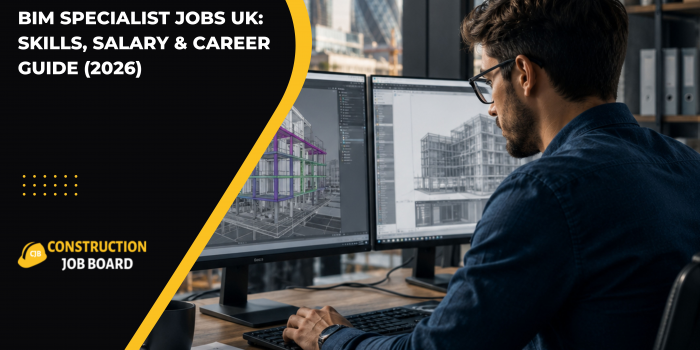
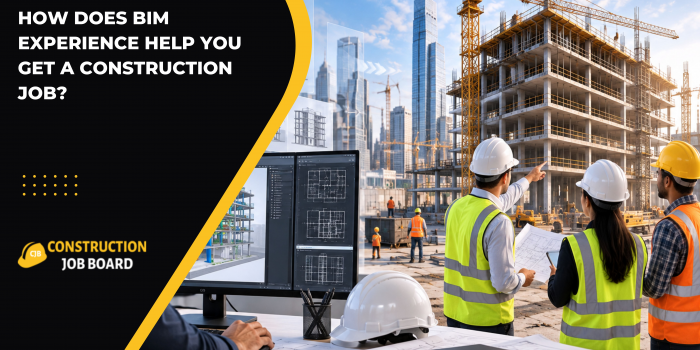
BIM is one of the most recognisable components of digital construction.
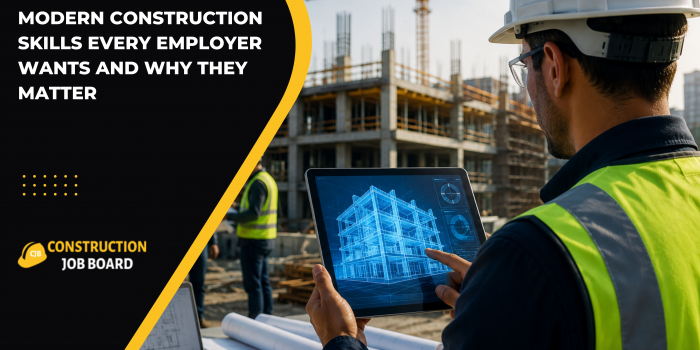
Instead of relying only on separate two-dimensional drawings, BIM can provide structured digital information about elements of a building or infrastructure project.
Construction professionals can use BIM to support:
- Design coordination
- Clash detection
- Construction planning
- Quantity information
- Sequencing
- Communication
- Asset information
- Project collaboration
This has created specialist positions such as BIM Coordinators, BIM Managers and other digital construction roles.
However, BIM knowledge can also be useful for Site Managers, Project Managers, Quantity Surveyors, Engineers and other professionals who interact with digital project information.
What construction jobs are changing because of digital technology?
Digital construction is affecting both existing roles and emerging occupations.
Traditional roles can increasingly involve digital responsibilities.
For example, a Site Manager may use mobile applications for inspections and reporting.
A Quantity Surveyor may work with digital measurement and cost-management systems.
A Project Manager may use digital dashboards to monitor programme and project information.
An Engineer may work with BIM models and digital design systems.
At the same time, specialist roles have developed around digital construction.
These can include:
- BIM Manager
- BIM Coordinator
- Digital Construction Manager
- Information Manager
- Digital Engineering roles
- Construction Technology specialists
- Data-focused construction roles
The result is a construction workforce that increasingly combines technical, practical and digital capabilities.
What skills are important in traditional construction?
Traditional construction skills remain essential because construction projects still require physical delivery and practical decision-making.
Important capabilities include:
Technical knowledge
Professionals need to understand construction methods, materials, sequencing and project requirements.
Practical problem solving
Site conditions can create challenges that require practical judgement.
Communication
Construction involves coordination between numerous people and organisations.
Health and safety
Safe working practices remain fundamental regardless of the technology used.
Quality management
Professionals must understand specifications, workmanship and inspection requirements.
Trade skills
Skilled trades remain an important part of construction delivery.
Digital technology does not remove the need for these capabilities.
What skills are important in digital construction?
Digital construction adds another layer of skills.
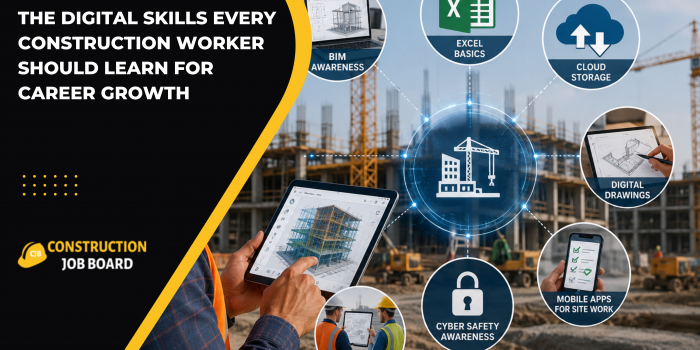
Important areas can include:
- BIM
- Data management
- Digital collaboration
- Construction software
- Digital reporting
- Information management
- Data analysis
- 3D modelling
- Digital surveying
- Technology adoption
- Cybersecurity awareness
- Understanding of digital workflows
Not every construction professional needs to become a technology specialist.
Instead, the required digital capability should match the role.
Do construction workers need to learn technology?
Increasingly, construction professionals may benefit from developing digital confidence.
A worker does not necessarily need programming skills to work effectively with technology.
For example, a Site Manager may need to understand how to complete digital inspections, access drawings through a project platform or update progress information.
A Quantity Surveyor may need to use digital measurement or cost-management tools.
A Project Manager may need to interpret data dashboards.
The important skill is often the ability to use technology effectively within the construction process.
How does digital construction affect project management?
Digital tools can change how project teams monitor and communicate information.
Project managers may use digital systems to track:
- Programme progress
- Project documentation
- Risks
- Issues
- Quality
- Resources
- Communication
- Site activity
Instead of waiting for information to be collected and transferred manually, digital systems can allow information to be updated and shared more quickly.
However, technology does not automatically solve project-management problems. Teams still need appropriate processes, accurate information and effective communication.
Does digital construction replace traditional construction jobs?
Digital construction is more accurately viewed as changing job responsibilities rather than simply eliminating traditional construction jobs.
A construction professional may continue performing the same core occupation while using different tools.
For example:
Traditional Site Manager
Site inspections → paper records → manual reporting
Digitally enabled Site Manager
Site inspections → mobile reporting → digital records → shared project information
The underlying construction knowledge remains important.
This means digital transformation can create opportunities for existing workers to develop additional skills rather than requiring every professional to move into a technology-specific career.
What are the benefits of digital construction?
Digital construction can provide several potential benefits.
Better information access
Teams can access project information through connected systems rather than relying exclusively on physical documents.
Improved coordination
Digital models and collaborative platforms can help teams identify information conflicts and coordination requirements.
Faster reporting
Mobile tools can make it easier to record site information.
Greater visibility
Digital dashboards can help project teams monitor information across different parts of a project.
Improved record keeping
Digital systems can create searchable records of project activity.
New career opportunities
The adoption of technology creates demand for professionals who understand construction and digital systems.
What challenges does digital construction create?
Digital transformation also introduces challenges.
Construction companies may need to manage:
- Staff training
- Technology costs
- Data quality
- Software integration
- Cybersecurity
- Resistance to new workflows
- Different levels of digital capability
- Compatibility between systems
A successful digital construction strategy therefore requires more than buying software.
People, processes and technology need to work together.
How can construction professionals prepare for digital careers?
Professionals can start by identifying the digital tools relevant to their current occupation.
A Site Manager could develop skills in digital reporting and project collaboration platforms.
A Quantity Surveyor could strengthen digital measurement and cost-management capabilities.
An Engineer could develop BIM and digital design knowledge.
A Project Manager could learn how to use digital project controls and data dashboards.
Professionals can also demonstrate digital skills on their CV by explaining how technology was applied to real construction activities.
What does the future of construction careers look like?
The future construction workforce is likely to combine practical construction expertise with digital capability.
Some professionals will specialise in technology, while others will use digital tools as part of traditional construction occupations.
This could create several career pathways:
Construction experience → digital skills → digitally enabled construction role
or:
Construction qualification → specialist technology training → digital construction career
The strongest combination for many roles may be an understanding of both construction fundamentals and the technology used to support them.
How should job seekers present digital construction skills on a CV?
Candidates should avoid simply listing software names.
Instead, they should explain how the technology was used.
For example:
Weak:
BIM, digital reporting, construction software.
Stronger:
Used BIM information to support construction coordination and identify design issues before site activities.
The second example gives recruiters more information about the candidate's practical application of the skill.
Candidates should also mention relevant project types, responsibilities and outcomes where appropriate.
Key Takeaways
- Traditional construction methods remain important across the industry.
- Digital construction adds technology to established construction processes.
- BIM is a major component of modern digital construction.
- Digital skills are increasingly relevant across many construction occupations.
- Technology does not automatically replace traditional construction roles.
- Site Managers, Quantity Surveyors, Engineers and Project Managers can all use digital tools.
- Specialist digital construction roles are also developing.
- Practical construction knowledge remains important.
- Digital transformation requires people, processes and technology to work together.
- Construction professionals can improve career opportunities by combining occupational expertise with relevant digital skills.
FAQs
What is the difference between traditional construction and digital construction?
Traditional construction relies more heavily on established processes, physical documentation and conventional workflows, while digital construction uses technologies such as BIM, cloud platforms, digital reporting and data systems to manage construction information and activities.
Is digital construction replacing traditional construction jobs?
Digital construction is generally changing how many construction professionals work rather than simply replacing traditional occupations. Existing roles can increasingly incorporate digital tools alongside practical construction responsibilities.
What digital skills are useful in construction?
Useful skills can include BIM, digital reporting, construction software, data management, digital collaboration, digital surveying and information management. The relevant skills depend on the occupation.
Do Site Managers need digital construction skills?
Digital skills can be useful for Site Managers because modern projects may use mobile reporting, digital drawings, project platforms, digital inspections and other technology-based workflows.
Is BIM necessary for a career in construction?
BIM is not necessary for every construction occupation, but knowledge of BIM can be valuable for professionals working on projects where digital information and coordinated models are used.
Conclusion
The comparison between traditional construction vs digital construction shows that technology is becoming an additional layer of construction capability rather than a complete replacement for established expertise.
Construction professionals still need practical knowledge, technical understanding, safety awareness and problem-solving skills. At the same time, digital capabilities such as BIM, digital reporting, data management and collaborative technology can help professionals adapt to changing project environments.
For construction job seekers, developing the right combination of construction expertise and relevant digital skills can create opportunities across both traditional and technology-enabled construction roles.