Temporary Works Coordinator Jobs UK: Roles and Skills
16/11/2026
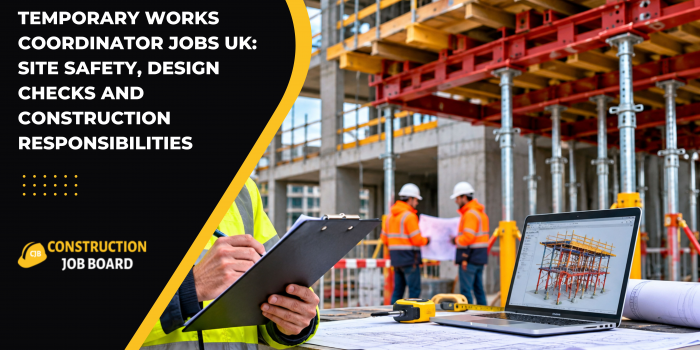
Temporary Works Coordinator Jobs UK: Site Safety, Design Checks and Construction Responsibilities
What Does a Temporary Works Coordinator Do?
Temporary Works Coordinator jobs in the UK involve managing the planning, design coordination, inspection and safe implementation of temporary structures used during construction projects. A Temporary Works Coordinator (TWC) helps ensure that temporary structures are suitable for their intended purpose, properly designed, checked, installed and maintained before they are used or removed.
Temporary works are essential to many construction activities. They may include scaffolding, excavation support, formwork, falsework, propping systems, crane platforms and temporary access arrangements.
Although these structures may only be required for a short period, their safety is critical. Poor planning or incorrect installation can lead to structural failure, injuries, project delays and financial losses.
As construction projects become more technically demanding, contractors need professionals who can coordinate temporary works requirements between engineers, designers, site managers and subcontractors.
What Are Temporary Works in Construction?
Temporary works are structures or engineering arrangements required to support the construction process but are not normally intended to remain as part of the completed building or infrastructure.
Examples include:
- Scaffolding: Temporary access and working platforms for construction teams.
- Formwork: Temporary moulds used to shape concrete.
- Falsework: Temporary support structures used during construction.
- Excavation support: Systems that prevent excavation sides from collapsing.
- Propping systems: Temporary supports for walls, floors and other structural elements.
- Crane platforms: Prepared working areas designed to support heavy lifting equipment.
- Temporary bridges and access roads: Structures that enable construction vehicles and workers to reach project areas.
Temporary works can be required on residential developments, commercial buildings, highways, railways, bridges, energy facilities and major infrastructure projects.
What Are the Main Responsibilities of a Temporary Works Coordinator?
The Temporary Works Coordinator helps manage temporary works throughout their lifecycle, from initial planning and design through installation, use and removal.
Typical responsibilities include:
1. Coordinating Temporary Works Designs
The coordinator works with temporary works designers and relevant engineers to make sure design requirements are identified and communicated.
This may involve reviewing design briefs, coordinating technical information and arranging appropriate design checks.
2. Maintaining the Temporary Works Register
A Temporary Works Register records the temporary works required on a project and tracks their status.
It may include details such as:
- Description and location of temporary works.
- Responsible designer and checker.
- Design submission and approval status.
- Installation and inspection requirements.
- Permission to load or use.
- Required removal or dismantling arrangements.
Maintaining accurate records helps project teams understand which temporary works are approved and which activities still require action.
3. Checking Site Implementation
The coordinator works with site teams to confirm that temporary works are installed in accordance with approved designs and project procedures.
If site conditions differ from the design assumptions, the issue must be referred to the appropriate competent person before proceeding.
4. Managing Inspections and Authorisations
Temporary works may require inspections before use and during their operational period.
The coordinator helps ensure that inspection requirements, permits and authorisations are completed in accordance with the project's temporary works procedure.
5. Communicating With Construction Teams
The role involves regular communication with:
- Project managers.
- Site managers and site engineers.
- Temporary Works Supervisors.
- Structural and civil engineers.
- Design consultants.
- Subcontractors and suppliers.
- Health and safety professionals.
Good coordination helps prevent conflicting activities and reduces the risk of temporary structures being overloaded, altered or removed without proper approval.
Why Is BS 5975 Important for Temporary Works Coordinator Jobs?
BS 5975 is an important British Standard covering the management procedures for temporary works and the design and implementation of falsework.
It provides an established framework for controlling temporary works activities, including responsibilities, design procedures, checking arrangements and site implementation.
The standard is relevant because temporary works must be managed systematically rather than treated as minor or informal site arrangements.
However, it is important to understand that the law does not require every project to use the specific job title Temporary Works Coordinator. The HSE explains that organisations can choose how they manage temporary works, provided they meet their legal health and safety responsibilities.
Third-party authority reference: The Health and Safety Executive's guidance on temporary works explains the need for suitable design, planning, management and inspection, and describes the role of a Temporary Works Coordinator.
What Qualifications and Skills Are Required?
Employers generally look for a combination of construction experience, technical understanding and temporary works management knowledge.
Requirements vary depending on the project, employer and level of responsibility.
Relevant Qualifications and Training
Candidates may benefit from:
- Civil engineering or structural engineering qualifications.
- HNC, HND or degree-level engineering education.
- Temporary Works Coordinator training.
- Temporary Works Supervisor training, where relevant to previous or supporting responsibilities.
- Construction site safety qualifications appropriate to the position.
- Relevant professional development or membership of an engineering institution.
CITB provides dedicated Temporary Works Coordinator and Temporary Works Supervisor training courses. The appropriate course depends on the responsibilities assigned to the individual.
Essential Professional Skills
Employers may look for:
- Understanding of temporary works procedures.
- Ability to interpret engineering drawings and design information.
- Knowledge of construction methods and site operations.
- Risk identification and problem-solving skills.
- Strong communication and coordination abilities.
- Accurate documentation and record management.
- Confidence in raising concerns about unsafe or non-compliant work.
A coordinator should understand the limits of their technical competence. The role involves coordinating designs and procedures; it does not automatically mean that the coordinator personally designs or approves every temporary structure.
Where Are Temporary Works Coordinators Employed in the UK?
Temporary Works Coordinators can work across several construction and engineering sectors.
Civil engineering and infrastructure: Road construction, bridges, railways, tunnels and major infrastructure schemes often involve complex temporary support arrangements.
Commercial construction: Office buildings, warehouses, shopping centres and industrial facilities may require scaffolding, formwork and structural support systems.
Residential construction: Housing developments and apartment projects can involve excavation support, propping and temporary access systems.
Energy and industrial projects: Power stations, nuclear facilities, renewable energy developments and industrial sites may require specialist temporary works management.
Demolition and refurbishment: Temporary supports and structural protection may be required when modifying or removing existing buildings.
Project location, technical complexity and contract duration can influence the type of opportunity available.
What Career Progression Is Available?
Temporary Works Coordinator experience can support progression into several construction and engineering management roles.
Possible career directions include:
- Senior Temporary Works Coordinator.
- Temporary Works Manager.
- Temporary Works Design Coordinator.
- Site Engineer.
- Project Engineer.
- Construction Engineering Manager.
- Civil Engineering Project Manager.
- Technical or Design Manager.
Progression depends on practical experience, technical competence, further training and the ability to manage larger or more complex projects.
Professionals who develop experience across design coordination, site implementation, risk management and project delivery may be able to take on broader engineering responsibilities.
How Can Candidates Find Temporary Works Coordinator Jobs in the UK?
Candidates should look beyond the job title alone. Similar responsibilities may appear under titles such as Temporary Works Manager, Temporary Works Supervisor, Temporary Works Engineer or Civil Engineering Coordinator.
When reviewing vacancies, pay attention to:
- Whether the position is permanent, contract or fixed-term.
- The type and scale of construction project.
- Required experience with temporary works procedures.
- Whether BS 5975 knowledge is expected.
- Required qualifications and training.
- Site location and travel expectations.
- Whether the role involves design coordination, site inspections or wider management responsibilities.
Construction Job Board features opportunities in this area, including a Temporary Works Coordinator vacancy in Plymouth.
Candidates should compare each job description carefully because responsibilities and experience requirements can differ considerably between employers.
What Is the Future of Temporary Works Coordinator Careers?
Temporary works management will remain an important part of construction delivery because many building and infrastructure projects depend on temporary structural arrangements.
Projects involving complex engineering, constrained sites, major infrastructure and demanding construction sequences require careful coordination between designers and site teams.
Digital project records, design coordination systems and improved inspection processes may also influence how temporary works are managed.
For professionals interested in construction engineering, site safety and technical coordination, the role offers a career path that combines engineering knowledge with practical project delivery.
Conclusion
Temporary Works Coordinator jobs in the UK offer opportunities for construction professionals with an interest in engineering, site safety and project coordination. The role involves managing temporary works procedures, coordinating design information, monitoring site implementation and maintaining appropriate inspection and authorisation processes.
Understanding BS 5975, developing relevant technical knowledge and gaining practical construction experience can help candidates prepare for these positions. As construction projects continue to require carefully managed temporary structures, competent temporary works coordination remains an important part of safe project delivery.
Frequently Asked Questions
1. What is a Temporary Works Coordinator?
A Temporary Works Coordinator is a construction professional responsible for coordinating the planning and management of temporary works on a project. This includes design coordination, documentation, site implementation and relevant inspection arrangements.
2. Is a Temporary Works Coordinator legally required on every construction site?
No. There is no universal legal requirement to appoint someone with the specific title Temporary Works Coordinator on every project. However, organisations must ensure temporary works are properly planned, managed and controlled to meet their legal health and safety duties.
3. What is BS 5975 in construction?
BS 5975 is a British Standard covering procedures for managing temporary works and the design and implementation of falsework. It provides recognised industry guidance for organising and controlling temporary works activities.
4. What training is useful for a Temporary Works Coordinator?
CITB offers a Temporary Works Coordinator Training Course. Relevant engineering qualifications, practical construction experience and knowledge of temporary works procedures can also support candidates applying for these roles.
5. Can a civil engineer become a Temporary Works Coordinator?
Yes. Civil engineers with suitable construction experience, temporary works knowledge and relevant training may move into Temporary Works Coordinator positions. The exact requirements depend on the employer and the complexity of the project.