21/08/2026
What Construction Skills Are in Demand in the UK?
What construction skills are in demand in the UK? It is one of the most important questions for anyone planning to start, change or progress a construction career.
The answer is broader than simply looking at which construction jobs are advertised most frequently.
The UK's construction industry needs a combination of skilled trades, technical professionals, project managers, engineers, commercial specialists and workers with digital capabilities.
CITB's latest Construction Workforce Outlook forecasts that the industry will require an average of 41,200 additional workers each year between 2026 and 2030 to meet growth and replacement requirements.
At the same time, construction is changing.
New infrastructure projects, housing development, refurbishment, energy investment, sustainability requirements, Building Information Modelling (BIM), automation and AI are changing the skills employers need.
For jobseekers, this creates an important opportunity.
The most valuable construction professional may not simply be the person who can do one task.
It may be the person who combines technical competence, safety awareness, digital skills and the ability to adapt.
Why are construction skills in demand in the UK?
The construction workforce is affected by several long-term pressures.
These include:
- New infrastructure investment
- Housing requirements
- Building refurbishment
- Retirement of experienced workers
- Skills shortages
- Digital transformation
- Sustainability requirements
- Major infrastructure projects
- Energy transition
- Increasing project complexity
The workforce requirement is not driven entirely by industry growth.
A significant part comes from replacing workers who leave the sector.
This means construction employers need new talent even when the overall size of the industry does not dramatically increase.
Which construction skills are currently most important?
There is no single list that applies equally to every employer.
However, several broad skill categories are particularly important:
- Skilled trades
- Civil engineering
- Electrical and building services
- Quantity surveying and commercial management
- Site management
- Project management
- Health and safety
- Digital construction
- Sustainability
- Communication and leadership
The exact demand varies by region and project type.
A major rail project may need civil engineers and plant operators.
A housing development may need bricklayers, carpenters, electricians and plumbers.
A commercial development may require quantity surveyors, building services specialists and project managers.
Are skilled trades still in demand?
Yes.
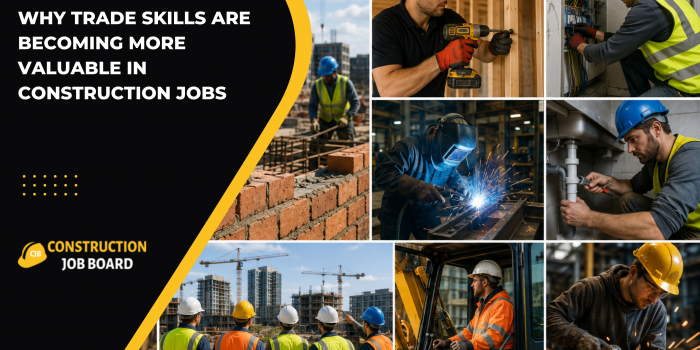
Despite increasing automation and digital technology, construction still requires people who can physically install, build, repair and maintain buildings and infrastructure.
Important skilled trades include:
- Bricklayers
- Carpenters
- Joiners
- Electricians
- Plumbers
- Roofers
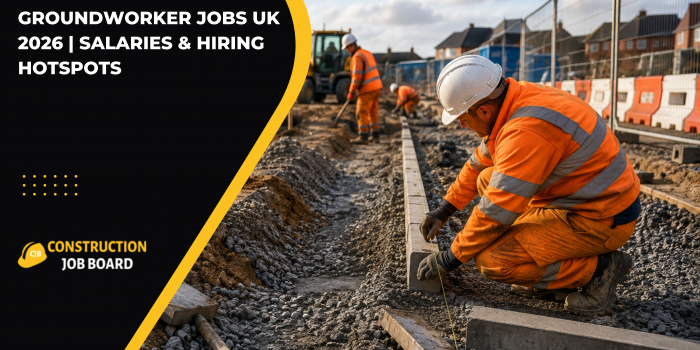
- Groundworkers
- Painters and decorators
- Plant operators
- Welders
The industry also needs experienced supervisors who understand how these trades interact on complex projects.
A skilled tradesperson with strong technical competence and reliable site experience can therefore remain highly valuable.
Why are electricians important to the future of construction?
Electrical systems are essential to virtually every modern building.
Demand can come from:
- New housing
- Commercial buildings
- Industrial facilities
- Infrastructure
- Renewable energy
- Electric vehicle charging
- Building automation
- Smart buildings
- Energy efficiency upgrades
The increasing electrification of buildings and transport also creates new areas of work.
Electricians who understand modern technologies can potentially expand their career opportunities beyond traditional electrical installation.
This demonstrates an important career principle:
Construction skills can become more valuable when they connect with wider technological trends.
Are plumbers still needed in modern construction?
Yes.
Plumbing remains essential across residential, commercial, industrial and public buildings.
Plumbers may work on:
- Water systems
- Heating
- Drainage
- Sanitation
- Building services
- Maintenance
- Refurbishment
The role can also evolve as buildings become more energy efficient and heating technologies change.
Workers who continue developing their knowledge can potentially remain competitive as building systems evolve.
Why are civil engineering skills important?
Civil engineering is closely connected to infrastructure.
Civil engineers can contribute to:
- Roads
- Railways
- Bridges
- Utilities
- Drainage
- Flood management
- Airports
- Energy infrastructure
- Major developments
The UK's infrastructure pipeline provides a major potential source of future demand.
The government's March 2026 pipeline identified 734 projects and programmes with approximately £718 billion of public and private investment planned over the next decade.
Not all projects will progress at the same time, and investment does not translate directly into vacancies.
However, the scale of the pipeline illustrates why civil engineering remains strategically important.
Are quantity surveyors in demand?
Quantity surveying remains an important part of construction because projects need professionals who can control costs and manage commercial risk.
Quantity surveyors can work on:
- Cost planning
- Estimating
- Procurement
- Contract administration
- Valuation
- Cost control
- Commercial reporting
- Final accounts
As construction projects become more complex, strong commercial management becomes increasingly important.
A quantity surveyor who combines traditional commercial knowledge with digital tools and data analysis can potentially offer additional value to employers.
Why are construction managers important?
Construction managers coordinate multiple parts of a project.
Their responsibilities can include:
- Managing teams
- Coordinating subcontractors
- Monitoring programmes
- Managing resources
- Supporting health and safety
- Controlling quality
- Communicating with clients
- Resolving site issues
As projects become larger and more complex, management skills become increasingly important.
Experience is particularly valuable because construction managers often need to make practical decisions under time and resource constraints.
Are site managers in demand?
Site managers play a critical role in turning plans into completed projects.
They may oversee:
- Daily site operations
- Workers
- Subcontractors
- Programme delivery
- Quality
- Health and safety
- Materials
- Site logistics
A strong site manager needs more than technical knowledge.
They also need:
- Leadership
- Communication
- Decision-making
- Organisation
- Problem-solving
This combination makes site management a career that can offer significant progression for experienced construction workers.
Why are health and safety skills important?
Construction safety is not an optional extra.
It is a core professional responsibility.
Workers and managers need to understand:
- Risk assessment
- Safe systems of work
- Site procedures
- PPE
- Work at height
- Plant and machinery
- Manual handling
- Hazardous substances
- Emergency procedures
The Health and Safety Executive continues to identify construction as a high-risk sector, making effective health and safety management particularly important.
Professionals who understand both construction operations and health and safety can be valuable across many projects.
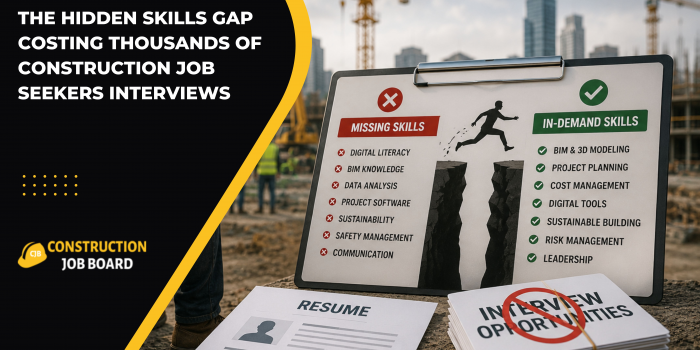
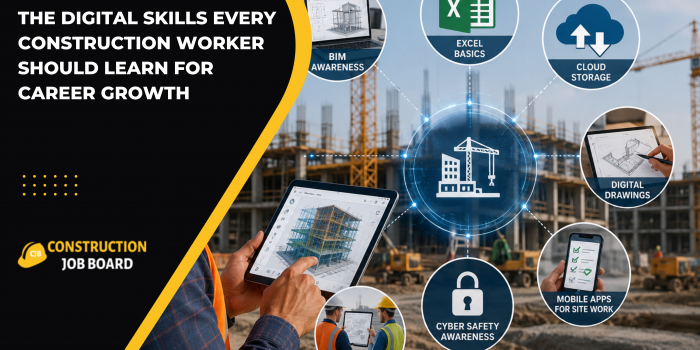
Are digital construction skills becoming more important?
Yes.
Construction is becoming increasingly digital.
Important technologies include:
- BIM
- CAD
- Drones
- Digital surveying
- Construction management software
- Cloud collaboration
- Digital twins
- AI
- Data analytics
- Computer vision
- Automated monitoring
Digital tools can help project teams improve planning, coordination, documentation and decision-making.
This does not mean traditional construction knowledge is becoming irrelevant.
Instead, employers increasingly need workers who understand both construction and technology.
What is BIM and why is it useful?
Building Information Modelling, or BIM, is a digital approach to managing information about built assets.
BIM can help project teams coordinate:
- Design
- Construction
- Materials
- Systems
- Project information
- Asset data
Professionals with BIM skills may work across design, engineering, project management and construction delivery.
Learning BIM can therefore be a useful way for construction professionals to develop a more future-focused skill set.
Will AI create new construction skills?
AI is likely to change how some construction professionals work.
Potential applications include:
- Automated document analysis
- Cost estimation
- Schedule optimisation
- Risk prediction
- Design assistance
- Progress monitoring
- Data analysis
- Procurement support
- Site image analysis
For workers, this means basic AI literacy could become increasingly useful.
A quantity surveyor might use AI to analyse project information.
A project manager might use digital tools to identify schedule risks.
An engineer might use AI-assisted design tools.
A construction administrator might automate repetitive document tasks.
The future skill is therefore not necessarily "AI instead of construction".
It is often AI + construction knowledge.
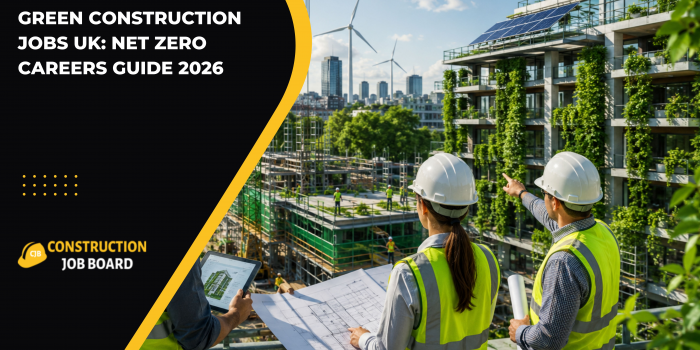
Are green construction skills becoming important?
Yes.
The construction industry has an important role in improving the environmental performance of buildings and infrastructure.
Relevant skills include:
- Energy efficiency
- Sustainable materials
- Low-carbon construction
- Retrofit
- Waste reduction
- Environmental management
- Building performance
- Renewable energy integration
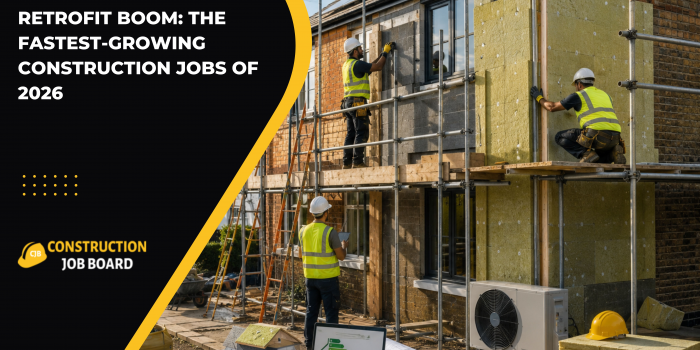
Retrofit is particularly important because existing buildings represent a large part of the UK's built environment.
Professionals who understand both construction and sustainability may therefore find opportunities across new construction and refurbishment.
What construction skills are useful for infrastructure projects?
Infrastructure projects require multidisciplinary teams.
Skills can include:
- Civil engineering
- Structural engineering
- Project management
- Quantity surveying
- Site management
- Groundworks
- Plant operation
- Electrical engineering
- Mechanical engineering
- Planning
- Health and safety
- Environmental management
Large infrastructure programmes can also require specialist experience in procurement, contracts and stakeholder management.
This makes infrastructure an attractive career area for professionals who want experience on large and complex projects.
Are communication skills important in construction?
Absolutely.
Construction is sometimes described as a technical industry, but communication is just as important.
A construction project may involve:
- Clients
- Architects
- Engineers
- Contractors
- Subcontractors
- Suppliers
- Surveyors
- Local authorities
- Inspectors
- Site workers
Miscommunication can result in delays, cost increases, quality problems and safety issues.
Workers who can communicate clearly can therefore become more effective as they progress into supervisory and management positions.
Why is problem-solving an important construction skill?
Construction rarely goes exactly according to plan.
Projects can encounter:
- Material delays
- Design changes
- Weather problems
- Ground conditions
- Labour shortages
- Budget pressures
- Programme delays
- Coordination issues
Construction professionals need to identify problems and find practical solutions.
This makes problem-solving one of the most transferable skills in the industry.
Are leadership skills important for construction careers?
Leadership becomes increasingly important as workers progress.
An apprentice may primarily focus on learning technical skills.
A skilled worker may eventually supervise others.
A site manager may coordinate dozens of workers and subcontractors.
A construction manager may manage an entire project team.
Leadership therefore becomes an important progression skill.
The ability to:
- Delegate
- Communicate
- Resolve conflict
- Motivate teams
- Make decisions
- Manage pressure
can significantly influence career progression.
Which construction skills are difficult to replace with technology?
Physical and decision-making skills can be difficult to automate completely.
Examples include:
- Complex site problem-solving
- Skilled installation
- Supervisory judgement
- Client communication
- Team coordination
- Safety leadership
- Unpredictable site work
- Skilled repairs
- Practical troubleshooting
Construction environments are often variable.
A real building site contains conditions that cannot always be predicted perfectly by software.
This is one reason why technology is more likely to support many construction workers than completely replace them.
Are construction qualifications important?
Qualifications can help demonstrate competence and improve access to specific roles.
The appropriate qualification depends on the career.
A trade worker may need vocational training.
An engineer may need academic and professional qualifications.
A quantity surveyor may pursue a surveying degree and professional accreditation.
A site manager may develop through site experience, qualifications and management training.
The important point is to match qualifications to your intended career.
More qualifications do not automatically mean a better career.
Relevant qualifications combined with practical experience are often more valuable.
Can construction workers develop skills while working?
Yes.
Construction is an industry where experience can be extremely valuable.
Workers can learn through:
- Apprenticeships
- On-site training
- Mentoring
- Employer training
- Professional development
- New project experience
- Specialist qualifications
A worker may begin with a basic role and gradually develop expertise.
This creates a potential progression pathway from entry-level work to skilled, supervisory or professional positions.
Which construction skills are best for career progression?
The strongest combination is usually:
Technical skill + experience + communication + digital literacy + leadership
For example:
A skilled electrician who learns building automation may broaden their opportunities.
A quantity surveyor who develops data and digital skills may become more efficient.
A site manager who develops project-management and commercial knowledge may progress into senior management.
A civil engineer who develops leadership skills may move into project management.
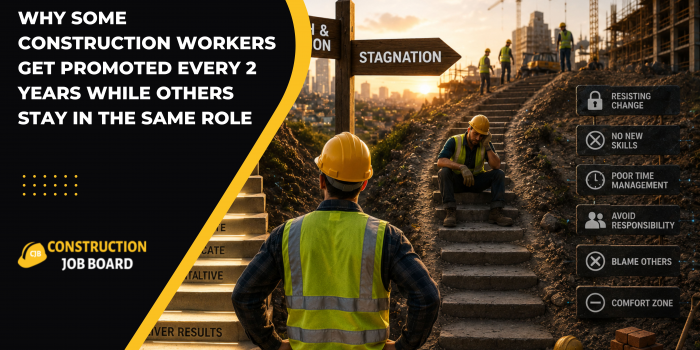
Career progression often happens when workers combine their existing expertise with a second valuable capability.
Do construction skills vary by region?
Yes.
Different UK regions can have different construction requirements.
London has major commercial, residential and infrastructure projects.
Manchester has significant regeneration and development.
Birmingham is an important West Midlands construction market.
Leeds has major commercial and regional development activity.
Liverpool has regeneration and infrastructure opportunities.
Newcastle and Sheffield also have important regional development programmes.
The type of project in each region influences which skills employers need.
Therefore, jobseekers should consider regional project pipelines when deciding which skills to develop.
Which skills should young people learn before entering construction?
Young people do not need to learn everything before starting.
A better approach is to develop a strong foundation.
Useful areas include:
- Basic maths
- Communication
- Digital literacy
- Health and safety awareness
- Problem-solving
- Teamwork
- Time management
- Practical skills
Then choose a specific construction pathway.
For example:
Interested in practical work? → Skilled trade
Interested in maths and money? → Quantity surveying
Interested in science and infrastructure? → Engineering
Interested in people and organisation? → Construction management
Interested in technology? → BIM/digital construction
This can make career planning much easier.
What skills should experienced construction workers learn next?
Experienced workers should think about where the industry is going.
Potential areas include:
- BIM
- AI literacy
- Digital project management
- Sustainability
- Energy efficiency
- Advanced health and safety
- Leadership
- Commercial management
- Data analysis
The goal is not to abandon existing skills.
It is to add complementary skills.
For example, a construction professional with 15 years of site experience who develops digital construction knowledge can combine practical expertise with technology.
That combination can be highly useful.
Will construction skills remain valuable in the future?
Many traditional construction skills are likely to remain important because buildings and infrastructure still need to be physically constructed and maintained.
At the same time, the nature of those skills will evolve.
A future construction worker may need to understand:
Traditional construction + digital tools + sustainability + safety + communication
This combination is likely to become increasingly important.
CITB's workforce outlook supports the broader point that the UK will continue to require significant construction workforce capacity through 2030.
What should employers look for when hiring construction workers?
Employers should consider more than qualifications.
Strong candidates may demonstrate:
- Technical competence
- Relevant experience
- Safety awareness
- Reliability
- Communication
- Problem-solving
- Teamwork
- Digital literacy
- Willingness to learn
Construction employers increasingly need workers who can adapt as projects and technology change.
How can jobseekers demonstrate construction skills?
A CV should clearly show:
- Qualifications
- Site experience
- Project types
- Responsibilities
- Technical skills
- Software knowledge
- Safety training
- Major achievements
Instead of simply writing:
"Experienced construction worker."
A stronger description explains what the worker actually did.
For example:
"Experienced site supervisor with residential and commercial project experience, responsible for subcontractor coordination, programme monitoring, quality control and site safety."
Specific evidence makes skills easier for recruiters to understand.
What are the most important construction skills for the future?
If you are planning a long-term construction career, focus on a combination of skills rather than one trend.
The strongest areas to consider are:
- Skilled technical ability
Be excellent at your core occupation.
- Health and safety
Understand how to work safely and lead safe teams.
- Digital literacy
Learn the tools increasingly used by construction companies.
- Communication
Learn to work effectively with different teams.
- Problem-solving
Develop the ability to handle unexpected site challenges.
- Sustainability
Understand how environmental requirements affect projects.
- Leadership
Prepare for progression into supervisory and management roles.
- Adaptability
Be prepared to learn as construction technology and project requirements change.
So, which construction skills are most in demand in the UK?
There is no single "best" construction skill.
The strongest opportunities are spread across skilled trades, engineering, surveying, site management, project management, building services, health and safety, digital construction and sustainability.
The industry's future workforce requirement is substantial. CITB forecasts an average need for around 41,200 additional workers each year between 2026 and 2030.
Meanwhile, the UK's infrastructure pipeline contains hundreds of major projects with significant planned investment.
For jobseekers, this creates an important lesson.
Don't ask only:
"Which construction job is in demand?"
Ask:
"Which combination of skills will make me valuable across multiple construction projects?"
That could mean combining bricklaying with supervision, quantity surveying with digital tools, engineering with project management, or site management with sustainability and technology.
The construction professionals who continue learning are likely to be better positioned as the industry changes.
Frequently Asked Questions
What construction skills are in demand in the UK?
Important areas include skilled trades, civil engineering, electrical and building services, quantity surveying, site management, project management, health and safety, digital construction and sustainability.
Is there a construction skills shortage in the UK?
The UK construction industry has significant workforce requirements. CITB forecasts an average need for approximately 41,200 additional workers each year between 2026 and 2030.
Are skilled trades still in demand?
Yes. Electricians, plumbers, bricklayers, carpenters, groundworkers, plant operators and other skilled trades remain essential to construction projects.
Are digital skills important in construction?
Yes. BIM, CAD, digital project management, data analysis, drones, AI and other technologies are becoming increasingly relevant to construction.
Will AI replace construction workers?
AI is more likely to change construction tasks than eliminate the need for construction workers. Physical construction, supervision, decision-making and site coordination will continue to require human expertise.
Is civil engineering a good construction career?
Civil engineering can offer strong opportunities connected to infrastructure, transport, utilities, energy and major development projects.
Are quantity surveyors in demand?
Quantity surveyors remain important because construction projects require cost planning, procurement, contract management and commercial control.
Is health and safety a valuable construction skill?
Yes. Health and safety knowledge is fundamental to construction because the industry contains significant workplace risks.
Are sustainability skills becoming important in construction?
Yes. Energy efficiency, retrofit, low-carbon materials, environmental management and sustainable construction are increasingly relevant across the built environment.
How can construction workers improve their skills?
Workers can improve through qualifications, apprenticeships, employer training, practical experience, professional development and learning digital construction technologies.
What construction skills will be important in the future?
A combination of technical competence, digital literacy, sustainability knowledge, safety awareness, communication, problem-solving and leadership is likely to remain valuable.
Conclusion
The UK's construction skills landscape is changing.
Traditional trades remain essential, but construction employers increasingly need professionals who can combine technical knowledge with technology, sustainability, communication and problem-solving.
The workforce requirement is significant, with CITB forecasting around 41,200 additional workers needed annually through 2030.
At the same time, the UK's infrastructure pipeline points towards continued investment across transport, energy, utilities and other major projects.
For someone planning a construction career, this is encouraging.
You do not necessarily need to learn every new technology.
Instead, start with one strong core skill and gradually add complementary capabilities.
Be good at your trade. Understand safety. Learn technology. Communicate well. Keep learning.
That combination can help construction professionals remain employable as the UK's industry evolves.