05/10/2026
What Does a Construction Site Supervisor Do? Responsibilities, Skills and Career Path
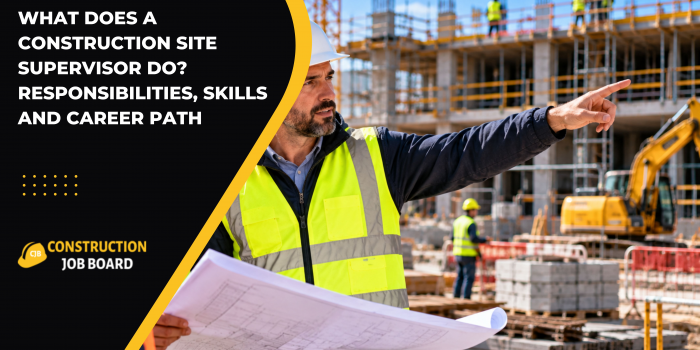
A construction site supervisor oversees day-to-day construction activities, coordinates workers and subcontractors, monitors health and safety, checks quality and tracks progress against the project plan. The role connects construction management with the teams carrying out work on site.
Site supervisors can work across residential, commercial, industrial, infrastructure and civil engineering projects. Their responsibilities vary according to the size and type of project, but the central purpose is to make sure construction activities are carried out safely, correctly and according to the required programme and specifications.
For experienced construction workers who want to move into supervision, the role can provide a route from hands-on site work towards construction management.
What does a construction site supervisor do?
A construction site supervisor manages and monitors construction activities within their area of responsibility.
Typical duties include:
- Supervising construction workers and specialist subcontractors
- Checking that work follows drawings and specifications
- Monitoring health and safety requirements
- Organising labour, materials and equipment
- Checking the quality of completed work
- Monitoring progress against the construction programme
- Identifying site problems and escalating issues
- Supporting site meetings and briefings
- Maintaining project records
- Reporting progress to site management
- Supporting cost and resource monitoring
- Helping with inspections and handover activities
Skills England identifies supervision of specialist contractors, health and safety control, progress reporting, environmental responsibilities, quality control and assistance with cost monitoring among the key duties associated with the occupation.
What does a site supervisor do during a typical working day?
There is no single routine because construction sites change constantly.
A supervisor may begin the day by reviewing planned activities, checking labour allocation and discussing safety requirements with workers.
During the day, they may:
- Check that teams are working according to the programme.
- Monitor site conditions and identify potential hazards.
- Coordinate subcontractors working in different areas.
- Check deliveries of materials and equipment.
- Inspect completed or ongoing work.
- Resolve minor site issues or escalate larger problems.
- Record progress and site information.
- Communicate updates to site management.
The National Careers Service also identifies activities such as organising work schedules, managing construction-material deliveries, inspecting work, checking safety procedures and completing site reports as part of the role.
This means site supervision involves both people management and practical construction knowledge.
Why is a construction site supervisor important?
A construction project can involve many trades and subcontractors working at the same time.
For example, a building project may involve:
- Groundworkers
- Bricklayers
- Carpenters
- Electricians
- Plumbers
- Plasterers
- Roofers
- Plant operators
- Specialist subcontractors
Without effective coordination, activities can overlap, materials may not arrive when required and work can be completed incorrectly or out of sequence.
The site supervisor helps coordinate these activities and communicates project requirements to the workforce.
They also provide an important link between site workers and senior construction management.
Skills England describes construction site supervisors as helping bridge the gap between senior managers and on-site teams.
What are the main responsibilities of a construction site supervisor?
1. Health and safety
Health and safety is one of the most important responsibilities.
Supervisors need to identify hazards, promote safe working practices and make sure workers understand relevant site procedures.
This can include monitoring:
- Risk assessments
- Method statements
- Site inductions
- Safe systems of work
- Personal protective equipment
- Plant and equipment
- Work at height
- Excavation activities
- Site access
- Emergency procedures
CITB's site supervision guidance covers areas including risk assessments, method statements, permits to work, site organisation, lifting operations, temporary works, excavations and work at height.
2. Managing construction teams
Supervisors coordinate workers and subcontractors to ensure activities are completed in the correct sequence.
This requires clear communication and the ability to give instructions while maintaining professional working relationships.
3. Monitoring quality
A supervisor checks whether construction work meets the required drawings, specifications and quality standards.
They may inspect:
- Materials
- Workmanship
- Dimensions
- Installation
- Finishes
- Construction methods
Problems should be identified early so that corrective action can be taken before they affect later stages of the project.
4. Monitoring progress
Construction supervisors track progress against the project programme.
They may record completed activities and provide information to site managers or project managers.
If work falls behind schedule, the supervisor can help identify the reason and communicate the issue to the relevant people.
5. Materials and equipment
Supervisors may help coordinate materials, plant and equipment required for site activities.
This includes checking deliveries, storage arrangements and availability for planned work.
Good resource coordination can help reduce delays and unnecessary disruption.
6. Site records
Construction projects require accurate documentation.
A supervisor may maintain or contribute to:
- Daily reports
- Inspection records
- Progress records
- Quality documentation
- Safety records
- Delivery information
- Handover information
Skills England specifically identifies maintaining auditable records of project activities and progress as part of the occupation.
What skills does a construction site supervisor need?
A good construction site supervisor needs a combination of technical construction knowledge and people-management skills.
Construction knowledge
Supervisors need to understand construction methods, materials and site processes.
Leadership
Supervisors are responsible for coordinating workers and must be able to communicate instructions clearly.
Organisation
Construction sites involve multiple activities, deadlines, deliveries and resources. Strong organisation helps supervisors keep work moving.
Problem-solving
Unexpected problems are common on construction projects. Supervisors need to identify issues, consider practical solutions and know when to escalate them.
Communication
Supervisors communicate with tradespeople, subcontractors, site managers, engineers, suppliers and other project stakeholders.
Attention to detail
Small construction errors can create larger problems later. Supervisors therefore need to check work carefully.
Health and safety awareness
Supervisors must understand relevant safety requirements and promote safe working practices.
Skills England lists leadership, planning, resource management, hazard identification, quality management, progress monitoring and communication among the knowledge and skills required for the occupation.
What qualifications do you need to become a construction site supervisor?
There is no single route into site supervision.
Some people progress from skilled trades or other construction roles through practical experience and further training.
Others enter through apprenticeships or construction-related qualifications.
The National Careers Service lists a Construction Site Supervisor Level 4 Higher Apprenticeship and a Construction Site Management Level 6 Degree Apprenticeship among possible training routes.
Construction-related qualifications can also be important for CSCS requirements.
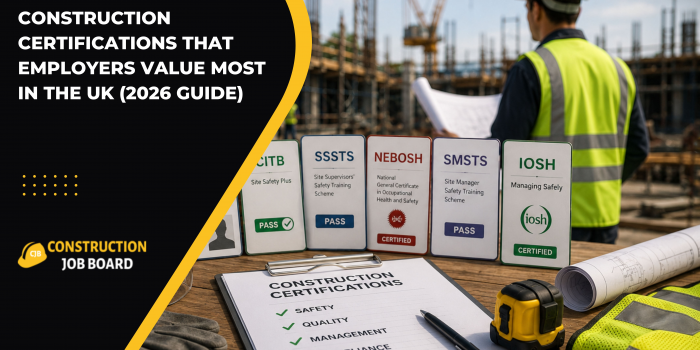
CSCS states that the Supervisor card is available to supervisor and technical occupations subject to achieving a relevant Construction Related Supervisory/Technical NVQ or SVQ Level 3 or 4, along with the required CITB Specialist Supervisory Health, Safety and Environment test.
Requirements can vary according to the specific role and card type, so candidates should check the current requirements for their occupation before applying.
Is SSSTS useful for a site supervisor?
The Site Supervisors' Safety Training Scheme (SSSTS) is specifically designed for people who have, or are about to take on, supervisory responsibilities.
CITB describes the course as covering legislation and other requirements affecting safe working in building, construction and civil engineering. It also focuses on risk assessment, control measures and communication.
However, SSSTS should not automatically be treated as a replacement for the qualification requirements for a CSCS Supervisor card. CSCS specifically states that SSSTS and SMSTS are not accepted as the qualification for obtaining those cards.
Can a tradesperson become a construction site supervisor?
Yes.
A skilled tradesperson can potentially progress into supervision by gaining broader construction knowledge, developing leadership skills and obtaining relevant qualifications.
For example, a person might progress from:
Skilled Trade → Senior Tradesperson → Assistant Supervisor → Site Supervisor → Site Manager
The exact route depends on experience, qualifications, employer requirements and the type of construction project.
Experience on site can be particularly valuable because supervisors need to understand how construction activities are actually carried out.
What is the difference between a site supervisor and a site manager?
The two roles can overlap, particularly on smaller projects, but they generally have different levels of responsibility.
A site supervisor typically focuses on supervising workers and subcontractors, monitoring quality and safety, and coordinating day-to-day construction activities within their area.
A site manager generally has broader responsibility for the overall site, including programme, resources, commercial considerations, subcontractor management and wider project coordination.
On smaller construction projects, however, one person may carry responsibilities associated with both positions.
Skills England notes that smaller construction companies may use titles such as Site Manager or Site Supervisor for related supervisory occupations.
What career progression is available?
Construction site supervision can lead to several career paths.
A common progression route is:
Construction Worker → Supervisor → Senior Supervisor → Site Manager → Project Manager
Other potential directions include:
- Construction management
- Quality management
- Health and safety
- Site management
- Project management
- Specialist construction supervision
- Commercial construction roles
Continued professional development can help supervisors build knowledge and take on greater responsibility.
What types of construction projects employ site supervisors?
Site supervisors can work across many parts of the construction industry.
These include:
- House building
- Commercial buildings
- Industrial construction
- Civil engineering
- Infrastructure
- Refurbishment
- Fit-out
- Maintenance
- High-rise construction
- Roads and highways
- Utilities
- Public-sector projects
The skills required can vary depending on the project type.
For example, a supervisor working on a civil engineering project may need different technical knowledge from someone supervising residential building work.
What should you include when applying for construction site supervisor jobs?
A CV for a site supervisor position should clearly demonstrate practical construction experience and supervisory responsibility.
Useful information can include:
- Construction experience
- Types of projects worked on
- Trades and activities supervised
- Subcontractor coordination
- Health and safety responsibilities
- Quality-control experience
- Construction qualifications
- CSCS status
- SSSTS or relevant safety training
- Experience reading drawings
- Programme and progress monitoring
- Team leadership
Where possible, describe achievements and responsibilities using specific examples rather than simply listing duties.
Key Takeaways
- A construction site supervisor coordinates workers, subcontractors and day-to-day construction activities.
- Health and safety is a major part of the role.
- Supervisors monitor quality, progress, resources and construction standards.
- Strong construction knowledge is combined with leadership and communication skills.
- Skilled tradespeople can potentially progress into supervisory positions.
- Relevant construction qualifications may be required for CSCS Supervisor card applications.
- SSSTS is designed for people with supervisory responsibilities, but it does not replace the qualification requirement for a CSCS Supervisor card.
- Site supervision can provide a pathway towards wider construction management roles.
Frequently Asked Questions
What does a construction site supervisor do?
A construction site supervisor oversees construction activities, coordinates workers and subcontractors, monitors health and safety, checks quality and tracks progress against project requirements.
What qualifications do you need to be a construction site supervisor in the UK?
Requirements vary by role. Relevant construction qualifications and supervisory training can be important. For a CSCS Supervisor card, CSCS states that applicants need an appropriate Construction Related Supervisory/Technical NVQ or SVQ Level 3 or 4 and the relevant CITB Specialist Supervisory Health, Safety and Environment test.
Is SSSTS required for a construction site supervisor?
SSSTS is designed for people with, or about to take on, supervisory responsibilities. However, SSSTS itself is not accepted as the qualification for a CSCS Supervisor card.
Can a tradesperson become a site supervisor?
Yes. Experienced tradespeople can progress into supervision by developing leadership, planning, health and safety and broader construction-management skills and gaining relevant qualifications.
What is the difference between a site supervisor and a site manager?
A site supervisor generally focuses on supervising workers, subcontractors, quality, safety and day-to-day activities. A site manager usually has broader responsibility for the overall construction site, although responsibilities can overlap on smaller projects.