30/09/2026
Infrastructure Construction vs Building Construction: Roles, Skills and Career Opportunities
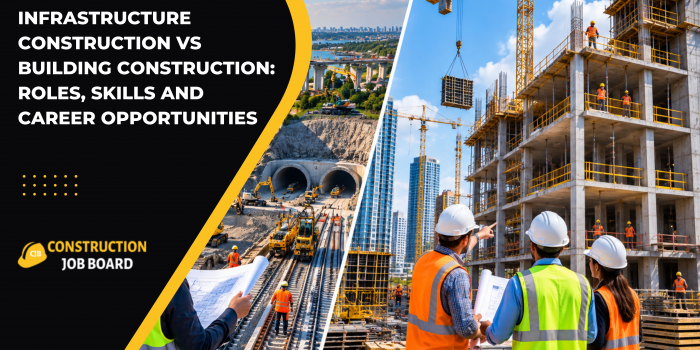
Infrastructure construction vs building construction is an important comparison for people considering a career in the UK construction industry. Both sectors require construction professionals, skilled trades and project teams, but the types of projects, technical requirements, working environments and career opportunities can differ.
Building construction commonly includes residential, commercial, industrial and other structures, while infrastructure construction includes projects such as roads, railways, bridges, utilities, energy infrastructure and other systems that support communities and economic activity.
For people looking at construction careers, understanding these differences can help clarify which project environments and skills may be relevant to their career goals.
Direct Answer: What Is the Difference Between Infrastructure and Building Construction?
Building construction generally focuses on constructing, refurbishing or maintaining buildings such as homes, offices, schools, hospitals and commercial properties.
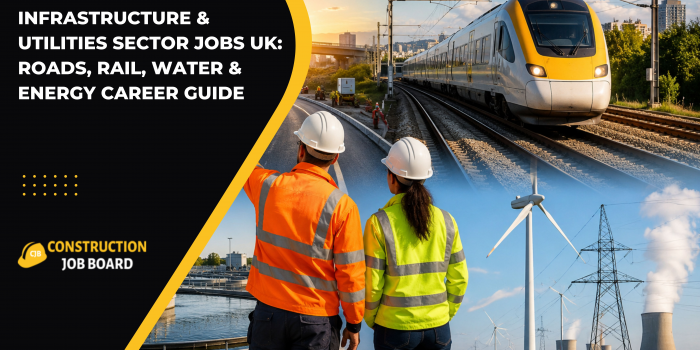
Infrastructure construction focuses on systems and structures that support transportation, utilities, energy, communications and wider public or economic activity.
Both sectors use project management, engineering, surveying, skilled trades, digital construction and health and safety expertise.
The biggest difference is the type and purpose of the assets being delivered.
What Is Building Construction?
Building construction covers projects involving structures intended for people, businesses, organisations and other activities.
Examples include:
- Residential developments
- Office buildings
- Retail buildings
- Schools
- Hospitals
- Hotels
- Warehouses
- Industrial buildings
- Public buildings
- Mixed-use developments
Building projects can involve multiple disciplines working together, including architecture, structural engineering, building services, surveying, construction management and skilled trades.
The scale can range from individual buildings to large developments involving hundreds of units or multiple structures.
What Is Infrastructure Construction?
Infrastructure construction involves projects that provide essential systems, connections or services.
Examples include:
- Roads
- Railways
- Bridges
- Tunnels
- Airports
- Water infrastructure
- Wastewater systems
- Energy infrastructure
- Power networks
- Utilities
- Flood-defence projects
- Civil engineering works
Infrastructure projects can involve complex engineering, extensive planning and coordination across large geographical areas.
Some infrastructure projects can also operate over many years from initial design through construction and commissioning.
Infrastructure vs Building Construction: Key Differences
|
Area
|
Building Construction
|
Infrastructure Construction
|
|
Main purpose
|
Create or improve buildings
|
Create or improve infrastructure systems
|
|
Examples
|
Homes, offices, hospitals, warehouses
|
Roads, rail, bridges, utilities
|
|
Main disciplines
|
Building, architecture, MEP, surveying
|
Civil engineering, transport, utilities, engineering
|
|
Project environment
|
Often concentrated on a site
|
Can cover large geographical areas
|
|
Engineering
|
Structural and building-services focused
|
Often civil, structural and specialist engineering
|
|
Planning
|
Building programme
|
Large-scale programme and interface planning
|
|
Stakeholders
|
Clients, contractors, consultants, occupants
|
Government, authorities, utilities, communities and contractors
|
|
Digital technology
|
BIM, project platforms, digital design
|
BIM, GIS, digital engineering and project systems
|
|
Site conditions
|
Building-specific
|
Often affected by terrain, utilities and existing infrastructure
|
|
Career opportunities
|
Building and property-related roles
|
Civil engineering and infrastructure-related roles
|
There is considerable overlap between the two sectors. Many construction professionals can work across both depending on their experience and specialisation.
What Jobs Are Common in Building Construction?
Building construction can involve a wide range of professional, technical and skilled roles.
Examples include:
- Construction Manager
- Site Manager
- Project Manager
- Quantity Surveyor
- Estimator
- Building Surveyor
- Architect
- Design Manager
- Structural Engineer
- Building Services Engineer
- Electrician
- Plumber
- Carpenter
- Bricklayer
- Groundworker
The exact team structure depends on the size and complexity of the project.
What Jobs Are Common in Infrastructure Construction?
Infrastructure projects can involve roles such as:
- Civil Engineer
- Site Engineer
- Project Manager
- Construction Manager
- Quantity Surveyor
- Contracts Manager
- Planner
- Design Manager
- BIM Manager
- Surveyor
- Environmental Specialist
- Transport Engineer
- Structural Engineer
- Site Supervisor
- Skilled Trades
Large infrastructure programmes may also require specialists working in environmental assessment, utilities coordination, geotechnical engineering, digital engineering and project controls.
Which Construction Skills Are Useful in Both Sectors?
Several skills can transfer between building and infrastructure construction.
These include:
Project Management
Both sectors require people who can coordinate programme, resources, contractors, risks and project information.
Quantity Surveying
Cost management, procurement and commercial management are relevant across many types of construction projects.
Planning
Construction programmes and sequencing are important for both building and infrastructure projects.
Health and Safety
Safe working practices are fundamental to construction regardless of project type.
Digital Skills
BIM, digital project-management platforms, data systems and electronic documentation are increasingly used across both sectors.
Communication
Construction professionals regularly coordinate information between different teams, companies and stakeholders.
Which Sector Requires More Engineering Knowledge?
Infrastructure projects can have particularly strong engineering requirements because they often involve civil engineering systems, transport networks, utilities, structures, earthworks and complex site conditions.
However, building construction can also require significant engineering expertise.
Building projects may involve:
- Structural engineering
- Mechanical engineering
- Electrical engineering
- Building services
- Fire engineering
- Geotechnical engineering
The engineering requirements therefore depend more on the specific project than on the sector alone.
Are Infrastructure Projects Larger Than Building Projects?
Infrastructure projects can be extremely large and may cover long distances or multiple locations.
For example, a major transport or utilities project may involve several construction sites and extensive coordination between different contractors.
However, building projects can also be very large.
A major residential development, hospital, airport terminal or commercial development can involve substantial budgets, complex programmes and large project teams.
Project size should therefore be assessed individually rather than assuming that one sector is always larger.
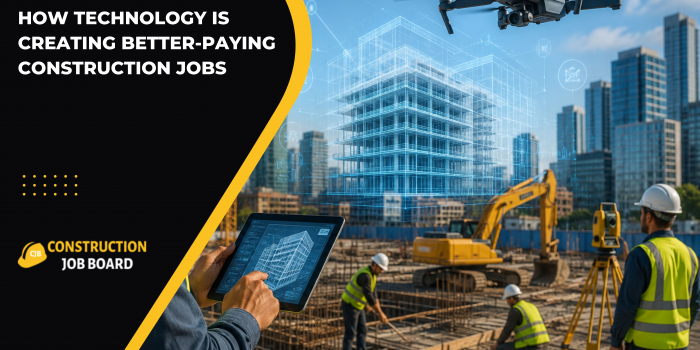
What Digital Skills Are Used in Infrastructure Construction?
Digital technology is increasingly important in infrastructure delivery.
Depending on the project, professionals may work with:
- BIM
- GIS
- Digital surveying
- Drone data
- Digital twins
- Project-management platforms
- Digital engineering systems
- Geographic information
- Remote monitoring
- Data analysis
These technologies can help project teams understand existing conditions, coordinate designs, monitor progress and manage information.
What Digital Skills Are Used in Building Construction?
Building projects also use a growing range of digital tools.
These can include:
- BIM
- 3D modelling
- Digital site reporting
- Project-management software
- Common Data Environments
- Digital scheduling
- Building performance software
- Quantity surveying software
- Mobile construction applications
Digital skills can therefore be relevant whether someone is working on a building or infrastructure project.
How Does BIM Differ Between the Two Sectors?
BIM can support both building and infrastructure projects, but the information requirements can be different.
On a building project, BIM may be used to coordinate:
- Architectural models
- Structural models
- Mechanical systems
- Electrical systems
- Plumbing
- Fire systems
Infrastructure BIM may involve:
- Roads
- Bridges
- Rail systems
- Utilities
- Terrain
- Structures
- Drainage
- Geospatial information
Large infrastructure projects can therefore involve significant integration between BIM and other digital engineering systems.
Infrastructure vs Building Construction: Career Development
Career progression can take different forms in each sector.
A building construction career might develop through:
Assistant Site Manager → Site Manager → Construction Manager → Project Manager
A commercial route might develop through:
Assistant Quantity Surveyor → Quantity Surveyor → Senior Quantity Surveyor → Commercial Manager
An infrastructure engineering pathway could develop through:
Graduate Engineer → Site Engineer → Senior Engineer → Project Engineer → Engineering Manager
These are examples rather than fixed career paths.
Construction professionals can move between disciplines and sectors when they develop transferable experience and meet the requirements of specific positions.
Can Building Construction Professionals Move Into Infrastructure?
Yes, potentially.
Professionals moving from building construction into infrastructure may need to develop knowledge of the relevant infrastructure environment.
For example, a Project Manager moving into infrastructure may need greater familiarity with:
- Civil engineering
- Infrastructure contracts
- Utilities
- Transport projects
- Large-scale programme management
- Infrastructure-specific standards
- Complex stakeholder environments
A Site Manager may similarly need experience with infrastructure-specific construction methods.
Can Infrastructure Professionals Move Into Building Construction?
The move can also work in the opposite direction.
Infrastructure professionals may have transferable skills in:
- Project management
- Planning
- Quantity surveying
- Site management
- Engineering
- Digital construction
- Contract management
However, building-specific knowledge may be required depending on the role.
For example, someone moving into building services or architectural coordination may need additional specialist experience.
Which Sector Uses More Skilled Trades?
Both sectors rely on skilled construction workers, although the types of trades can differ.
Building projects commonly require trades such as:
- Bricklayers
- Carpenters
- Electricians
- Plumbers
- Plasterers
- Painters and decorators
- Roofers
- Joiners
Infrastructure projects may require:
- Plant operators
- Groundworkers
- Civil engineering operatives
- Steelworkers
- Electricians
- Drainage specialists
- Rail specialists
- Paving and surfacing workers
Large projects can require many different specialist trades working together.
What Qualifications Are Useful for Infrastructure Careers?
Qualification requirements depend on the position.
Relevant backgrounds can include:
- Civil engineering
- Structural engineering
- Construction management
- Quantity surveying
- Project management
- Environmental engineering
- Surveying
- Transport engineering
Apprenticeships and vocational routes can also provide pathways into skilled infrastructure occupations.
For regulated or specialist positions, candidates should check the requirements of individual employers and professional bodies.
What Qualifications Are Useful for Building Construction Careers?
Building careers can be entered through several routes.
Relevant subjects include:
- Construction management
- Building
- Quantity surveying
- Architecture
- Civil engineering
- Building services
- Surveying
- Project management
Vocational qualifications and apprenticeships can also lead to skilled construction occupations.
The appropriate route depends on the specific job and level of responsibility.
What Should Candidates Include on a Construction CV?
Candidates should tailor their CV to the type of construction project they are applying for.
For building construction roles, relevant information may include:
- Building types
- Site experience
- Project values where appropriate
- Construction methods
- Building services experience
- Contractor coordination
- Relevant qualifications
- Health and safety training
For infrastructure roles, candidates may highlight:
- Infrastructure project experience
- Civil engineering knowledge
- Utilities experience
- Roads or rail experience
- Earthworks
- Large-scale project coordination
- Digital engineering
- Relevant qualifications
Candidates should focus on actual responsibilities and project experience rather than simply listing generic construction skills.
Why Infrastructure Skills Are Becoming Important
Infrastructure investment can create demand across engineering, construction, project management, planning, surveying and skilled trades.
The UK infrastructure pipeline includes projects across transport, energy, utilities and other infrastructure areas. Large programmes can require professionals who understand complex project environments and digital delivery.
This creates a broad career ecosystem rather than opportunities being limited to civil engineers alone.
Why Building Construction Skills Remain Important
Buildings continue to require professionals and trades across construction, refurbishment, maintenance and development.
Building construction also connects with emerging areas such as:
- Retrofit
- Energy efficiency
- Sustainable construction
- Digital construction
- Modern methods of construction
- Building information modelling
- Smart buildings
This means traditional building skills can increasingly be combined with new technical and digital capabilities.
Infrastructure vs Building Construction: Which Skills Should You Develop?
There is no single skill set that applies equally to every construction career.
Someone interested in infrastructure may consider developing:
- Civil engineering knowledge
- Infrastructure project experience
- Digital engineering
- Surveying
- Project controls
- Planning
- Environmental awareness
Someone interested in building construction may consider:
- Building technology
- Site management
- Building services
- BIM
- Quantity surveying
- Construction management
- Retrofit knowledge
Across both sectors, communication, health and safety awareness, digital literacy and practical construction knowledge remain relevant.
Key Takeaways
- Building construction focuses primarily on structures such as homes, offices, hospitals and commercial buildings.
- Infrastructure construction covers systems such as roads, railways, bridges, utilities and energy infrastructure.
- Both sectors require project managers, planners, quantity surveyors, engineers, site managers and skilled workers.
- Infrastructure projects can involve complex engineering and large geographical areas.
- Building projects can also be highly complex and require multiple specialist disciplines.
- BIM and other digital technologies are increasingly used across both sectors.
- Many construction skills can transfer between building and infrastructure work.
- Candidates should tailor their CVs to the project type and role they are applying for.
Frequently Asked Questions
1. What is the difference between infrastructure construction and building construction?
Infrastructure construction focuses on systems and structures such as roads, railways, bridges, utilities and energy networks, while building construction generally focuses on structures such as homes, offices, schools, hospitals and commercial buildings.
2. What jobs are available in infrastructure construction?
Infrastructure construction can involve civil engineers, project managers, construction managers, quantity surveyors, planners, site engineers, surveyors, BIM professionals, skilled trades and environmental specialists.
3. Can a building construction professional move into infrastructure?
Yes. Many skills are transferable, including project management, planning, quantity surveying, site management and construction coordination. Additional infrastructure-specific knowledge may be required for some positions.
4. Does infrastructure construction require civil engineering?
Civil engineering is important for many infrastructure projects, but infrastructure teams include professionals from many disciplines, including project management, surveying, quantity surveying, environmental management, planning and skilled construction trades.
5. Are digital skills important in infrastructure and building construction?
Yes. BIM, digital project-management systems, surveying technology, data platforms and digital reporting are increasingly used across both building and infrastructure projects.
Conclusion
Infrastructure construction and building construction are two major areas of the UK construction industry, with different project environments and technical requirements.
Building construction focuses on creating and improving structures such as homes, offices, schools and commercial buildings. Infrastructure construction focuses on systems and assets that support transportation, utilities, energy and wider economic activity.
The career opportunities overlap significantly. Project managers, quantity surveyors, planners, engineers, surveyors, BIM professionals and skilled workers can be found across both sectors, although the specialist knowledge required can differ.
For construction professionals considering their next career step, understanding the type of projects they want to work on can help them identify relevant skills and experience. Digital construction, sustainability, infrastructure delivery and traditional construction expertise can all form part of modern career development.